Important Disclaimer
BatteryStorageHQ provides educational content and estimates only. We are not certified installers, financial advisors, or electricians. Always consult with licensed professionals.
Understanding Battery Safety: Your First Priority
Battery storage systems provide incredible benefits, from energy independence to backup power security. However, these systems store significant electrical energy and contain reactive chemical materials. Without proper safety measures, batteries can pose serious hazards including fires, explosions, toxic gas exposure, and electrical shock. Understanding and implementing comprehensive safety protocols protects your property, your family, and your investment.
This guide covers everything you need to know about battery storage safety, from fundamental principles to advanced protection systems. Whether you are building a small DIY power bank or installing a whole-house backup system, these safety practices are essential.
The Dangers of Improper Battery Handling
Thermal Runaway: The Most Serious Risk
Thermal runaway occurs when a battery’s internal temperature rises uncontrollably, triggering a self-accelerating chemical reaction. Temperature increases cause faster chemical reactions, which generate more heat, creating a dangerous feedback loop. In lithium-ion batteries, thermal runaway can reach temperatures exceeding 500°C (932°F), potentially igniting surrounding materials.
Several factors can trigger thermal runaway:
- Overcharging or charging at excessive current
- Physical damage to cells (punctures, crushing)
- Internal short circuits from manufacturing defects
- Exposure to high ambient temperatures
- Contamination during assembly
LiFePO4 batteries, commonly used in DIY energy storage, offer better thermal stability than other lithium chemistries. Their phosphate-based cathode material is inherently more stable. However, they are not immune to thermal runaway if severely abused.
Fire and Explosion Hazards
Battery fires are difficult to extinguish. Standard fire extinguishers may be ineffective against lithium battery fires. Burning lithium produces its own oxygen supply, making smothering attempts futile. Water can sometimes worsen the situation by reacting with lithium.
Lead-acid batteries present different fire risks. During charging, they emit hydrogen gas, which is highly explosive in concentrations between 4% and 75% by volume. A single spark near a charging lead-acid battery bank can cause catastrophic explosions.
Electrical Shock Hazards
Large battery systems operate at dangerous voltages. A 48V battery bank exceeds the 50V DC threshold considered safe for casual contact. Higher voltage systems can deliver lethal shocks. Additionally, the massive current capacity of large battery banks means even brief short circuits can generate intense heat, arcing, and molten metal.
Chemical Exposure Risks
Damaged batteries may leak electrolyte fluids. Lead-acid batteries contain sulfuric acid, which causes severe chemical burns. Lithium battery electrolytes are typically organic solvents with lithium salts, which are toxic and flammable. Proper containment and cleanup procedures are essential when handling damaged batteries.
Essential Safety Equipment
Personal Protective Equipment (PPE)
When working with batteries, always wear appropriate protection:
- Safety glasses or face shield: Protects against acid splashes and arc flash
- Chemical-resistant gloves: Nitrile or neoprene gloves prevent electrolyte contact
- Long sleeves and pants: Natural fiber clothing (cotton, wool) resists heat and does not melt like synthetics
- Closed-toe shoes: Steel-toed boots provide protection from dropped tools and batteries
- Respiratory protection: Use when working around charging lead-acid batteries or in poorly ventilated areas
Fire Suppression Equipment
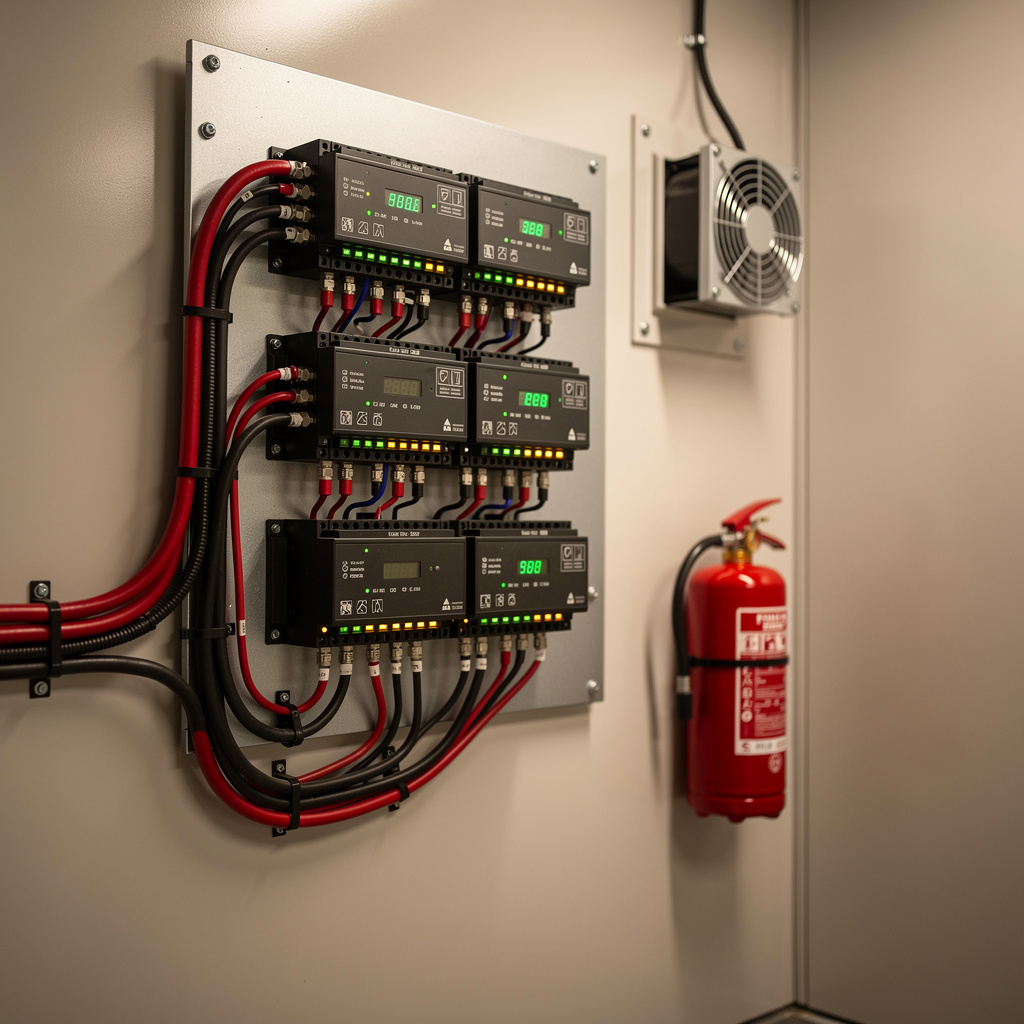
Install appropriate fire suppression near your battery installation:
- Class ABC fire extinguisher: For general fires including wood, paper, and electrical
- Class D fire extinguisher: Specifically for metal fires including lithium
- Fire blanket: For smothering small fires and protecting escape routes
- Sand or dry earth: Effective for smothering lithium fires when extinguishers fail
Never use water on lithium battery fires unless absolutely necessary and in large volumes. Water can react with lithium metal, creating hydrogen gas and worsening the situation.
Spill Containment and Cleanup
Prepare for potential electrolyte spills:
- Baking soda (sodium bicarbonate) neutralizes acid spills
- Absorbent materials (cat litter, vermiculite) contain spills
- Plastic sheeting protects floors during installation
- Shallow containment trays catch minor leaks
Safe Battery Installation Practices
Location Selection
Choose your battery location carefully:
- Ventilation: Adequate airflow prevents gas accumulation (critical for lead-acid)
- Temperature control: Avoid areas exceeding 30°C (86°F) for prolonged periods
- Accessibility: Easy access for maintenance and emergency shutdown
- Separation: Distance from living spaces, ignition sources, and water
- Structural support: Batteries are heavy; ensure floors can support the load
A detached garage, utility room, or dedicated battery shed often provides optimal conditions. Never install batteries in living spaces without proper ventilation and fire separation.
Secure Mounting and Enclosures
Batteries must be securely mounted to prevent movement:
- Use battery boxes or racks designed for your battery type
- Strap batteries to prevent shifting during earthquakes or transportation
- Provide non-conductive barriers between battery terminals and metal enclosures
- Ensure enclosures allow adequate airflow for cooling
- Include access panels for maintenance without complete disassembly
For lithium battery banks, proper Battery Management System (BMS) installation within your enclosure is essential. The BMS monitors cell voltages, prevents overcharging, and detects dangerous conditions before they escalate.
Proper Wiring and Connections
Electrical connections require careful attention:
- Use appropriately sized cables for your current loads
- Torque all connections to manufacturer specifications
- Apply anti-oxidation compound to prevent corrosion
- Use insulated tools when working near batteries
- Cover exposed terminals with insulated boots
- Label all cables clearly for maintenance and troubleshooting
Loose connections create resistance, generating heat and potentially starting fires. Regularly inspect and retorque connections, especially during the first months of operation.
Overcurrent Protection and Circuit Safety
Fuses and Circuit Breakers
Every battery system requires overcurrent protection:
- Install fuses or breakers on every positive conductor leaving the battery
- Use DC-rated components; AC breakers may not properly extinguish DC arcs
- Size protection at 125% of maximum expected current
- Locate protection as close to the battery as possible
- Use fuse holders or breakers with adequate interrupt ratings for your battery capacity
A large battery bank can deliver thousands of amps during a short circuit. Standard automotive fuses may vaporize without breaking the circuit. Use high-amp, DC-rated circuit protection designed for your specific application.
Disconnect Switches
Install accessible disconnect switches for emergency shutdown:
- Master disconnect near the battery bank
- Individual disconnects for major loads
- Clearly labeled and easily accessible
- Regularly test switches to ensure proper operation
In emergency situations, being able to quickly de-energize your system saves critical seconds and prevents further damage.
Grounding and Bonding
Proper grounding prevents electrical hazards:
- Connect battery negative to earth ground at one point only
- Use appropriately sized grounding conductors
- Bond all metal enclosures and equipment chassis
- Check ground connections annually for corrosion
Multiple ground points create ground loops, which can cause erratic system behavior and safety hazards.
Safe Charging Practices
Charge Controller Selection and Programming
Charge controllers prevent dangerous overcharging conditions:
- Select controllers rated for your battery chemistry
- Program correct charge voltages for your specific cells
- Set appropriate charge current limits
- Enable temperature compensation when available
- Verify automatic charge termination functions
Lead-acid batteries require specific charging profiles with bulk, absorption, and float stages. Lithium batteries need precise voltage limits and typically do not use float charging. Proper charge controller programming is critical for battery longevity and safety.
Temperature Monitoring
Charging generates heat. Monitor battery temperature during charging:
- Install temperature sensors on battery banks
- Reduce charging current if temperatures exceed 45°C (113°F)
- Stop charging if temperatures reach 50°C (122°F)
- Never charge frozen batteries; allow them to warm first
Lithium plating occurs when charging LiFePO4 batteries below freezing temperatures. This creates dangerous metallic lithium deposits that can cause internal short circuits.
Avoiding Overcharging
Overcharging is a leading cause of battery failures:
- Set appropriate charge voltage limits in your charge controller
- Use BMS systems with cell-level monitoring
- Install voltage alarms for manual systems
- Never leave charging unattended for extended periods
- Regularly verify charge controller settings have not been accidentally changed
Handling Damaged or Defective Batteries
Identifying Problem Batteries
Watch for these warning signs:
- Swelling or bulging cells
- Unusual odors (sweet or chemical smells)
- Excessive heat during charging or discharging
- Voltage imbalances between cells
- Visible damage to cell cases or terminals
- Rapid capacity loss
Safe Disposal Procedures
Damaged batteries require special handling:
- Isolate damaged cells immediately from the battery bank
- Discharge to safe voltage levels before handling
- Store in fire-resistant containers away from combustibles
- Contact local hazardous waste facilities for disposal instructions
- Never puncture, crush, or incinerate lithium batteries
Many jurisdictions have specific regulations for battery disposal. Follow local environmental guidelines to prevent contamination.
Emergency Response Procedures
Battery Fire Response
If a battery fire occurs:
- Evacuate the area immediately
- Call emergency services
- Only attempt extinguishment if the fire is small and you have proper equipment
- Use Class D extinguisher or sand for lithium fires
- Use water only in large volumes from a safe distance
- Expect re-ignition; lithium fires can restart hours later
Electrolyte Spill Response
For acid spills from lead-acid batteries:
- Don full PPE (gloves, face shield, apron)
- Neutralize acid with baking soda
- Contain spill with absorbent materials
- Collect contaminated materials in sealed containers
- Dispose according to hazardous waste regulations
- Flush area with water after neutralization
Electrical Shock Response
If someone receives an electrical shock:
- Do not touch the victim while they are in contact with the electrical source
- De-energize the system using disconnect switches
- If unable to de-energize, use non-conductive material to separate victim from source
- Call emergency services immediately
- Begin CPR if victim is not breathing
- Treat burns and monitor for shock symptoms
Maintenance for Safety
Regular maintenance prevents dangerous failures:
- Inspect batteries monthly for damage, swelling, or leaks
- Check and clean terminals quarterly
- Retorque connections annually
- Test safety equipment (smoke detectors, fire extinguishers) regularly
- Verify charge controller settings periodically
- Monitor battery temperatures during charging
Implement comprehensive maintenance routines to catch problems before they become dangerous. Document all inspections and note any changes in battery behavior.
Building Codes and Regulations
Comply with local regulations:
- Many jurisdictions require permits for large battery installations
- National Electrical Code (NEC) provides standards for safe installation
- Insurance companies may require specific safety equipment
- Some areas restrict battery chemistry or installation locations
- Professional installation may be required for grid-tied systems
Contact your local building department before installation. Permits and inspections, while sometimes inconvenient, ensure your system meets safety standards.
Insurance Considerations
Battery installations affect home insurance:
- Notify your insurer before installation
- Document all safety equipment and installation practices
- Maintain records of professional inspections if required
- Some insurers offer discounts for professional installations with safety certifications
Failure to disclose battery installations can void coverage in case of fire or damage.
Conclusion
Battery storage safety requires vigilance, proper equipment, and respect for the significant energy stored in these systems. By understanding the risks and implementing comprehensive safety measures, you can enjoy the benefits of energy independence while protecting yourself, your family, and your property.
Remember that safety is not a one-time consideration but an ongoing practice. Regular inspections, proper maintenance, and staying informed about best practices keep your system safe throughout its operational life.
The investment in safety equipment and proper installation pays dividends in peace of mind. When you know your system is protected by robust battery management systems, appropriate overcurrent protection, and emergency procedures, you can enjoy reliable backup power with confidence.
Take battery safety seriously from day one. Choose quality components, follow manufacturer guidelines, adhere to local codes, and never compromise on safety to save money. Your battery system should provide years of reliable service without incident when properly designed, installed, and maintained with safety as the primary priority.