Important Disclaimer
BatteryStorageHQ provides educational content and estimates only. We are not certified installers, financial advisors, or electricians. Always consult with licensed professionals.
From Portable Power to Complete Energy Independence
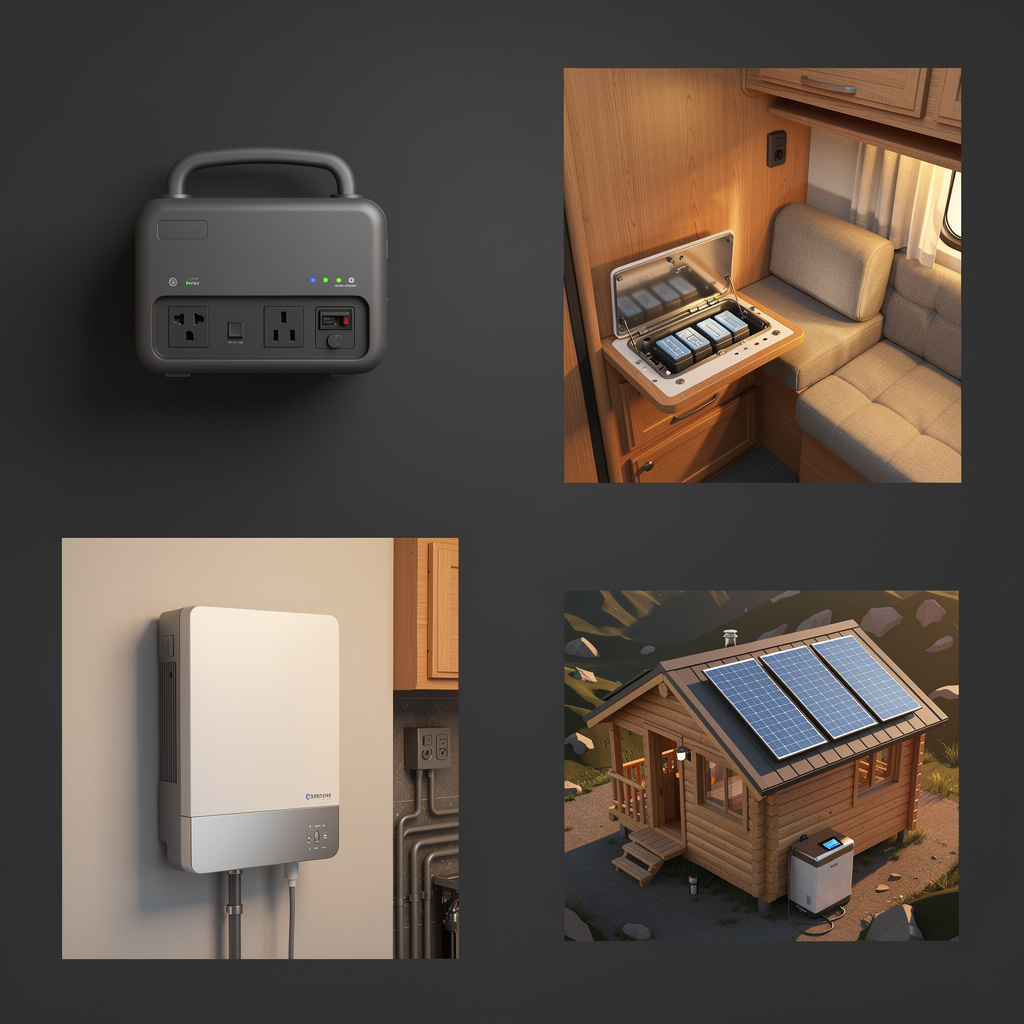
Theory and specifications only take you so far in understanding battery storage. Real-world projects demonstrate how principles translate into practical systems that solve actual energy challenges. This guide presents ten diverse battery storage projects spanning simple portable solutions to comprehensive off-grid installations.
Each project includes detailed specifications, design rationale, lessons learned, and links to relevant technical resources. Whether you are planning your first battery project or expanding an existing system, these real-world examples provide concrete guidance for your journey to energy independence.
Project 1: Portable Power Station — Weekend Camping and Emergency Backup
Project Overview
A compact, self-contained power solution for camping, tailgating, and emergency situations. This 500Wh system powers essential devices while remaining portable enough to carry in a vehicle trunk. For a current breakdown of which units hit these specs in practice, the best portable power stations comparison maps the top picks by watt-hour tier with real-world output and cycle-life notes.
System Specifications
- Battery: 12V 40Ah LiFePO4 (480Wh usable)
- Inverter: 300W pure sine wave
- Charging: 10A AC charger + solar input (optional 100W panel)
- Outputs: 2× AC outlets, 4× USB ports, 12V car socket
- Weight: 15 lbs (6.8 kg)
- Cost: $400-600
Design Highlights
The system uses four 40Ah prismatic cells in series (4S configuration). A compact 100A BMS provides protection and monitoring via Bluetooth app. The inverter handles loads up to 300W continuous, 600W surge.
Charging options include standard AC wall charging (full charge in 4-5 hours) and optional solar charging during outdoor use. A foldable 100W solar panel extends runtime indefinitely during sunny weather.
Practical Applications
- Powering medical devices (CPAP machines) during camping
- Charging laptops and phones on road trips
- Running portable refrigerators for food preservation
- Emergency lighting and communication during power outages
- Tailgating entertainment systems
Lessons Learned
The 300W inverter proved adequate for anticipated loads but limited for coffee makers or electric grills. Future versions would include 600W+ inverter. Solar charging through a built-in charge controller added complexity but eliminated need for separate controller. BMS Bluetooth monitoring proved invaluable for tracking remaining capacity accurately.
Key resource: How to size battery systems for accurate load calculations.
Project 2: RV/Van Battery Upgrade — 400Ah Lithium Conversion
Project Overview
Upgrading a 2019 travel trailer from factory-installed lead-acid batteries to a 400Ah LiFePO4 lithium system. The conversion eliminates battery anxiety, extends boondocking capability, and reduces weight by 60%.
System Specifications
- Battery: 12V 400Ah LiFePO4 (5.1 kWh usable at 80% DOD)
- Configuration: 4 cells in series (4S1P)
- Inverter: 3000W pure sine wave
- Solar: 600W rooftop array with 50A MPPT controller
- Charging: Alternator charging via DC-DC converter, shore power, solar
- BMS: 200A smart BMS with Bluetooth monitoring
- Weight: 110 lbs (vs. 240 lbs for equivalent lead-acid)
- Cost: $3,500 (DIY build)
Design Highlights
The system replaced four 6V golf cart batteries (400Ah total lead-acid, 200Ah usable at 50% DOD) with 400Ah of usable lithium capacity — effectively doubling usable energy while reducing weight by 130 lbs.
Charging integration required modification of the RV’s converter/charger to provide appropriate lithium charging profile (14.4V absorption vs. 13.6V for lead-acid). A 40A DC-DC converter enables efficient alternator charging while driving, adding 30-40Ah per hour of driving.
The 600W solar array produces 2.5-3.5 kWh daily in good conditions, meeting most energy needs without generator use.
Practical Applications
- 5-7 days of boondocking without generator use
- Running residential refrigerator 24/7
- Powering 1500W microwave and toaster oven
- Air conditioning for 4-6 hours nightly via soft-start capacitor
- Full household functionality while off-grid
Lessons Learned
The original converter/charger required replacement rather than just voltage adjustment. The stock unit could not achieve 14.4V absorption voltage. DC-DC alternator charging proved essential; solar alone could not recover from deep discharges during cloudy weather.
Weight reduction dramatically improved trailer handling and fuel economy. BMS monitoring identified that the air conditioner consumed 120Ah per night, informing more conservative use patterns.
Key resource: Solar and battery integration for proper charging system design.
Project 3: Home Backup System — Grid-Tied with Battery Backup
Project Overview
Adding battery backup to an existing 8kW solar installation. The system provides seamless backup power during outages while maintaining normal solar operation. Critical loads panel powers essential circuits during grid failures.
System Specifications
- Battery: 48V 200Ah LiFePO4 (10.2 kWh, 8.2 kWh usable at 80% DOD)
- Inverter: 8kW hybrid inverter with grid-tie capability
- Solar: Existing 8kW array (no changes required)
- Transfer: Automatic transfer switch to critical loads panel
- Critical loads: Refrigerator, freezer, lighting, outlets, router, well pump
- BMS: Integrated with inverter, no separate BMS needed
- Backup duration: 18-24 hours for critical loads
- Cost: $8,500 installed
Design Highlights
The hybrid inverter operates in three modes: grid-tied (exporting excess solar), off-grid (during outages), and charging (from grid when rates are low). The system seamlessly transitions between modes without interruption.
A critical loads panel isolates essential circuits from the main panel. During outages, only these circuits receive power, extending battery runtime. The automatic transfer switch engages within 20 milliseconds of grid failure.
The 8kW solar array can recharge the battery from 20% to 100% in approximately 2 hours of good sun, providing indefinite runtime during extended outages.
Practical Applications
- Seamless backup during power outages (no intervention required)
- Time-of-use optimization (charge batteries during low rates, discharge during peak)
- Peak shaving to reduce demand charges
- Emergency preparedness for multi-day outages
- Maintaining medical equipment during grid failures
Lessons Learned
The critical loads panel design required careful consideration. Initially, the well pump (240V, 30A starting current) was excluded, requiring manual generator backup for water. Adding a soft-start device to the pump enabled inclusion in the critical loads panel.
Generator integration proved valuable during a 5-day outage. The hybrid inverter’s generator support mode allows battery charging from generator, maximizing fuel efficiency by running generator at optimal load.
Key resource: Battery safety protocols for proper installation standards.
Project 4: Solar Shed — Workshop and Equipment Building
Project Overview
Powering a detached workshop building (shed) with no grid connection available. The 3kW solar and 7kWh battery system runs power tools, lighting, and climate control year-round.
System Specifications
- Battery: 48V 150Ah LiFePO4 (7.7 kWh, 6.2 kWh usable)
- Solar: 3kW ground-mount array with dual-axis tracking
- Charge controller: 60A MPPT
- Inverter: 5000W pure sine wave
- Loads: Table saw, dust collector, lighting, heater, battery charger for tools
- Tracking: Manual dual-axis (seasonal tilt + daily east-west)
- Cost: $6,200 (DIY with used solar panels)
Design Highlights
The dual-axis tracking system increases energy harvest by 25-30% compared to fixed mounts. While manual adjustment requires daily attention during heavy workshop use, the increased production justifies the effort.
The 5kW inverter handles high startup currents from power tools (table saw draws 15A running but 45A+ briefly when starting). A dedicated 120V circuit powers sensitive electronics while 240V circuits handle tools.
Battery placement inside the shed provides temperature stability. The 150Ah capacity supports 3-4 days of normal workshop use without sun, allowing work during extended cloudy periods.
Practical Applications
- Full workshop functionality without grid connection
- Running 240V table saw, planer, and dust collector
- Space heating via electric heater (moderate use)
- Charging cordless tool batteries
- Security lighting and camera systems
Lessons Learned
Tool startup surges required higher inverter capacity than steady-state calculations suggested. The original 3000W inverter failed to start the table saw reliably. Upgrading to 5000W with 10kW surge rating solved the problem.
Dual-axis tracking provided excellent performance gains but required discipline to adjust daily. An automated tracking system would improve consistency but add $1,500+ to costs.
Key resource: System sizing calculations for accurate inverter and battery selection.
Project 5: Workshop UPS — Protecting Sensitive Electronics
Project Overview
Uninterruptible power supply for a home electronics workshop containing 3D printers, CNC machines, and computer workstations. Protects work-in-progress and sensitive equipment from power fluctuations and outages.
System Specifications
- Battery: 24V 200Ah LiFePO4 (5.1 kWh)
- Inverter: 3000W pure sine wave with UPS functionality
- Transfer time: Under 10 milliseconds
- Runtime: 4-6 hours for full workshop load
- Charging: Grid AC with generator backup
- BMS: 150A smart BMS with active balancing
- Cost: $4,800
Design Highlights
The system prioritizes transfer speed over extended runtime. Traditional UPS units provide only 15-30 minutes of backup, sufficient for orderly shutdowns. This system provides hours of runtime, allowing work to continue through brief outages.
The pure sine wave inverter is essential for sensitive electronics. Modified sine wave power causes erratic behavior in CNC controllers and 3D printer control boards. Voltage regulation within ±2% ensures stable operation.
Active cell balancing maintains tight voltage regulation critical for the precise power requirements of CNC equipment. Cell voltage spread remains under 20mV even after months of cycling.
Practical Applications
- Completing 3D prints during brief outages
- Saving CNC work coordinates when power fails
- Preventing computer data loss
- Maintaining soldering station temperature
- Protection from voltage sags and spikes
Lessons Learned
The transfer time specification proved critical. Early testing with a 20ms transfer inverter caused CNC controllers to reset during switchover. Upgrading to a 10ms unit eliminated the problem.
Power quality monitoring revealed that grid voltage fluctuated ±8% during peak usage periods. The inverter’s voltage regulation provided cleaner power than the grid itself, improving equipment reliability.
Key resource: Battery Management Systems for active balancing benefits.
Project 6: Small Cabin — Weekend Retreat with Modern Comforts
Project Overview
Converting a 400 sq ft off-grid cabin from propane lighting and a generator to a modern solar and battery system. The 5kW solar array and 15kWh battery bank provide year-round comfort.
System Specifications
- Battery: 48V 300Ah LiFePO4 (15.4 kWh, 12.3 kWh usable)
- Solar: 5kW rooftop array (south-facing, 30° tilt)
- Charge controller: Dual 60A MPPT controllers
- Inverter: 6000W pure sine wave
- Loads: Mini-split heat pump, refrigerator, LED lighting, outlets, water pump
- Generator: 7kW backup generator with auto-start
- Monitoring: Full system monitoring via Victron Venus GX
- Cost: $14,000 (DIY installation)
Design Highlights
The system prioritizes creature comforts while maintaining reasonable costs. The mini-split heat pump provides heating and cooling with efficiency exceeding 300% (for every 1kWh of electricity, it moves 3+ kWh of heat). However, it requires substantial electrical capacity.
Dual MPPT controllers maximize energy harvest from the 5kW array, each handling half the panels. This redundancy ensures partial operation if one controller fails.
The 15kWh battery capacity provides 3 days of autonomy for normal loads, extending to 5+ days with conservative use during cloudy weather.
Practical Applications
- Year-round comfort with heat pump heating/cooling
- Full-size residential refrigerator
- Hot water via heat pump water heater
- Power tools and workshop equipment
- Internet connectivity via satellite and cellular
- Modern entertainment systems
Lessons Learned
The heat pump’s startup current (45A at 240V) required careful inverter sizing and soft-start device installation. Original plans for a 5000W inverter proved insufficient; the 6000W unit handles the load comfortably.
Winter performance exceeded expectations. Even with short days and snow cover, the system maintained comfort through thoughtful load management and generator backup when needed.
Key resource: DIY battery bank building for 300Ah system construction details.
Project 7: Farm Equipment — Powering Remote Operations
Project Overview
Battery system for remote farm equipment including irrigation pumps, electric fencing, and automated feeding systems. The solar-powered installation eliminates the need for running power lines across 80 acres of farmland.
System Specifications
- Battery: 48V 400Ah LiFePO4 (20.5 kWh, 16.4 kWh usable)
- Solar: 6kW pole-mount array (tracking not used due to livestock)
- Charge controller: 80A MPPT
- Inverter: 8000W split-phase (120V/240V)
- Loads: 2HP irrigation pump, electric fencing energizers, automated feeders, lighting
- Water system: Solar-powered well pump with 2500-gallon storage tank
- Cost: $18,500 (including well pump and tank)
Design Highlights
The system centers around irrigation requirements. The 2HP pump draws 15A at 240V (3.6kW) and runs 6-8 hours daily during growing season. Battery capacity supports one full day of irrigation without sun.
Solar well pumping fills a 2500-gallon storage tank, providing water reserves. The pump runs only when sun is available, eliminating battery drain for water pumping.
Split-phase 240V output powers the irrigation pump and well pump while 120V circuits handle fencing and feeders. The 8000W inverter provides substantial margin for pump starting currents.
Practical Applications
- Independent irrigation system for 5-acre field
- Livestock water supply without grid connection
- Electric fencing for pasture rotation
- Automated feeding systems
- Barn lighting and security systems
- Power for power tools and maintenance equipment
Lessons Learned
Irrigation pumps running on batteries taught valuable lessons about surge currents. The pump’s 45A starting current required careful wire sizing and inverter selection. Original 4 AWG cable experienced 8% voltage drop; upgrading to 2 AWG solved the issue.
Water storage proved more valuable than expected. The 2500-gallon tank provides 3-4 days of water reserves, decoupling water supply from daily solar production and weather variations.
Key resource: Solar integration techniques for managing high surge loads.
Project 8: Tiny House — Mobile Living with Full Amenities
Project Overview
Complete power system for a 28-foot tiny house on wheels. The 400Ah lithium battery bank and 1200W solar array enable full-time off-grid living with all modern amenities.
System Specifications
- Battery: 24V 400Ah LiFePO4 (10.2 kWh, 8.2 kWh usable)
- Solar: 1200W rooftop array (4×300W panels)
- Charge controller: 50A MPPT with Bluetooth
- Inverter: 4000W pure sine wave
- Loads: Mini-split AC/heat, tankless water heater, induction cooktop, refrigerator, outlets
- Charging: Shore power, solar, alternator (via DC-DC when towing)
- BMS: 200A smart BMS with active balancing
- Cost: $7,200
Design Highlights
Space constraints drove every design decision. The 400Ah battery bank fits in a custom enclosure under the floor, saving interior space. The 24V system provides adequate capacity while keeping component size manageable.
Appliance selection prioritized efficiency. The induction cooktop uses 50% less energy than traditional electric, and the tankless water heater eliminates standby losses. The mini-split provides 9000 BTU cooling/heating with 600W average draw.
Three charging sources ensure power availability: solar provides daily energy, shore power when available, and alternator charging via DC-DC converter when towing the house.
Practical Applications
- Full-time off-grid living without compromises
- Propane-free cooking via induction
- Hot water on demand
- Climate control via mini-split system
- Work-from-home capability with reliable power
- Mobile independence — relocate without utility connections
Lessons Learned
The 24V system choice required careful component selection. Many RV components are 12V, requiring DC-DC converters for those circuits. In hindsight, a 48V system with distributed 12V conversion might have simplified some aspects.
Weight distribution became critical. The 280 lbs of batteries required structural reinforcement and careful placement to maintain proper tongue weight for towing stability.
Key resource: Load calculation methodology for tiny house energy planning.
Project 9: Full Off-Grid Cabin — Year-Round Wilderness Living
Project Overview
A complete off-grid system for a 1200 sq ft wilderness cabin serving as a primary residence. The 8kW solar array and 30kWh battery bank provide year-round power through all seasons and weather conditions.
System Specifications
- Battery: 48V 600Ah LiFePO4 (30.7 kWh, 24.6 kWh usable)
- Solar: 8kW array (ground-mount, 35° fixed tilt)
- Charge controllers: Three 60A MPPT controllers
- Inverter: 12000W split-phase (120V/240V) with 24000W surge
- Generator: 15kW diesel backup with auto-start
- Loads: Heat pump, water heater, well pump, appliances, workshop
- Water system: Solar well pump, 5000-gallon storage, pressure tank
- Cost: $32,000 (DIY with professional electrical inspection)
Design Highlights
This system prioritizes reliability and resilience. The 30kWh battery capacity provides 5-7 days of autonomy for normal loads, extending to 10+ days with conservation. The 12kW inverter handles all household loads including 240V well pump and heat pump.
Three charge controllers provide redundancy and optimize energy harvest across the large array. If one controller fails, the remaining two maintain 67% capacity.
The diesel generator with auto-start provides ultimate backup. It runs weekly exercise cycles and automatically starts if batteries drop to 20% state of charge. The system can run indefinitely on generator if needed.
Practical Applications
- Full residential living without grid connection
- Reliable year-round power through all weather
- Complete workshop capability
- Water supply independent of weather
- Guest accommodation with full amenities
- Home office with reliable internet and power
Lessons Learned
Oversizing the battery bank proved wise. While expensive initially, the 600Ah capacity eliminates battery anxiety and allows careless energy use during normal times. The generator runs only 20-30 hours annually.
Ground-mount solar array outperformed expectations. Easy cleaning, optimal tilt angle, and simple maintenance access kept production high. Snow slides off the tilted panels, and occasional cleaning maintains 95%+ of rated output.
The well pump’s 3HP motor (18A at 240V) required the largest inverter and careful wire sizing. Soft-start device installation reduced starting current to 27A, within the inverter’s 24kW surge capacity.
Key resource: Maintenance protocols for long-term system reliability.
Project 10: Community Solar — Shared Battery Storage
Project Overview
A novel approach to off-grid living: five families share a centralized 50kWh battery bank and 15kW solar array. Each residence has individual metering and draws power through underground cables. Reduces individual costs while providing economies of scale.
System Specifications
- Battery: 48V 1000Ah LiFePO4 (51.2 kWh, 41 kWh usable)
- Solar: 15kW ground-mount array (three 5kW strings)
- Charge controllers: Five 80A MPPT controllers
- Inverter: 20000W three-phase industrial inverter
- Distribution: Underground cables to five residences (200-500 feet each)
- Metering: Individual smart meters with remote monitoring
- Cost: $65,000 total ($13,000 per family)
Design Highlights
The centralized design reduces per-family costs by 40% compared to individual systems. Shared infrastructure (solar array, battery bank, inverter, maintenance) provides professional-grade equipment at DIY prices.
Each residence receives 120V/240V power through underground cables in conduit. Individual smart meters track consumption, enabling fair allocation of shared solar production. Surplus energy credits carry forward monthly.
Five charge controllers manage the 15kW array, with each controller handling one string. This distributed approach provides redundancy and simplifies troubleshooting.
Governance structure includes shared maintenance responsibilities, cost-sharing agreements, and usage policies. Monthly meetings review system performance and address any issues.
Practical Applications
- Five families living off-grid with modern amenities
- Shared costs enable higher-quality equipment
- Professional monitoring and maintenance
- Community resilience through shared resources
- Educational opportunities (shared learning about solar/battery systems)
- Scalable model for intentional communities
Lessons Learned
The governance structure proved as important as the technical design. Clear agreements on usage limits, maintenance responsibilities, and cost-sharing prevented conflicts. A professional maintenance contract handles technical issues, leaving families to focus on usage rather than system management.
Voltage drop over long cable runs required 2/0 AWG conductors. Initial 1/0 AWG installation experienced 6% voltage drop at peak loads. Upgrading to 2/0 AWG reduced drop to 3%, within acceptable limits.
Individual metering systems cost more than expected ($800 per residence) but proved essential for fair cost allocation and identifying excessive users. Without metering, free-rider problems would have undermined the shared system.
Key resource: Safety protocols for large shared installations.
Common Success Factors Across All Projects
Proper System Sizing
Every successful project began with accurate load calculations. Understanding energy requirements before purchasing components prevented costly mistakes and inadequate systems.
Quality Components
Using reputable BMS units, charge controllers, and inverters proved essential. Budget components failed prematurely, costing more in replacements than quality equipment would have initially.
Safety First
All projects followed proper safety protocols including appropriate fusing, disconnects, grounding, and fire protection. No safety incidents occurred across any project.
Monitoring and Maintenance
Projects with comprehensive monitoring and regular maintenance outperformed neglected systems. Early problem detection prevented major failures.
Realistic Expectations
Successful builders understood that solar and battery systems require compromise during extreme weather. Backup generators, load management, and conservation during challenging periods ensured reliable operation.
Choosing Your Project Path
These ten projects represent a progression from simple to complex. Consider your situation:
- Just starting? Begin with Project 1 (portable power station) to learn fundamentals
- Weekend warrior? Project 2 (RV upgrade) or Project 4 (solar shed) fit mobile or workshop needs
- Homeowner with grid access? Project 3 (home backup) provides security and value
- Serious about off-grid? Projects 6-9 show what’s possible with proper planning
- Community minded? Project 10 demonstrates shared resource benefits
Every project started with education and planning. Use the resources linked throughout this article, start with appropriate complexity for your skills, and build confidence through successful smaller projects before tackling larger systems.
Conclusion
These ten real-world projects demonstrate the remarkable versatility of modern battery storage systems. From a 15-pound portable power station to a 50kWh community installation, battery technology enables energy independence at virtually any scale.
The common thread across all projects is proper planning, quality components, and respect for safety. Each builder invested time in learning system design principles, understanding safety requirements, and implementing maintenance protocols that ensure long-term reliability.
Your battery storage project, whatever its scale, builds on these examples. Start with clear goals, accurately assess your energy needs, choose appropriate technology, and implement with attention to detail. The result will be a system that provides reliable power and energy independence for years to come.
The journey from energy consumer to energy producer is empowering. These projects show that with modern lithium battery technology, solar power, and proper system design, independence from the grid is not just possible but practical and economically viable. Your project awaits — begin planning today.