Important Disclaimer
BatteryStorageHQ provides educational content and estimates only. We are not certified installers, financial advisors, or electricians. Always consult with licensed professionals.
The best portable power station is the one sized to your actual loads with enough surge headroom to start them — not the one with the biggest watt-hour number on the box. For most buyers that lands on a LiFePO4 unit in the 1,000–2,000 Wh range with a continuous inverter rating that comfortably exceeds your largest single device. I have spent years living with LiFePO4 banks and the inverters that drive them, and the selection logic below is the same one I apply on my own bench, stripped down to what matters when you are buying a sealed box instead of building one.
This is not a ranked list of model numbers that will be stale in six months. It is a method: decide your size tier, demand the right chemistry, check the surge spec, and confirm the solar input before you ever compare brands. Get those four right and almost any reputable unit in the correct tier will serve you for years.
Start With the Size Tier, Not the Brand
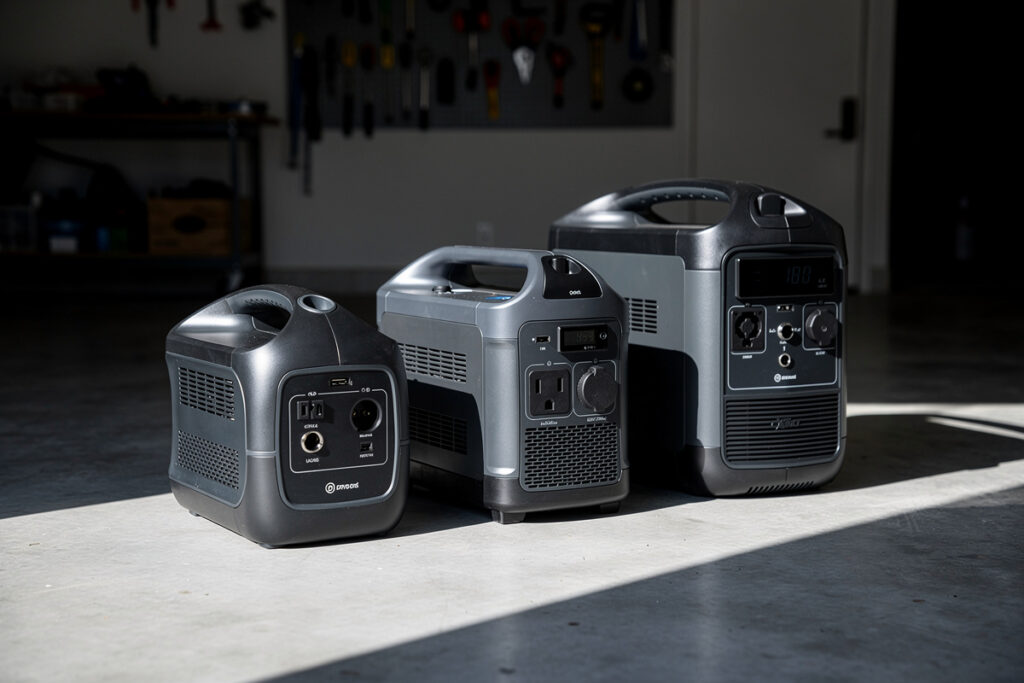
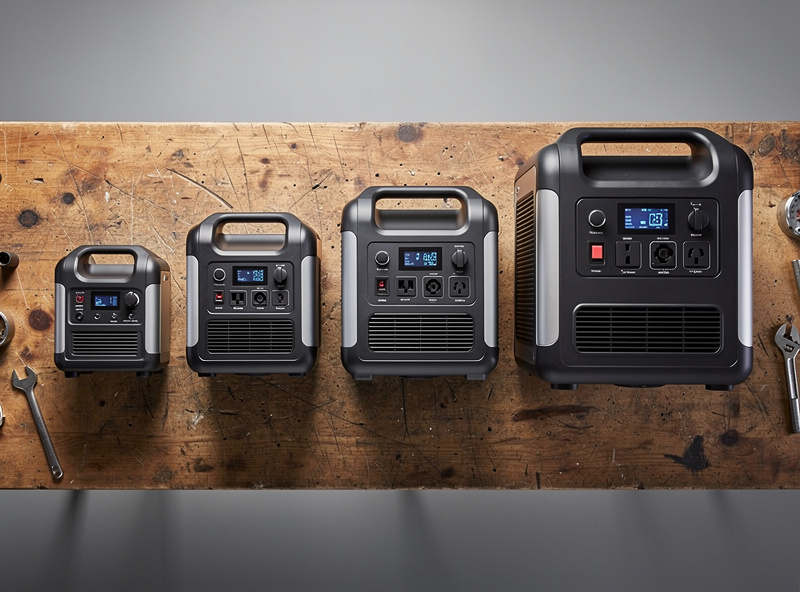
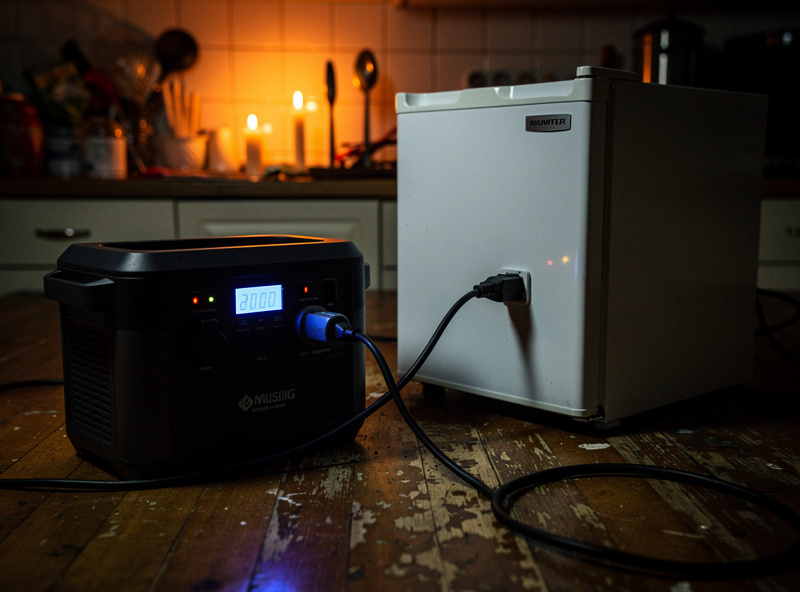
Before you compare any two models, decide which of four tiers you actually need, because a unit in the wrong tier is the wrong unit regardless of how good it is. Sub-500 Wh handhelds run phones, laptops, and a CPAP but start no motors. The 1,000–1,500 Wh tier is the camping-and-short-outage sweet spot. The 2,000–3,600 Wh tier carries a fridge through a two-day outage. Expandable 4 kWh+ systems start competing with a small home backup — and with a DIY bank.
Most buyers overshoot. They picture running everything at once during a blackout and buy a 3 kWh monster that lives in a closet and weighs 55 pounds, when a 1,500 Wh unit would have covered every real scenario. Do the arithmetic first: list your devices, multiply watts by hours, add 10–15% for inverter losses. The full method is in the portable power station guide, and it almost always points to a smaller unit than your instinct does. A solid mid-tier 1,500 Wh LiFePO4 power station covers the widest range of real-world needs.
Demand LiFePO4 Chemistry
For any unit you will cycle regularly, insist on LiFePO4 cells. The cycle-life gap is decisive: roughly 3,000–5,000 cycles to 80% capacity versus 500–1,000 for the older NMC packs. That is the difference between a unit that lasts a decade of daily use and one that is tired in three summers. LFP is also far more thermally stable, which matters for a sealed box that lives in a hot car or a closet.
The only legitimate reason to choose NMC is minimum weight, and very few buyers actually need that trade. If a unit’s spec sheet does not state its chemistry plainly, that vagueness is itself a warning. The deeper reasoning — why cycle life tracks chemistry and depth of discharge — is in the LiFePO4 vs NMC comparison and the cycle life vs depth-of-discharge chart. One firm rule travels with LFP: it must not be charged below freezing, so confirm any unit you would use in the cold has a low-temperature charge cutoff, a point I cover in the cold-weather guide.
Check the Surge Rating Before the Capacity
Surge output — the wattage a unit delivers for a fraction of a second — is the spec that decides whether your fridge, pump, or power tool starts at all. Motors inrush to four to seven times their running watts at startup, the locked-rotor amperage. A station rated 2,000 W continuous but only 2,400 W surge will trip the instant a fridge compressor kicks in alongside anything else.
This is the spec that causes the most returns, because buyers shop on capacity and never read the surge line. If you intend to run any motor load — a refrigerator, a sump pump, a circular saw — the surge rating matters more than the watt-hours. A unit with a generous surge margin, ideally double its continuous rating, is worth more to an outage kit than one with more capacity and a thin surge spec. Pair the right unit with a quality high-surge portable power station if motor loads are in your plan.
Confirm Solar Input and Recharge Options
If you want a “solar generator,” check two numbers: the maximum solar input wattage and the controller’s voltage window. A built-in MPPT controller recovers 20–30% more harvest than the cheap PWM controllers in bargain units, especially on a cold, high-voltage panel string. Feed the input more open-circuit voltage than it accepts and it shuts off — and cold weather raises panel voltage by roughly 0.27–0.30% per degree Celsius below the rating, which can over-voltage an input that looked fine in summer.
Recharge flexibility is underrated. The best units recharge three ways — wall, solar, and 12 V car — and a few accept fast AC charging that refills them in an hour or two. For outage use, AC fast-charging matters more than solar, because you top up before the storm; for off-grid use, solar input is the priority. Match a panel’s voltage to the input window before buying; the MPPT vs PWM breakdown and the solar sizing method walk the real numbers. A compatible foldable 200W solar panel turns a station into a true solar generator once the voltages line up. Getting that match right is what the portable solar panels for a power station guide covers in full — wattage, voltage windows, and MPPT compatibility.
Matching Tiers to Use Cases
This table maps each size tier to the use case it fits and the spec to scrutinize before buying.
| Use Case | Target Capacity | Key Spec to Check | Chemistry |
|---|---|---|---|
| Phones, laptops, CPAP (camping) | 500–1,000 Wh | Pure sine output, quiet operation | LiFePO4 |
| Short outage, small fridge | 1,000–1,500 Wh | Surge ≥ 2× continuous | LiFePO4 |
| Two-day fridge + lights backup | 2,000–3,600 Wh | Surge rating + AC fast charge | LiFePO4 |
| Off-grid van or cabin essentials | 4,000 Wh+ | Expansion cost per kWh | LiFePO4 |
| Ultralight backpacking | 200–500 Wh | Weight | NMC (only here) |
When the Best Choice Is Building Your Own
Once you cross roughly 3–5 kWh, the “best portable power station” is often no power station at all. Stacking expansion modules costs more per kWh than the base unit, and well past the point where a DIY LiFePO4 bank wins on cost and control. If the system will be permanent and large, building lets you pick the inverter and surge rating to your loads instead of accepting a sealed box’s choices. The 18-month cost analysis shows where that crossover lands. For everything under that threshold, a portable unit in the right tier is genuinely the better buy — convenience you do not have to commission.
Frequently Asked Questions
What size portable power station is best for most people?
A LiFePO4 unit in the 1,000 to 1,500 Wh range suits the widest range of needs, covering camping, CPAP, and short outages. Buyers consistently overshoot capacity; do the watt-hour arithmetic first and you usually need less than instinct suggests.
Is LiFePO4 the best chemistry for a power station?
Yes for any unit you cycle regularly. LiFePO4 lasts roughly 3,000 to 5,000 cycles versus 500 to 1,000 for NMC and is far more thermally stable. NMC only wins for ultralight units where minimum weight is the priority.
Why does surge rating matter more than capacity?
Motors like fridge compressors and pumps inrush to four to seven times their running watts at startup. A unit with high capacity but a thin surge rating trips the moment a motor starts, even when running watts are well within range.
What makes a power station a solar generator?
A built-in MPPT charge controller and a solar input port. Check the maximum solar input wattage and the controller’s voltage window, and match your panel string’s open-circuit voltage to that window before buying panels.
When should I build a battery bank instead of buying a power station?
Above roughly 3 to 5 kWh. Below that, a portable unit’s convenience premium is reasonable. Above it, a DIY LiFePO4 bank costs less per kWh than stacking expansion modules and lets you choose the inverter and surge rating yourself.