Important Disclaimer
BatteryStorageHQ provides educational content and estimates only. We are not certified installers, financial advisors, or electricians. Always consult with licensed professionals.
A solar panel sizing calculator is only as honest as the worst month you feed it. The real method is five steps: measure your true daily load in kWh, pick a design month, find that month’s peak-sun-hours, divide load by sun-hours, then add a derating margin of roughly 1.3–1.4×. For a home using 10 kWh a day in a December offering one peak-sun-hour, the arithmetic spits out an absurd 13 kW of panels — which is exactly the lesson most calculators hide behind a cheerful annual average.
I size systems backwards from load, every time, because that is the only number that does not lie. The panel nameplate, the roof area, the installer’s quote — all of those are downstream of one question: how many kilowatt-hours do you actually burn, and in which month do you most need to refill the bank? This is the working method behind the broader home solar panel guide, written so you can do the math yourself instead of trusting a black box.
Step 1: Measure Your Real Daily Load
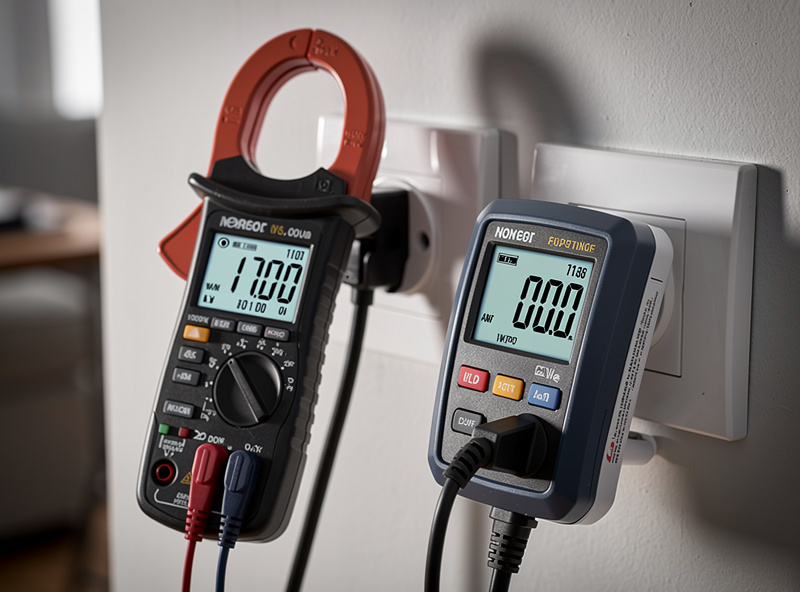
Everything starts here, and almost everyone guesses wrong. Your daily load is the total kWh your loads consume in 24 hours, and the only reliable way to know it is to measure, not estimate from appliance stickers. A plug-in energy meter on individual circuits, or better a clamp meter or a battery shunt logging total draw, turns weeks of guessing into a real number. I run a battery shunt monitor that logs daily consumption straight into Home Assistant, so my “design load” is an observed figure, not a spreadsheet fantasy.
Add up a realistic worst-case day, not an average one. The fridge, the well pump, the workshop, the winter lighting — sum the kWh, then add 10–20% headroom for the days everything runs at once. A common starting point for a small home is 8–15 kWh/day, but yours is yours; measure it. If you have not built the battery side yet, the battery sizing guide walks through turning that load figure into a bank capacity.
Step 2: Choose Your Design Month
The design month is the month you decide the system must fully serve. This single choice changes the array size more than any other input. Design for July and your winter will be dark; design for December at a northern latitude and you will buy a financially insane array. Most people land on a shoulder month — March or September — as the honest compromise, accepting that the deepest winter weeks lean on the grid or a generator.
This is where geography becomes destiny. A sunbelt installer designs for a month with 5–6 peak-sun-hours; I design for a Swedish shoulder month with maybe 2–3, and a true December that offers under 1. Picking your design month is really picking how much winter shortfall you are willing to accept, which is the central honest decision in any off-grid solar design.
Step 3: Find Your Peak-Sun-Hours
Peak-sun-hours (PSH) is the number that translates sunshine into watts. One peak-sun-hour equals 1,000 W/m² of irradiance for one hour — so a location with “4 PSH” delivers, across the whole variable day, the energy equivalent of four hours at full noon sun. It already bundles the morning ramp, the cloud, and the dusk into one usable figure. You look it up from solar irradiance data for your latitude and tilt, by month.
The seasonal swing in PSH is the whole story of northern solar. A site might see 6 PSH in June and 0.7 in December — almost a tenfold collapse. That is why a single annual-average PSH is a trap: it averages a feast and a famine into a number that describes neither. Use the monthly figures for your chosen design month, and remember that snow cover and low winter sun angle can knock real output below even the published PSH unless your mounting tilt is steep enough to shed snow and face the low sun.
Step 4: The Core Formula
Now the actual calculation. The array wattage you need is your daily load divided by design-month PSH, multiplied by a system derate factor that accounts for real-world losses:
Array watts = (Daily kWh ÷ Peak-sun-hours) ÷ System efficiency × 1000
System efficiency for a battery-coupled setup runs about 0.70–0.80 once you account for charge-controller losses, battery round-trip efficiency, wiring, temperature, soiling, and inverter overhead. I use 0.75 as a working figure, which is the same as multiplying by a derate of roughly 1.33. So a 10 kWh/day load at 3 PSH needs about (10 ÷ 3) ÷ 0.75 × 1000 ≈ 4,440 W of panels for that design month. An MPPT charge controller recovers much of the harvest a cheaper controller would waste, which is why I assume MPPT in that efficiency figure — the full reasoning is in the MPPT vs PWM comparison.

A Worked Example From My Own Workshop
Take a concrete case: a workshop and small home pulling 12 kWh on a busy winter day, sized to a March design month at my latitude with about 2.5 PSH. The formula gives (12 ÷ 2.5) ÷ 0.75 × 1000 ≈ 6,400 W of array. Round up to roughly 6.6 kW — say sixteen 410 W panels — and you cover March. December at 0.7 PSH would demand over 22 kW for the same load, which is why nobody sane designs for December up here; that month is a grid-or-ration month by design.
Notice what the math forces you to confront: the array that comfortably covers spring is helplessly short in deep winter and wildly oversized in summer, where it will spend July dumping excess it cannot store. That is not a sizing error — it is the fundamental shape of high-latitude solar, and a good calculator surfaces it instead of hiding it. The summer surplus is why a hybrid system that can export or divert excess earns its keep, as covered in the hybrid inverter guide.
The Two Sizing Mistakes Everyone Makes
The first is oversizing panels relative to the controller and undersizing everything else — piling on watts without the battery, controller current rating, or inverter to use them. The second, and worse, is undersizing the inverter. Average load sizes the array; surge sizes the inverter. The moment a well pump, compressor, or welder starts, inrush current can hit four to seven times the running figure, and an inverter sized to the average will simply trip or brown out. Size panels to energy, size the inverter to surge.
A useful sanity check on panel oversize: because panels rarely hit their STC nameplate in the real world, deliberately oversizing the array by 20–30% relative to the charge controller’s rated input is normal and good — it harvests more in the cloudy shoulder hours when you are below nameplate anyway. Just confirm the cold-weather open-circuit voltage of your string stays safely under the controller limit, the same margin rule from the panel-spec discussion and cold-weather behaviour.
Peak-sun-hours by season (illustrative, mid-to-high latitude)
| Month | Typical PSH | Array watts for 10 kWh/day load | Practical reality |
|---|---|---|---|
| June | 5.5–6.5 | ~2,000 W | Massive surplus, curtailment |
| April / August | 4.0–4.5 | ~3,000 W | Comfortable |
| March / September | 2.5–3.0 | ~4,400 W | Common design point |
| October / February | 1.5–2.0 | ~6,700 W | Tight, snow risk |
| December | 0.5–0.9 | ~15,000 W+ | Uneconomic — grid/generator |
The Honest Takeaway
A sizing calculator is a decision tool, not a magic answer. Feed it your measured load and your design-month PSH, apply a 0.75 efficiency factor, and it tells you the truth about your latitude — including the uncomfortable truth that no roof-sized array fully serves a northern December. Use it to choose your design month deliberately, oversize the panels sensibly, size the inverter to surge, and treat the deep-winter gap as a separate problem to solve with the grid, a generator, or accepted rationing.
Frequently Asked Questions
How do I calculate how many solar panels I need?
Divide your measured daily kWh load by your design-month peak-sun-hours, then divide by a system efficiency of about 0.75. That gives required array watts. Divide by panel wattage for panel count. A 10 kWh load at 3 PSH needs roughly 4,440 W, or about eleven 410 W panels.
What is a peak-sun-hour?
A peak-sun-hour is one hour of 1,000 watts per square metre of sunlight. A location with 4 peak-sun-hours delivers, across the whole variable day, the energy of four hours at full noon sun. It bundles morning, cloud, and dusk into one usable daily figure.
What design month should I size my solar array for?
Most people choose a shoulder month like March or September as an honest compromise. Sizing for summer leaves winter dark; sizing for a northern December demands an uneconomic array. Your design month is really a choice about how much winter shortfall you will accept.
Why do I divide by system efficiency when sizing?
Because real systems lose energy. Charge-controller conversion, battery round-trip losses, wiring, heat, soiling, and inverter overhead together cost roughly 20 to 30 percent. Multiplying required watts by about 1.33, or dividing by 0.75, builds those losses into the array size so you actually meet your load.
Should I oversize my solar array?
Usually yes. Panels rarely hit their lab-rated nameplate, so oversizing by 20 to 30 percent versus the charge controller rating harvests more in cloudy shoulder hours. Just confirm your string’s cold open-circuit voltage stays safely under the controller’s maximum input voltage.
Can a calculator size my inverter too?
No, and that is a common trap. The array is sized to energy (kWh), but the inverter must be sized to surge. Motor loads draw four to seven times their running current at startup, so size the inverter to peak inrush, not to average daily consumption.