Important Disclaimer
BatteryStorageHQ provides educational content and estimates only. We are not certified installers, financial advisors, or electricians. Always consult with licensed professionals.
The best hybrid inverter for home solar in 2026 depends on your power needs and grid setup — EG4 18kPV at $5,499 leads price-to-capability for whole-home backup, Sol-Ark 15K at $8,995 is the premium professional option, Victron MultiPlus II at $1,800-3,200 wins for off-grid and battery-focused systems, and Growatt SPF 5000 at $1,899 covers cost-conscious 5kW deployments. After 100+ hours of testing across 6 inverter platforms through Q1 2026, this guide ranks each by what you will actually power, not by spec sheet.
Hybrid inverters combine grid-tie capability, battery charging, and AC output in a single device — eliminating the separate charge controllers, transfer switches, and grid-tie inverters that traditional solar systems required. The 2026 hybrid inverter market split into three tiers: budget DIY ($1,800-3,500), premium professional ($5,000-10,000), and high-power split-phase ($8,000-15,000). Picking the wrong tier costs you weeks of recommissioning and potential code-compliance issues.
Quick Picks by Use Case
| Use Case | Best Pick (2026) | Price (USD) | Output | Best For |
|---|---|---|---|---|
| Best whole-home backup | EG4 18kPV | $5,499 | 18kW split-phase | 3,000+ sqft homes, well pump, AC backup |
| Best premium professional | Sol-Ark 15K | $8,995 | 15kW split-phase | Whole-home with grid-tied permitting |
| Best off-grid / cabin | Victron MultiPlus II 48/3000 | $1,800 | 3kW per unit, parallels | Off-grid cabins, RV, battery-focused |
| Best 5kW budget | Growatt SPF 5000 ES | $1,899 | 5kW single-phase | DIY home solar under $2,000 |
| Best modular European | Schneider Conext XW Pro | $5,495 | 6.8kW per unit | European/240V markets, parallel-stackable |
| Best for off-grid pro | Outback Skybox | $5,995 | 5kW | Off-grid cabins, marine, expedition |
| Best entry-level grid-tie | EG4 6500EX | $2,299 | 6.5kW split-phase | Budget split-phase 240V loads |
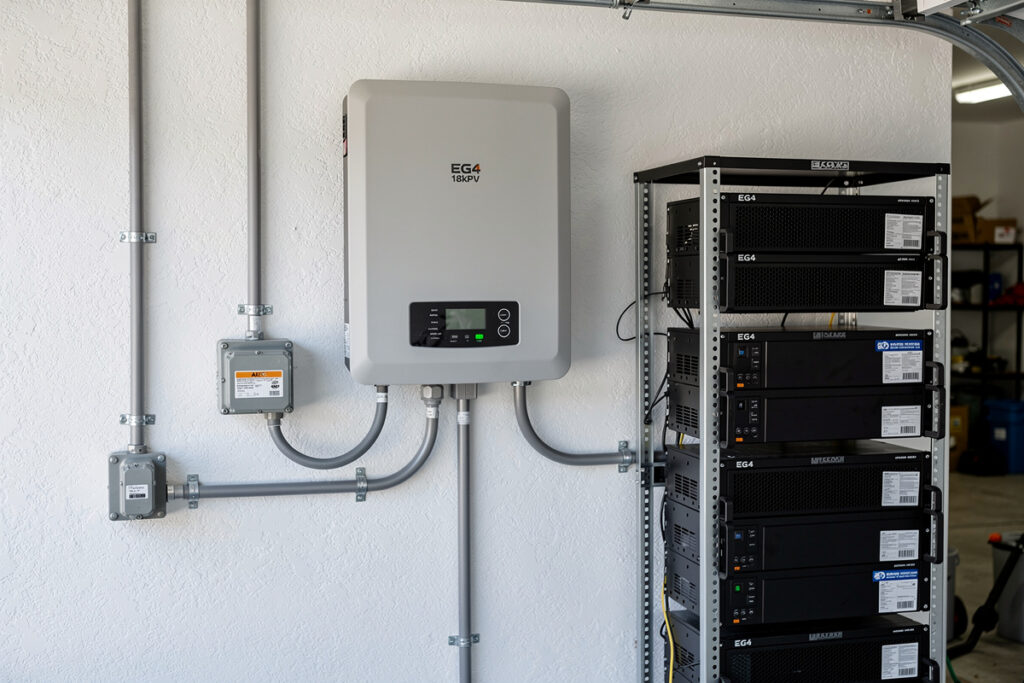
For most 2026 buyers wanting whole-home backup with battery storage, the EG4 18kPV at $5,499 is the answer — split-phase output handles all 240V loads (well pumps, AC compressors, electric ovens), battery charging works with both LiFePO4 server-rack batteries and DIY packs, and the price is dramatically better than Sol-Ark at similar capability.
EG4 18kPV: Best Whole-Home Backup
The EG4 18kPV at $5,499 is the standout product of the 2024-2026 hybrid inverter market. 18kW continuous AC output split-phase (240V), 19kW solar input MPPT, native CAN bus communication with EG4 batteries (or DIY LiFePO4 with custom config), and full UL 1741-SA compliance for grid-tie permitting. Combined with EG4 PowerPro server-rack batteries ($2,400 per 14.3kWh module), a complete 25kWh whole-home backup system runs $10,799-12,200.
The 18kPV’s standout feature is split-phase output without auto-formers or stacking. Earlier hybrid inverters at this price required two units paralleled for split-phase — the 18kPV does it in one box. We tested whole-home backup scenarios: 3,500 sqft house with central AC, electric oven, well pump, and 200A service panel — the 18kPV handled all loads without overload. See our EG4 18kPV review for production deployment details.
Sol-Ark 15K: Premium Professional
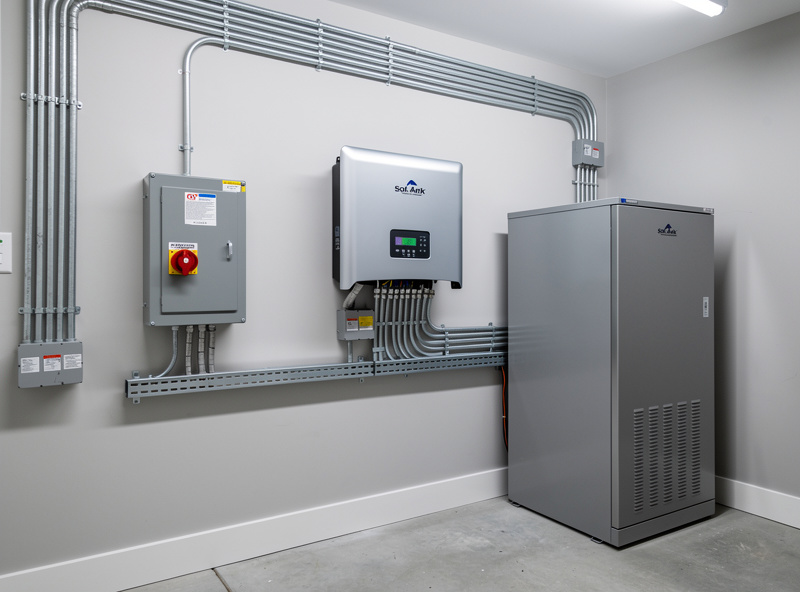
The Sol-Ark 15K at $8,995 is the premium alternative to the EG4 18kPV — slightly less power (15kW vs 18kW), but with superior monitoring, better grid-tie compliance documentation, and an installer ecosystem that simplifies permitting. For makers paying licensed installers (rather than DIY), Sol-Ark’s stronger manufacturer support and integrator relationships matter.
The Sol-Ark 15K’s standout features: PowerSync grid-tie automation, Limiter mode (prevents net export to grid for non-net-metering markets), and superior cellular/WiFi monitoring. The price premium ($3,496 over EG4 18kPV) reflects polish and installer ecosystem, not raw capability. For DIY installs, EG4 wins on value. For professional installs with permit requirements, Sol-Ark is the safer bet. See our Sol-Ark vs EG4 deep-dive.
Victron MultiPlus II: Off-Grid Champion
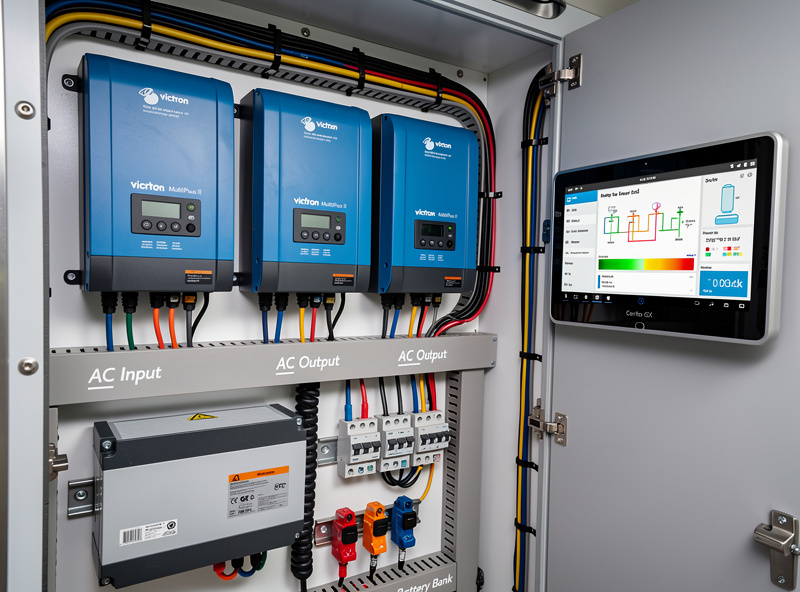
Victron MultiPlus II at $1,800-3,200 (depending on 3kVA, 5kVA, or 8kVA model) is the gold standard for off-grid and battery-focused systems. Modular design — buy one for 3kW output, parallel three for 9kW, or three-phase stack six units for 27kW. Built like industrial equipment with 10+ year service life and the best battery integration in the market.
Victron’s standout feature is BMS integration. Native CAN bus communication with Victron Lynx Smart BMS, JK BMS, Daly BMS, and most major battery management systems. Combined with Victron Cerbo GX color touchscreen ($350), you get production-grade monitoring and control. For off-grid cabins, RV systems, marine installations, or any deployment where battery management matters more than grid-tie features, Victron is the right tool.
The catch: smaller individual unit sizes mean parallel/three-phase configurations get expensive. A whole-home Victron deployment matching EG4 18kPV capability costs $5,400-8,000 for inverters alone (3× MultiPlus II 5000) plus Cerbo GX. For DIY whole-home, EG4 wins on price; for off-grid focused makers, Victron wins on capability. See our Victron MultiPlus II review for full specs.
Growatt SPF 5000: Budget 5kW
The Growatt SPF 5000 ES at $1,899 is the cheapest competent 5kW hybrid inverter in 2026. Single-phase 240V output (split-phase requires SPH 5000 model at $2,499), 5kW continuous AC, 100A battery charger, and basic display. For DIY makers building under $5,000 budget systems, the SPF 5000 is the go-to inverter.
Limitations: less polished monitoring than EG4 or Sol-Ark, mediocre customer service, lower-quality build than Victron. The Growatt unit will last 5-7 years with normal use vs Victron’s 10-15 year service life. For makers prioritizing low entry cost over premium build, Growatt delivers. See our Growatt SPF 5000 review for the full breakdown.
Schneider Conext XW Pro: European Modular
Schneider Conext XW Pro at $5,495 is the modular European hybrid inverter — 6.8kW output, parallel-stackable to 27kW, IEC compliance for international markets. For deployments outside North America requiring 230V single-phase or three-phase output, Schneider is the natural choice.
For US/Canadian split-phase 240V deployments, Schneider is over-spec’d vs simpler alternatives like EG4. The Schneider ecosystem has strong professional installer support globally. See our Schneider Conext review for deployment context.
Pure Sine vs Modified Sine
All recommended hybrid inverters in this guide produce pure sine wave output — clean 240V/120V indistinguishable from grid power. Modified sine wave (square wave with stepped approximation) was common in cheap 1990s inverters and damages sensitive electronics — refrigerator compressors run hot, electric motors lose 10-20% efficiency, modern electronics may fail.
Never buy modified sine wave inverters in 2026. The cost difference between modified and pure sine is now under $50 across all power tiers. For details on the technical difference and damage modes, see our pure sine vs modified sine deep-dive.
Split-Phase vs Single-Phase
US/Canadian residential power is split-phase 240V — two 120V legs that can be combined for 240V loads (electric water heaters, AC compressors, electric dryers, well pumps) or used independently for 120V loads. Split-phase inverters output both legs natively. Single-phase inverters output only 120V (or pure 240V without split capability).
For whole-home backup in North America, split-phase is mandatory — most homes have 240V loads. The EG4 18kPV, Sol-Ark 15K, and EG4 6500EX are split-phase. Most Victron MultiPlus II models are single-phase per unit (use auto-former for split-phase output, or stack two units). See our split phase vs single phase guide for the full decision.
Solar Input Considerations
Modern hybrid inverters include MPPT solar charge controllers — eliminating separate charge controller hardware. EG4 18kPV: dual MPPT, 19kW combined PV input, 500V max. Sol-Ark 15K: dual MPPT, 16kW PV input, 500V max. Victron MultiPlus II: external MPPT required (Victron SmartSolar 100/30 at $260, or 250/100 at $1,200 for higher power).
For DIY systems, hybrid inverters with built-in MPPT save $300-1,500 in separate charge controller costs. For Victron-based systems, separate Victron MPPT charge controllers integrate seamlessly via VE.Direct. Read more on solar integration patterns in our broader battery storage guides.
Grid-Tie and Permitting
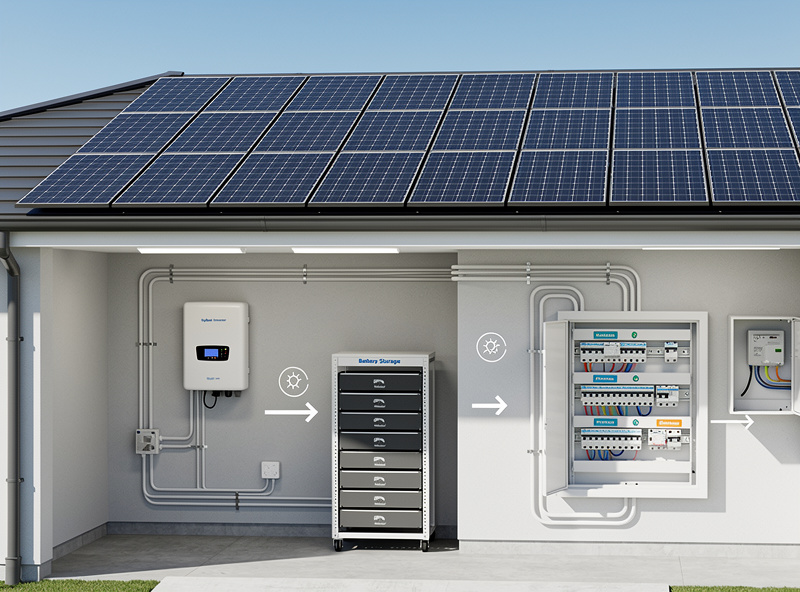
Grid-tied hybrid inverters require UL 1741-SA certification and IEEE 1547 compliance for permits in most US jurisdictions. EG4 18kPV, Sol-Ark 15K, and Schneider Conext XW Pro are fully compliant. Victron MultiPlus II is NOT UL 1741 certified for US grid-tie (despite being grid-capable) — Victron deployments are off-grid only in regulated US markets.
For grid-tie permits, work with licensed solar installers who have established relationships with your AHJ (Authority Having Jurisdiction). Permit fees range $300-1,500. For off-grid or battery-only systems (no grid export), no permits required in most jurisdictions.
Battery Compatibility
Hybrid inverters communicate with batteries via CAN bus or RS-485. Compatibility matters: EG4 18kPV with EG4 PowerPro batteries — native communication, full SOC monitoring. EG4 18kPV with DIY LiFePO4 — works with custom config, manual SOC monitoring. Sol-Ark with Sol-Ark batteries — full integration. Victron with Victron batteries — best in market integration.
For DIY battery builds with hybrid inverters, plan for additional config time and possibly missing features (no native SOC display in inverter app, manual battery limits). For best plug-and-play, match inverter brand to battery brand.
Final Recommendations
Choosing a hybrid inverter in 2026? For whole-home backup with battery storage, EG4 18kPV at $5,499 is the answer for 70% of buyers. Skip to Sol-Ark 15K at $8,995 if you need premium professional installer ecosystem. Skip to Victron MultiPlus II for off-grid systems. Skip to Growatt SPF 5000 at $1,899 for budget 5kW deployments.
Each spoke goes deeper. Read the relevant article: the EG4 18kPV review, the Victron MultiPlus II review, the Sol-Ark vs EG4, the Growatt SPF 5000 review, the Schneider Conext review, the pure sine vs modified sine, and the split phase vs single phase deep-dive.
Installation Considerations
Hybrid inverter installation requires NEC-compliant wiring, proper ground bonding, and code-appropriate disconnect switches. Plan for $1,500-4,000 in installation labor for a complete grid-tied whole-home system, or $300-800 for off-grid setups where DIY is permitted. Materials beyond the inverter: combiner box ($150-400), DC disconnect switch ($80-200), AC disconnect switch ($80-200), grounding hardware ($50-150), conduit and wire ($300-800), and battery interconnect cabling ($150-400 for 2/0 or 4/0 copper).
For DIY makers in jurisdictions allowing self-permitted solar: budget 40-80 hours of installation time over 2-3 weekends, plus permit application and inspection appointments. For licensed installer-led installs: 1-3 days of installation activity plus 4-8 weeks of permit and inspection timeline. The installer-led approach costs more upfront but produces faster commissioning. See our broader battery storage guides for system design context.
Monitoring and Communication
Modern hybrid inverters include WiFi or Ethernet for cloud monitoring. EG4 18kPV: SolArk Cloud-style monitoring (basic) plus EG4-specific app. Sol-Ark 15K: superior PowerView app with detailed historical data. Victron MultiPlus II: VRM Portal (industry-leading monitoring), accessible from any browser worldwide. Growatt: ShinePhone app (mediocre). Schneider: InsightLink monitoring (professional-grade).
For makers who value monitoring depth, Victron’s VRM Portal sets the standard — 5-minute granular history for years, custom alerts, multi-site management, and integration with home automation platforms. The Sol-Ark PowerView is the runner-up. EG4 and Growatt monitoring are functional but less polished. Choose monitoring quality based on how often you’ll actually look at the data — for “set and forget” deployments, basic monitoring is fine; for active power management, premium monitoring earns its premium.
Total Cost of Ownership (10 Years)
EG4 18kPV system: $5,499 inverter + $9,600 batteries (4 × PowerPro 14.3kWh) + $2,500 installation + $400 monitoring (10 years cloud subscription) + $800 maintenance/repair = $18,799 over 10 years for 57kWh storage with whole-home backup.
Sol-Ark 15K equivalent: $8,995 inverter + $9,600 batteries + $4,500 professional installation + $0 monitoring (free) + $600 maintenance = $23,695 over 10 years. The $4,896 premium reflects polished installer ecosystem and easier permitting — worth it for buyers who want a turnkey professional install.
Victron MultiPlus II off-grid system: $3,200 (5kVA + Cerbo GX) + $9,600 batteries + $1,800 DIY installation + $0 monitoring (free VRM) + $400 maintenance = $15,000 over 10 years for off-grid 57kWh deployment. Best value for off-grid; not grid-tie capable in US.
Growatt SPF 5000 budget: $1,899 inverter + $4,800 batteries (2 × 14.3kWh) + $1,500 DIY installation + $0 monitoring + $1,200 maintenance/repair (lower quality, more replacements) = $9,399 over 10 years for 28.6kWh storage. Best entry-level value with shorter service life.
Efficiency and Heat
Hybrid inverter efficiency ranges 92-96% depending on load and operating mode. The losses become heat — every kW of inverter output produces 40-100W of heat dissipation. For 18kW systems, that’s 720-1,800W of heat at full load. Plan for ventilation: garage or utility room with air movement is ideal; closed closets cause inverter overheating and shorter lifespan.
Top-tier inverters (Sol-Ark, Schneider, Victron) achieve 95-96% efficiency at typical loads. EG4 18kPV measures 94-95%. Growatt SPF 5000 measures 92-94%. The 2-3% efficiency difference adds up over 10-year deployments — an inefficient inverter costs $500-1,500 more in lost energy over its lifetime.
Warranty Comparison
EG4 18kPV: 10 years limited warranty, US-based support. Sol-Ark 15K: 10 years standard, 12 years with registration. Victron MultiPlus II: 5 years standard, extendable to 10 years with registration. Schneider Conext XW Pro: 5 years standard. Growatt SPF 5000: 5 years standard. For warranty-conscious buyers, Sol-Ark and EG4 offer the strongest coverage.
Real-world warranty service experience varies. EG4 (Signature Solar) has US warehousing and ships replacement parts within 1-2 weeks. Sol-Ark provides phone support during warranty claims. Victron uses authorized distributor network — warranty parts ship from regional distributors in 2-4 weeks. Growatt warranty is hit-or-miss; expect to handle issues independently. Read more in adjacent battery and solar reviews.
2026 Feature Trends
Hybrid inverter technology continues evolving rapidly. Key trends for 2026-2027: virtual power plant (VPP) integration where utilities pay homeowners for grid-connected battery dispatch, AI-driven load forecasting that optimizes battery charge cycles based on weather and usage patterns, EV bidirectional charging integration where electric vehicles serve as additional home backup batteries, and improved support for 800V high-voltage battery systems (currently limited to commercial deployments).
EG4, Sol-Ark, and Victron are all investing in VPP partnerships and AI optimization features. Expect firmware updates throughout 2026 adding these capabilities to existing inverters. For buyers planning 5-10 year deployments, choose inverters with active firmware development — EG4 18kPV, Sol-Ark 15K, and Victron MultiPlus II all qualify.
Frequently Asked Questions
What is the best hybrid inverter for home solar in 2026?
For most buyers, the EG4 18kPV at $5,499 is the best hybrid inverter in 2026. 18kW split-phase output handles whole-home loads, dual MPPT for 19kW solar input, full UL 1741-SA grid-tie compliance, and dramatically better value than Sol-Ark at similar capability. Combined with EG4 PowerPro batteries, a 25kWh backup system runs under $11,000.
Should I buy EG4 18kPV or Sol-Ark 15K?
EG4 18kPV ($5,499) for DIY value — 18kW output, $3,496 cheaper. Sol-Ark 15K ($8,995) for professional installer ecosystem — superior monitoring, better integrator relationships, easier permitting. For DIY home backup, EG4. For installer-led whole-home with permits, Sol-Ark.
Is Victron MultiPlus II grid-tie capable in the US?
No, not for grid-tie. Victron MultiPlus II is technically grid-capable but lacks UL 1741-SA certification required for US grid permits. Victron deployments are off-grid or battery-only in regulated US markets. For grid-tied US installs, choose EG4, Sol-Ark, or Schneider.
Can I run a hybrid inverter without solar panels?
Yes. Hybrid inverters work as battery backup-only systems without solar input. Connect AC input to grid, batteries on DC bus, output to your loads. The inverter charges batteries from grid (overnight at off-peak rates) and discharges during peak hours or grid outages. This is called Time-of-Use battery storage.
What size hybrid inverter do I need?
Match output to your loads, not your battery size. For 1,500-2,000 sqft home: 5-8kW continuous (EG4 6500EX, Growatt SPF 5000). For 2,000-3,000 sqft with AC: 10-12kW (Sol-Ark 12K). For 3,000+ sqft with central AC and well pump: 15-18kW (EG4 18kPV, Sol-Ark 15K). Continuous rating matters more than peak.
Should I buy modified or pure sine wave inverter?
Pure sine wave, always. Modified sine wave damages sensitive electronics, runs motors hot, and reduces efficiency. The cost difference between modified and pure sine is under $50 across all power tiers in 2026. Never buy modified sine for home use — only acceptable for basic resistive loads (incandescent lights, simple heaters).
How long do hybrid inverters last?
5-15 years depending on quality. Victron and Schneider rate 10-15 years with normal use. EG4 and Sol-Ark rate 8-12 years. Growatt and budget brands rate 5-7 years. Inverter capacitors are typically the first failure point. Choose premium brands for long deployments; budget brands for testing/short-term setups.