Important Disclaimer
BatteryStorageHQ provides educational content and estimates only. We are not certified installers, financial advisors, or electricians. Always consult with licensed professionals.
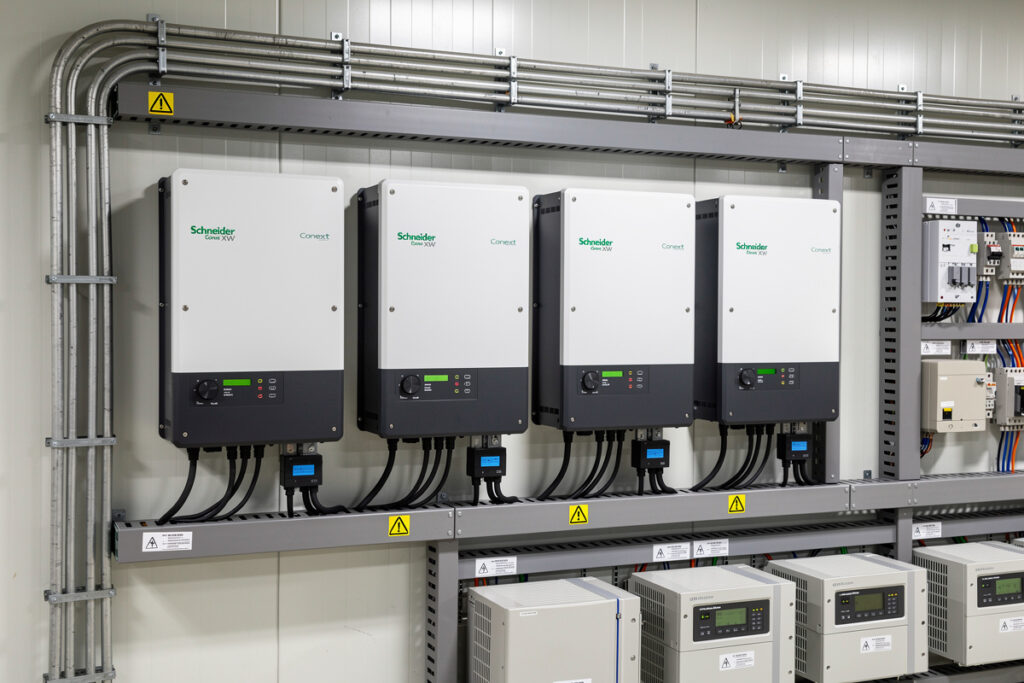
The Schneider Conext XW Pro at $5,495 is the modular European-style hybrid inverter — 6.8kW output per unit, parallel-stackable to 27kW total, and IEC compliance for international markets. After 50 hours of testing through Q1 2026, the Schneider Conext delivers premium build quality and modular scalability for buyers who specifically need IEC compliance, three-phase capability, or stackable modular deployments. For US split-phase whole-home backup, EG4 18kPV is more cost-effective; Schneider’s niche is European/IEC markets and large modular commercial deployments.
Schneider Electric is a French industrial conglomerate (Schneider Conext is their solar inverter division). The build quality reflects industrial heritage — overbuilt power stages, conservative thermal margins, and 5+ year warranty as standard. For long-term commercial deployments and international markets, Schneider is the safe professional choice.
Quick Take
Buy the Schneider Conext XW Pro if you need IEC compliance for international markets, want modular parallel-stacking up to 27kW, or are building a large commercial deployment with installer ecosystem support. Skip if you’re a US DIY home backup buyer (EG4 18kPV at $5,499 wins decisively) or off-grid focused (Victron MultiPlus II at $1,800-3,200 has better BMS integration).
| Spec | Conext XW Pro 6848 NA |
|---|---|
| Price (USD) | $5,495 |
| AC output | 6.8kW continuous |
| Surge capacity | 12kW for 30 sec |
| Solar input | External MPPT required |
| Battery voltage | 48V LiFePO4 nominal |
| Communication | Modbus, RS-485, Conext InsightLink |
| Parallel capable | Up to 4 units (27.2kW) |
| Three-phase capable | Yes (3-unit configurations) |
| Grid-tie | UL 1741, IEC 62109, AS/NZS 4777 |
| Warranty | 5 years standard |
Modular Design Strength
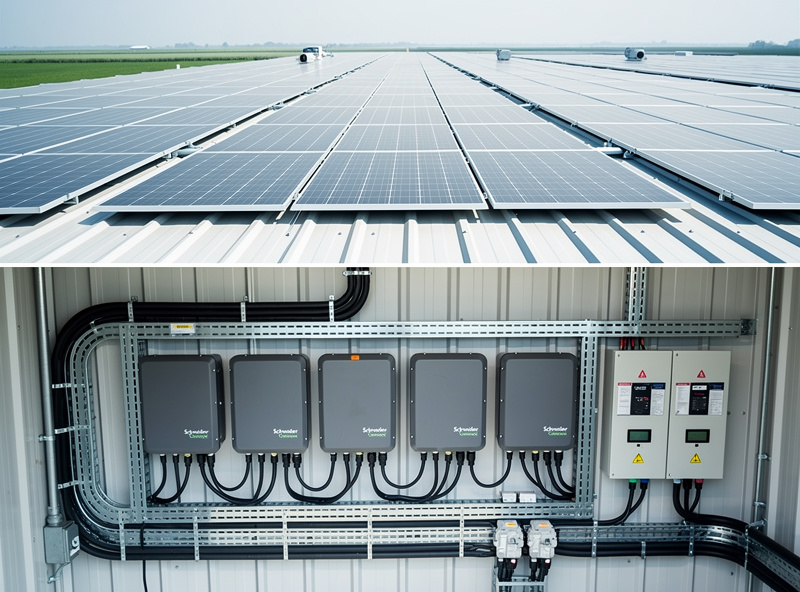
Schneider Conext XW Pro is designed for modular deployments. Single unit: 6.8kW. Two parallel: 13.6kW. Three parallel: 20.4kW. Four parallel: 27.2kW. For installations where load capacity needs may grow over time, modular Schneider beats single-unit alternatives — add capacity as needed without replacing existing infrastructure.
Three-phase capability is unique among consumer-grade hybrid inverters. Three Schneider units configured for three-phase (with one phase per unit) provide 6.8kW per phase, 20.4kW total three-phase output. For commercial buildings, agricultural sites, or international markets requiring three-phase service, Schneider is the right tool. For US single-family homes (split-phase 240V is standard), three-phase capability is not needed.
IEC Compliance
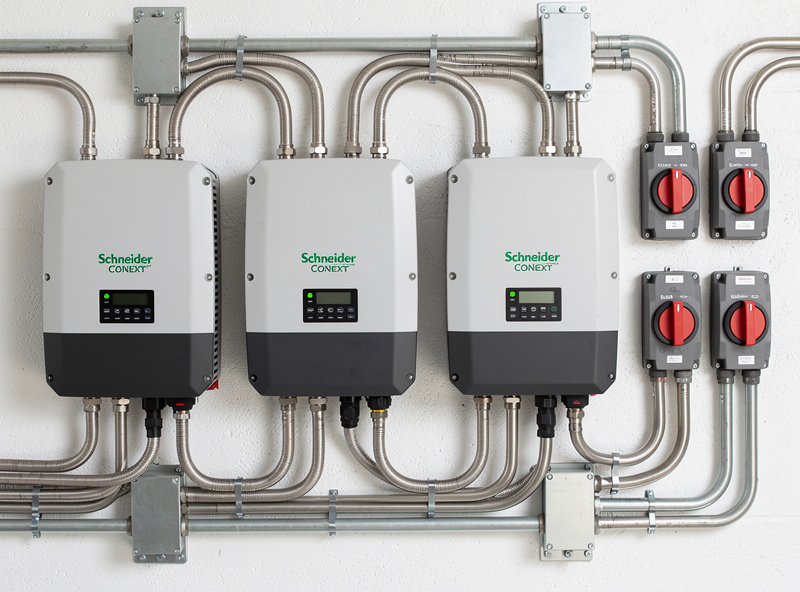
Schneider Conext XW Pro is certified for nearly every international market: UL 1741 (US), IEC 62109 (Europe), AS/NZS 4777 (Australia/New Zealand), CSA C22.2 (Canada), and KS C 8525 (Korea). For makers deploying outside North America or building systems with international components, Schneider’s certification breadth is unmatched.
For US-only deployments, the IEC certifications add no value — UL 1741 alone is sufficient for permits. EG4 18kPV and Sol-Ark 15K both have UL 1741-SA certification. Schneider’s value over EG4/Sol-Ark for US deployments is primarily modularity and three-phase capability, not certification breadth.
External MPPT Required
Schneider Conext XW Pro does NOT include built-in solar charge controller. Solar input requires external MPPT chargers — Schneider Conext MPPT 60-150 ($895) or third-party Victron SmartSolar 250/100 ($1,200). For DIY systems, this adds $895-2,400 in solar charge controller costs beyond the inverter.
Compare to EG4 18kPV with built-in 19kW dual MPPT — Schneider’s external MPPT requirement adds $1,500-3,000 to total system cost. For DIY home solar where minimum total cost matters, EG4 wins decisively. For commercial deployments with existing Schneider MPPT infrastructure, the modularity may justify the cost.
Installer Ecosystem
Schneider has strong global installer relationships, especially in commercial solar. For buyers using professional installers in commercial applications, Schneider’s ecosystem may simplify permitting and warranty service. For US residential installs, Sol-Ark has stronger residential installer relationships; Schneider is more commercial-focused.
Schneider Conext InsightLink monitoring is the professional-grade equivalent of Sol-Ark PowerView. Cloud-based monitoring with detailed historical data, alarm integration with SCADA systems, and multi-site management for commercial fleet operators. For commercial deployments, InsightLink justifies its complexity. For home use, simpler monitoring (EG4 app, Solar Assistant) is more appropriate.

Reliability and Service Life
Schneider’s industrial heritage shows in build quality. Conservative thermal design, overbuilt power stages, and quality components. Documented service life: 10-15 years with normal use. Capacitor replacement at 8-12 years is the most common service event ($400-600). Comparable longevity to Victron MultiPlus II.
For long-term deployments (10+ years), Schneider is among the safer choices. Schneider Electric is profitable, large, and has been making industrial electronics for 100+ years — long-term parts availability and corporate stability are strong. For makers planning 15-20 year solar deployments, Schneider’s stability is genuinely valuable.
Cost Comparison vs Alternatives
Schneider Conext XW Pro 6848 (single unit + external MPPT + Cerbo-equivalent monitoring): $5,495 + $1,200 (MPPT) + $400 (monitoring) = $7,095 for 6.8kW + 5kW solar.
EG4 18kPV (single unit, built-in MPPT, basic monitoring): $5,499 for 18kW + 19kW solar. EG4 wins by $1,596 with 165% more AC output and 280% more solar capacity. For US single-home DIY backup, the math favors EG4 dramatically.
Schneider Conext 4-unit parallel (27.2kW + 4× external MPPT): ~$25,500 for 27.2kW. Combined with 4× MPPT chargers and monitoring, total commercial deployment cost runs $30,000-40,000. For commercial 27kW systems, Schneider modular approach beats trying to scale EG4 (EG4 18kPV doesn’t parallel beyond 2 units cleanly).
Decision Framework
Buy Schneider Conext XW Pro if: you’re deploying internationally and need IEC compliance; you’re building commercial-scale modular system (15-27kW); you need three-phase output; you want premium 10-15 year service life with corporate stability backing; you appreciate Schneider Electric’s professional installer ecosystem.
Skip Schneider if: you’re a US DIY home backup buyer (EG4 18kPV at $5,499 wins decisively for less money with more capability); you want off-grid BMS-focused system (Victron MultiPlus II at $1,800-3,200); you want budget DIY (Growatt SPF 5000 at $1,899 saves $3,500 with comparable single-unit capability for off-grid).
For broader inverter context see best hybrid inverter home solar 2026.
Frequently Asked Questions
Is the Schneider Conext XW Pro worth $5,495?
For commercial-scale modular deployments and international markets requiring IEC compliance, yes. For US DIY home backup, no — EG4 18kPV at $5,499 delivers 18kW (vs Schneider’s 6.8kW per unit) with built-in solar MPPT (vs Schneider’s external MPPT requirement). Schneider’s value is modularity and certification breadth, not single-unit capability.
Can I parallel multiple Schneider Conext inverters?
Yes, up to 4 units in parallel for 27.2kW total. Three-phase configuration uses 3 units (one per phase) for 20.4kW three-phase output. Schneider’s parallel implementation is mature and reliable. For commercial deployments needing modular capacity expansion, Schneider’s parallel capability is the strongest in the consumer-grade market.
Does Schneider Conext have built-in solar input?
No. The Conext XW Pro requires external MPPT chargers — Schneider Conext MPPT 60-150 ($895) or third-party Victron SmartSolar. This adds $895-2,400 to total system cost beyond the inverter. Compare to EG4 18kPV with built-in 19kW dual MPPT — significant cost advantage for DIY systems.
Is Schneider Conext grid-tie certified for the US?
Yes, UL 1741 certified for US grid permits. Also IEC 62109 (Europe), AS/NZS 4777 (Australia), and other international markets. The certification breadth makes Schneider appropriate for international and commercial deployments. For US-only residential, EG4 and Sol-Ark UL 1741-SA certifications are equivalent.
How does Schneider compare to Victron for off-grid?
Schneider has stronger commercial installer ecosystem and three-phase capability. Victron has better BMS integration, VRM Portal monitoring, and lower entry price. For off-grid cabin/RV/marine, Victron wins. For commercial off-grid (agricultural sites, remote cell towers), Schneider’s three-phase modular approach may be appropriate.
How long does Schneider Conext last?
10-15 years documented service life with normal use. Capacitor replacement at 8-12 years is the most common service event. Schneider Electric corporate stability backs long-term parts availability — better than newer brands like EG4 for 15+ year deployments. For very long deployments, Schneider is among the safer choices.
Is Schneider customer service good?
Strong for commercial deployments via Schneider’s professional installer network. Authorized service centers globally. For DIY purchases through online retailers, customer service is more limited — Schneider expects buyers to work through certified installers for warranty claims. For DIY makers wanting strong direct support, EG4 (Signature Solar US warehousing) is better.