Important Disclaimer
BatteryStorageHQ provides educational content and estimates only. We are not certified installers, financial advisors, or electricians. Always consult with licensed professionals.
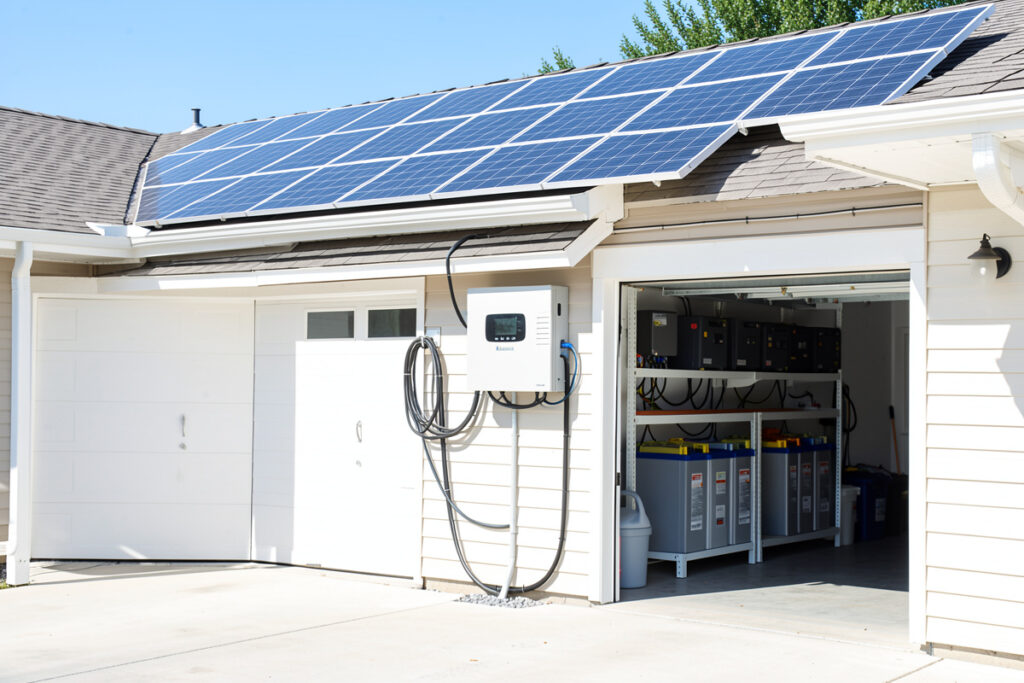
The difference between AC coupling and DC coupling solar comes down to where the panels meet the battery: DC-coupled solar feeds the battery through the hybrid inverter’s own MPPT, while AC-coupled solar comes from a separate grid-tie inverter on the AC side and has to be converted twice to charge. For a new DIY build, DC coupling is simpler and gives back a few percent of round-trip efficiency; AC coupling earns its place mainly when you are bolting a battery onto an array that already has its own string inverter. On my bench the double conversion in an AC-coupled path costs roughly 5 to 8 percent more than DC coupling for the same stored kilowatt-hour.
I run a DC-coupled array at home because I built the system around the battery from the start, and that is the right default for most people reading this. But the choice is not religious — there are real cases where AC coupling is the honest answer, and getting it wrong means either rewiring or living with a system that fights itself during an outage. This is one of the six layers in the larger hybrid inverter setup guide, and it is the one that most changes your wiring diagram.
What DC Coupling Actually Means
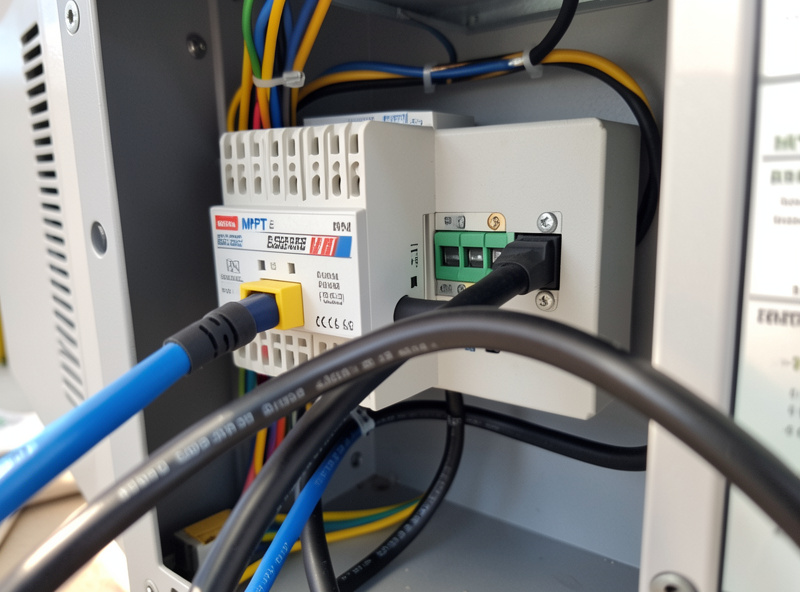
In a DC-coupled system, the solar panels connect to a charge controller — almost always an MPPT — that sits inside the hybrid inverter. The panel’s DC power is tracked to its maximum power point and pushed straight into the battery as DC, with a single conversion only when you later draw AC for the house. That single-conversion path is why DC coupling is more efficient for charging: the energy that goes into the battery never has to be turned into AC and back.
This is the natural topology for a ground-up build. You size the string to the MPPT’s voltage window, mind the cold-weather Voc as covered in the Voc rise guide, and the panels charge the bank directly. The internal MPPT is the same component I compare in MPPT vs PWM controllers — and on a DC-coupled hybrid it is already in the box, one less thing to wire and one less point of failure.
What AC Coupling Actually Means
In an AC-coupled system, the panels feed a standard grid-tie string inverter that outputs AC, exactly as a normal solar install does. That AC is then either consumed by the house, exported to the grid, or — to charge the battery — rectified back to DC by the hybrid inverter’s charger. So solar energy destined for the battery is converted DC to AC by the string inverter, then AC to DC by the hybrid: two conversions, each with its own small loss.
The reason AC coupling exists is retrofits. If you already own a working grid-tie array with its own inverter, AC coupling lets you add a battery without tearing out and re-stringing the panels. You keep the existing solar, add the hybrid on the AC side, and gain storage and backup. The efficiency penalty is the price of not rebuilding the array.
The Efficiency and Behavior Comparison
The headline number is round-trip efficiency for stored solar, but the more important difference shows up during a grid outage. A DC-coupled array charges the battery normally in a blackout because the MPPT does not care whether the grid is present. An AC-coupled array is trickier: the grid-tie string inverter needs a stable AC reference to run, and in an outage the only thing providing that reference is the hybrid itself. The hybrid has to use frequency-shift power control — nudging the output frequency upward — to throttle the string inverter down when the battery is full, or it will overcharge.
| Factor | DC coupling | AC coupling |
|---|---|---|
| Charging path | Panels → MPPT → battery (1 conversion) | Panels → GT inverter → hybrid charger (2) |
| Round-trip for stored solar | Higher (fewer losses) | ~5–8% lower on my bench |
| Best for | New ground-up builds | Retrofit onto existing grid-tie array |
| Outage charging | Native, simple | Needs frequency-shift control |
| Extra hardware | MPPT built into hybrid | Separate grid-tie inverter |
| Daytime self-use over inverter rating | Capped by hybrid AC output | Can exceed it (solar feeds loads directly) |
That last row is the one genuine efficiency advantage AC coupling holds: when the sun is strong and loads are high, AC-coupled solar can feed the house directly without passing through the hybrid’s inverter stage at all, so on a sunny day with big daytime loads it can actually move more power than a DC-coupled system limited by the hybrid’s AC output rating. For most homes that is a corner case; for a workshop that runs hard in daylight it can matter.
Which One to Choose
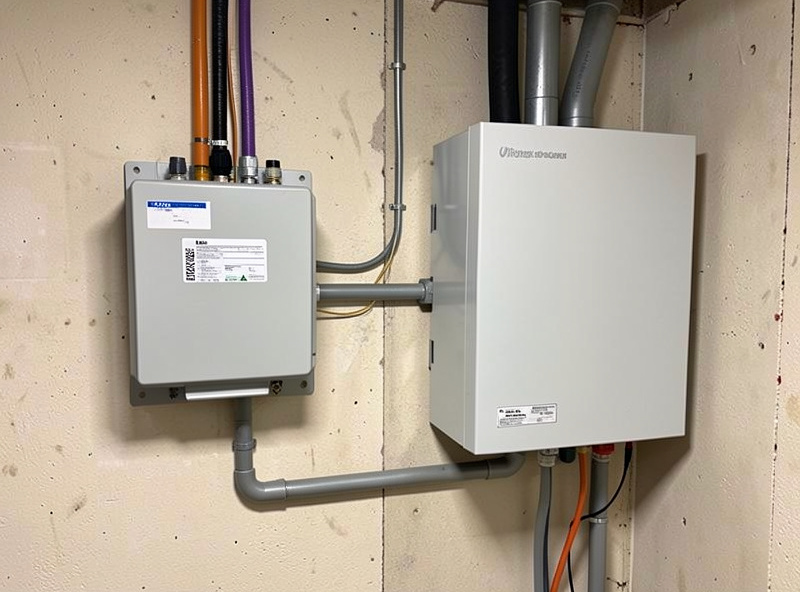
The decision tree is short. Building from scratch with no existing solar? Go DC-coupled — it is simpler, more efficient for charging, and behaves cleanly in an outage. Adding a battery to a house that already has a working grid-tie array? AC-couple it and keep the panels you have; the conversion loss is cheaper than re-stringing. Have a very large daytime load and a big array? A hybrid (DC) plus some AC-coupled capacity is a legitimate combination, and several all-in-one units like the ones I cover in the hybrid inverter roundup support both at once.
One caution for AC coupling: the ratio of AC-coupled PV to battery-inverter capacity matters, because in an island (off-grid backup) condition the hybrid must be able to absorb or shed all the solar the string inverter can produce. Oversize the AC-coupled array relative to the hybrid and you can lose frequency-shift control authority. Manufacturers publish a maximum AC-coupled ratio for exactly this reason — respect it. If you are wiring the split-phase output as part of this, read the split-phase setup guide next, and if you plan to push surplus back, the grid-sell and zero-export settings are the layer after that.
What This Looks Like On My System
My own array is DC-coupled into the hybrid’s MPPT, and I made that choice deliberately because I started from bare cells and a blank wall rather than an existing solar install. The win I notice most is not the few percent of efficiency — it is the simplicity during the dark months. When a winter storm drops the grid, the panels keep trickling into the bank through the MPPT with no special handling, no frequency-shift dance, nothing to misconfigure. In my Home Assistant logs the charge curve looks identical whether the grid is up or down, which is exactly the predictability you want from a backup system.
The one time I would have gone AC-coupled is a hypothetical I think through for readers often: a house with a five-year-old grid-tie array and a working string inverter, where the owner now wants backup. Ripping out functioning panels and re-stringing them to a hybrid’s MPPT window would be wasteful when AC coupling adds the battery cleanly on the AC side. The 5-to-8 percent conversion penalty is real, but it is dwarfed by the cost and labour of rebuilding a perfectly good array. That is the honest tradeoff: DC coupling for new builds, AC coupling to respect hardware that already works. Anyone telling you one is universally correct has not wired both.
How It Fits the Rest of the Build
Coupling choice ripples through the whole system. It sets how the panels tie in, which is part of the broader solar and battery integration picture. It affects how you size, because an AC-coupled retrofit inherits whatever string the original installer chose, while a DC build lets you size the string to your hybrid’s MPPT and your real winter, per the winter-gap math. And it changes your commissioning steps — an AC-coupled system has a grid-tie inverter to bring up and frequency-shift to verify, which I flag in the commissioning guide. Whatever you choose, the battery underneath still has to be a properly balanced bank, the job I walk in the DIY LiFePO4 build.
Frequently Asked Questions
Is AC coupling or DC coupling more efficient?
DC coupling is more efficient for charging the battery because solar passes through one conversion instead of two. On my bench the AC-coupled path costs roughly 5 to 8 percent more round-trip for the same stored kilowatt-hour, since solar is converted DC to AC then back to DC.
When should I choose AC coupling?
Choose AC coupling when retrofitting a battery onto a house that already has a working grid-tie solar array. It lets you keep the existing panels and string inverter and add storage on the AC side, avoiding the cost of re-stringing the whole array.
Can an AC-coupled system charge the battery during a blackout?
Yes, but it relies on the hybrid inverter using frequency-shift power control to throttle the grid-tie inverter as the battery fills. DC-coupled systems charge natively in an outage because the MPPT does not need the grid present.
Can I use both AC and DC coupling on one system?
Yes. Many all-in-one hybrid inverters support a DC-coupled array on their MPPT plus an AC-coupled array on the AC input at the same time. This is common when adding capacity to an existing grid-tie install or serving very large daytime loads.
Why does the AC-coupled PV to battery ratio matter?
In an off-grid backup condition the hybrid must absorb or shed all the solar the string inverter produces using frequency-shift. Oversizing the AC-coupled array relative to the hybrid can exceed that control authority, so manufacturers publish a maximum ratio to respect.