Important Disclaimer
BatteryStorageHQ provides educational content and estimates only. We are not certified installers, financial advisors, or electricians. Always consult with licensed professionals.
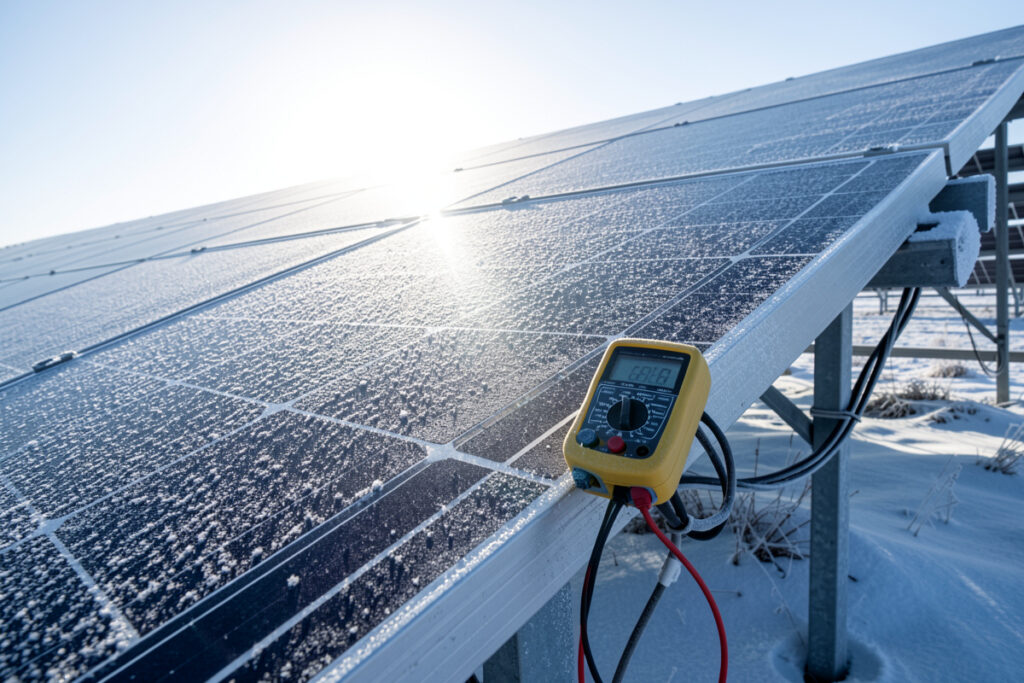
Here is the gotcha that catches more careful northern DIY builders than any other cold-weather issue: a solar panel produces more voltage when it is cold, not less. Most people instinctively assume cold means weaker — and for power output, in winter, that is broadly true. But for open-circuit voltage the relationship runs the other way. On a clear, still, sub-zero morning your string voltage can climb well above the panel’s rated figure — often more than 10% higher — and if you sized your string and your charge controller against the nameplate number, that cold-morning spike can over-volt the controller. At best it shuts down and you lose harvest on the one sunny winter day you finally got. At worst it damages the controller. This is not trivia; it is a wiring-margin safety issue, and it is design discipline you do once and then never worry about.
This is the over-voltage half of cold-weather wiring, the electrical counterpart to the production and storage decisions in the winter solar storage guide. It pairs naturally with the broader picture of how cold changes a solar-storage system. Let me explain why cold panels do this and exactly how to design around it.
Why a cold panel makes more voltage
Solar cells have a negative temperature coefficient for voltage. As the cell temperature drops below the 25°C reference at which the spec sheet’s open-circuit voltage (Voc) is measured, the cell’s voltage rises; as it heats above 25°C, voltage falls. Power output in real winter still drops because the light is so much weaker — fewer photons, low sun, short days — but the voltage the string can present at open circuit goes up with the cold regardless of how dim the light is.
The temperature coefficient is a published spec, typically given as a percentage per degree Celsius (a common range is around −0.27 to −0.30 %/°C for the Voc of a crystalline silicon panel, but use your panel’s actual datasheet figure). The key realisation is that the relevant temperature is not the air temperature in your forecast — it is the temperature of the cell itself, which on a clear, still, sub-zero morning before the sun has loaded the panel can be colder than the air. You design against the coldest your cells will realistically get, not a mild average.
The over-voltage trap, concretely
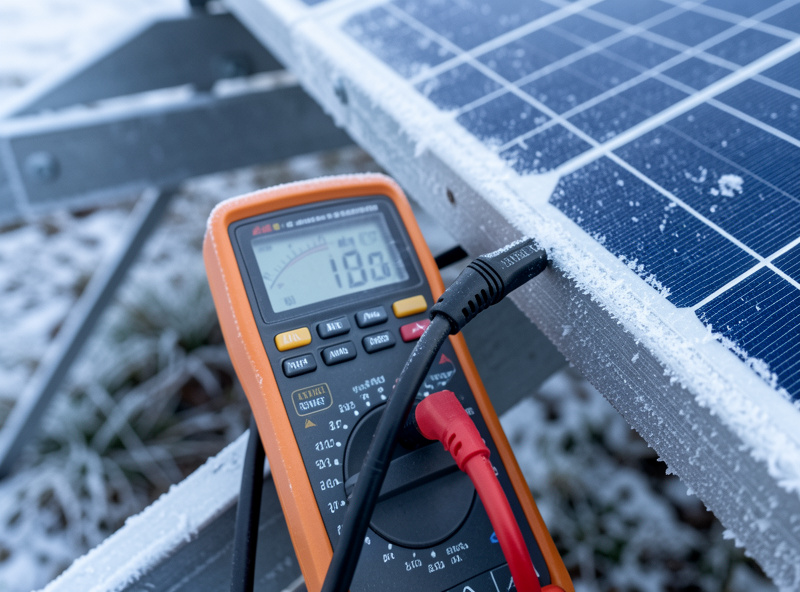
Picture a string sized so that, at the nameplate 25°C Voc, it sits comfortably under your charge controller’s maximum input voltage. Looks fine on paper. Now drop the cell temperature to a genuine winter low. Each panel’s Voc rises by the temperature coefficient times the number of degrees below 25°C, the whole string’s voltage scales up with it, and suddenly the string Voc has climbed past the controller’s rated maximum input. The controller sees a voltage it was never rated for.
The reason this catches good builders is that everything works perfectly all summer and autumn. The fault only appears on the coldest clear mornings — exactly when you most wanted the harvest — and it can look like a random controller glitch rather than a design error. It is not random. It is the temperature coefficient doing exactly what physics says it will, against a string that was sized to the wrong temperature.
How to size the string correctly
The fix is a calculation you do once at design time, and it is straightforward.
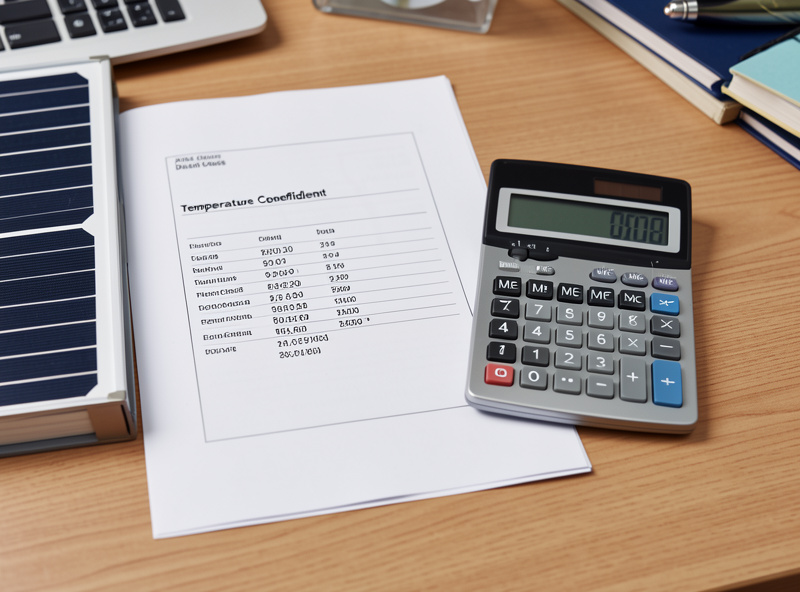
- Find your panel’s Voc temperature coefficient from its datasheet (percent per °C, a negative number).
- Pick your coldest realistic cell temperature — the record-cold or near-record-cold low for your site, not an average winter day. Conservative wins here.
- Compute the temperature rise in Voc: for every degree below 25°C, Voc rises by the coefficient. Multiply the coefficient by the number of degrees below 25°C to get the percentage increase, and apply it to each panel’s rated Voc.
- Multiply by panels in series to get the worst-case cold string Voc.
- Compare to the controller’s maximum input voltage and keep a margin. The cold worst-case string Voc must stay comfortably below the controller’s max — I keep margin rather than sneaking right up to the rated limit, because datasheets, record colds, and real installs all have slop.
If the worst-case cold Voc exceeds your controller’s input rating, you have three honest options: fewer panels in series per string (shorter strings), a charge controller with a higher maximum input voltage, or rewiring some series into parallel. The one option that is not on the table is hoping it never gets that cold — at high latitude it will.
Why MPPT controllers care more than you might think
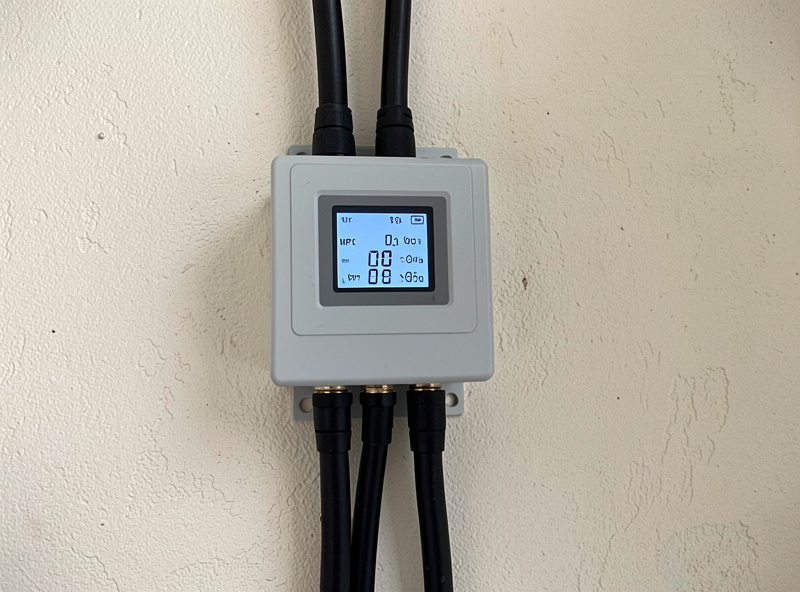
This is also part of why a proper MPPT controller earns its keep on a cold, high-Voc string where a cheap PWM controller does not. An MPPT controller can take a higher-voltage string and down-convert it efficiently to the battery voltage, harvesting the extra winter voltage as usable charge — but only within its input rating, which is exactly why that rating must respect the cold worst case. A PWM controller cannot do that conversion and effectively throws away the voltage headroom a cold string offers. On my own setup I keep a cheap PWM controller around purely to demonstrate to people why it loses on a cold, high-Voc string. For any serious northern build, MPPT — sized against cold Voc — is the only sensible choice.
The wiring-margin mindset
The deeper lesson here is that cold weather is a design input on the electrical side, not just the production side. You size conductors and protection against worst-case current; you size string length and controller against worst-case voltage, and at high latitude worst-case voltage happens in the cold. It is the same conservative discipline that says fuse for the fault current, not the normal current — you design for the worst realistic condition the system will see, because that is the condition that breaks things.
Do this once, keep your margin, and cold Voc stops being a lurking failure and becomes a non-event. The string that was sized against the cold simply keeps feeding the controller on the coldest, clearest, most productive winter mornings — which, after all the gloom of a northern December, are exactly the mornings you do not want to lose.
The gear that keeps cold strings in spec
The real fix is calculation, not a product — but two things make it reliable. A charge controller with genuine voltage headroom over your cold worst-case is the heart of it, and a multimeter rated to read your full string voltage lets you verify the cold-morning Voc against your math rather than trusting the spreadsheet alone. I check mine on the first hard frost.
As an Amazon Associate I earn from qualifying purchases. These are tools I would genuinely reach for; they cost you nothing extra.
- MPPT charge controller — choose one whose maximum input voltage clears your cold worst-case string Voc with margin.
- DC multimeter (high-voltage range) — measure actual open-circuit string voltage on a cold morning to confirm your design.
Frequently asked questions
Why does solar panel voltage go up in cold weather?
Solar cells have a negative voltage temperature coefficient: as the cell drops below the 25°C reference, its open-circuit voltage rises. A common figure is around −0.27 to −0.30 percent per degree Celsius, but use your panel’s datasheet. Power output still falls in winter because the light is weak, but the open-circuit voltage a string can present goes up with the cold.
Can cold weather damage my charge controller?
It can if the string was sized against the panel’s nameplate 25°C voltage. On a cold morning the string Voc can climb more than 10 percent above rated, and if that exceeds the controller’s maximum input it will shut down or, in the worst case, be damaged. Sizing the string against the cold worst-case voltage prevents it.
How do I calculate cold-weather string voltage?
Take the panel’s Voc temperature coefficient and your coldest realistic cell temperature, compute the percentage Voc rise for every degree below 25°C, apply it to each panel’s rated Voc, multiply by the panels in series, and compare the result to your controller’s maximum input — keeping a margin. Use the coldest realistic temperature, not an average.
What if my cold string voltage is too high for my controller?
You have three honest fixes: put fewer panels in series per string, choose a controller with a higher maximum input voltage, or move some series wiring to parallel. The one thing you cannot do is hope it never gets that cold — at high latitude it will, and the over-voltage appears on exactly the clear cold mornings you most want the harvest.
Does this affect MPPT and PWM controllers differently?
Yes. An MPPT controller can down-convert a higher-voltage cold string into usable charge, but only within its input rating — so that rating must respect the cold worst case. A PWM controller cannot do that conversion and wastes the extra cold-weather voltage headroom. For a serious northern build, an MPPT controller sized against cold Voc is the right choice.