Important Disclaimer
BatteryStorageHQ provides educational content and estimates only. We are not certified installers, financial advisors, or electricians. Always consult with licensed professionals.
LiFePO4 batteries have one major weakness compared to other chemistries: cold weather charging. In ~40 words: charging LiFePO4 cells below 0°C causes lithium plating that permanently damages the cell. Discharge below 0°C reduces capacity 20-30% but doesn’t damage cells. For cold climate installations, mitigation is essential — heated enclosures, BMS-enforced charge cutoff, or installation in conditioned spaces.
This guide covers what cold actually does to LiFePO4 cells, the mitigation strategies that work, and how cold climates affect system design. Most home installations avoid the problem by placing batteries in basements, garages, or conditioned utility rooms. Off-grid cabin and outdoor installations need active mitigation.
Why Cold Charging Damages LiFePO4
Lithium plating is the failure mode. When charging at low temperatures, lithium ions can’t diffuse into the graphite anode quickly enough. Instead of intercalating into the anode structure, lithium plates onto the surface as metallic lithium.
The plated lithium isn’t recoverable. Each subsequent charge cycle plates more lithium, reducing usable capacity permanently. After dozens of cold charge cycles, the cell may have lost 20-50% of capacity that won’t return when warmed up.
The damage threshold is approximately 0°C for typical LiFePO4 chemistry. Some cells tolerate cold charging at very low rates (under 0.05C) but damage scales with temperature and rate — colder and faster charging causes more damage.
For broader battery context, see our battery chemistry comparison.
Cold Discharge: Capacity Loss, Not Damage
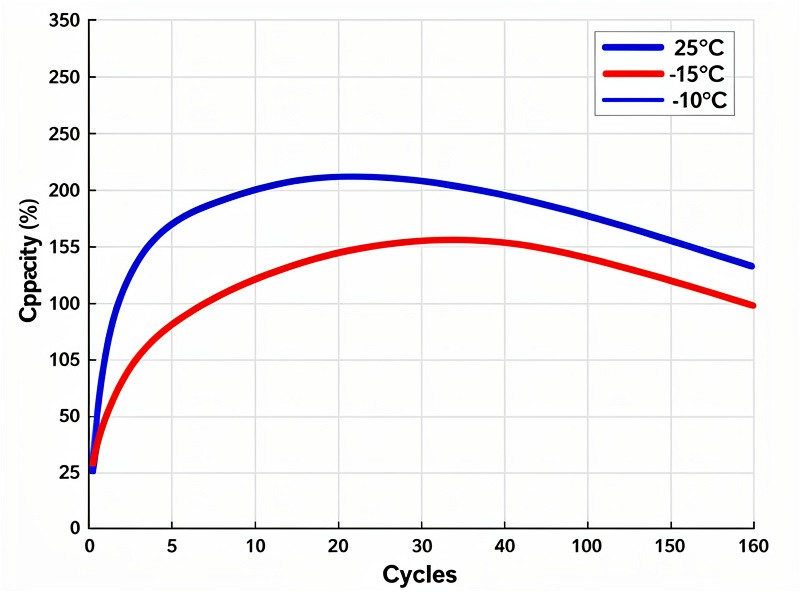
Unlike cold charging, cold discharge doesn’t damage LiFePO4 cells. Capacity is temporarily reduced — the chemistry slows at low temperatures — but the cells return to full capacity when warmed up.
Approximate capacity at low temperatures (LiFePO4):
20°C (room temperature): 100% rated capacity
0°C: 90-95% rated capacity
-10°C: 75-85% rated capacity
-20°C: 60-70% rated capacity
The capacity is recoverable when temperature rises. A battery used heavily at -20°C delivering 60% capacity will deliver full 100% capacity when temperatures return to 20°C. No permanent loss.
The implication: cold discharge is acceptable when needed (emergency power during winter outages, off-grid cabin use during cold snaps). The reduced capacity is temporary. Just don’t charge while cold. Winter battery discharge also happens faster when solar input drops — the solar panel winter output guide quantifies the month-by-month production fall-off by latitude so you can pair storage capacity with what the panels will actually deliver in January.
BMS Protection Against Cold Charging
The standard mitigation: BMS-enforced charge cutoff below 0°C. The BMS reads temperature from sensors mounted on cells; when temperature drops below the threshold, the BMS prevents charging current from reaching cells.
Configure: most modern BMS units (JK, Heltec, JBD) have a “Charge low temperature cutoff” setting. Set to 0°C or 2°C (slight margin). When cells are below threshold, charging blocks; discharge continues normally.
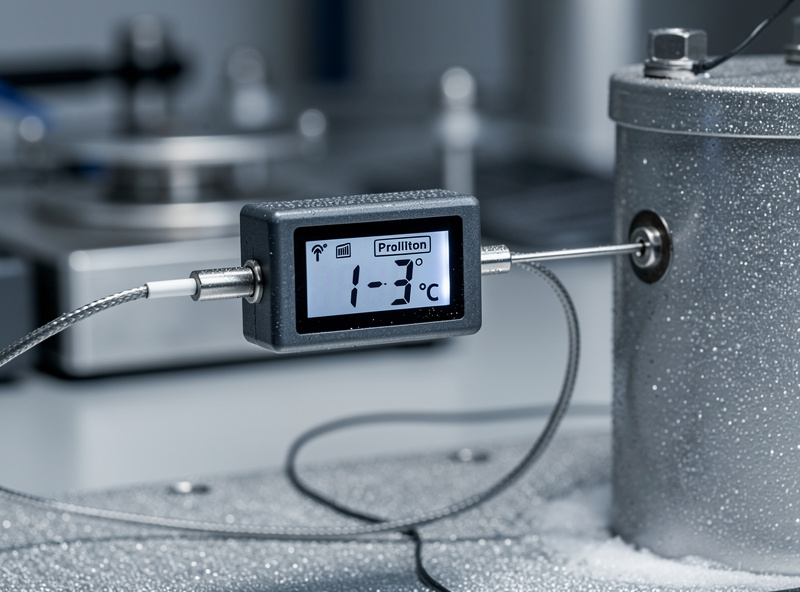
Verify the cutoff works. Place the battery in a freezer or cold environment to drop temperature. Try to charge — current should be 0 amps despite the inverter trying to push power. If charging happens despite cold temperature, the BMS configuration is wrong.
This protection is essential for outdoor installations, cabin systems, and anywhere temperatures might drop below freezing. Without BMS cold-charge protection, cells will be damaged during cold weather charging.
Heated Enclosures
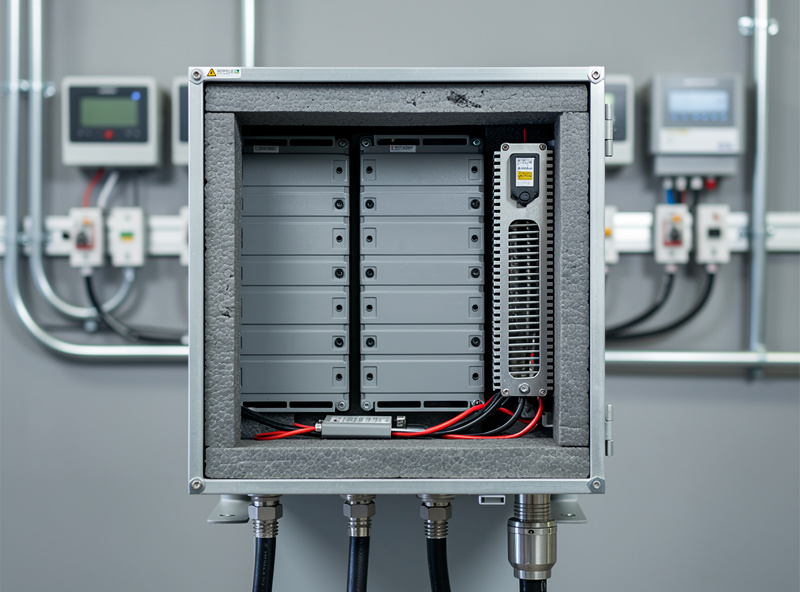
For cold climates where below-freezing is common, heated battery enclosures keep cells in the safe operating range. Production systems (EG4, BigBattery, Pytes) include integrated heaters; DIY systems can add aftermarket heaters.
Heater requirements: 50-100W for typical 14 kWh DIY pack in moderately insulated enclosure. The heater triggers via thermostat when cell temperature drops below 5°C, runs until temperature reaches 15°C. Total daily energy use: typically 1-3 kWh in cold climates.
Heater installation: thermostatic switch (around $20), heating pad rated for batteries ($30-100), insulated enclosure ($50-200). Total cost: $100-300 for retrofit. Worth it for any installation in unheated spaces in cold climates.
The heat source matters. Use battery-rated heating pads — typical home heating pads or strip heaters can produce hot spots that damage cells. Battery-specific heaters are designed for safe contact with cell surfaces.
Installation Strategies for Cold Climates
The cleanest approach for cold climates: install batteries in conditioned spaces. Basements, attached garages, utility rooms — all stay above freezing year-round in heated homes. No active heating needed. If you are also running solar, the winter solar battery storage guide covers how reduced panel output and cold charging constraints compound in a northern winter.
For unheated spaces (detached garage, outdoor enclosure, off-grid cabin): heated enclosure plus BMS cold-charge protection. The combination handles all but the most extreme conditions.
For extreme cold (Alaska, northern Canada, mountain elevations): heated insulated enclosures with backup heat from generator or thermal mass. Production systems designed for these climates include redundant heating.
Sodium-ion batteries handle cold better than LiFePO4 — operating range typically -30°C with no charging damage threshold. For climates where LiFePO4 mitigation is impractical, sodium-ion may be the right chemistry. Sodium-ion availability for home storage is growing in 2025-2026.
Cold Weather Emergency Strategies
If your battery is exposed to unexpectedly cold conditions:
Immediately: Stop all charging. Don’t try to “warm up” by charging — this is what causes damage. Run the battery from existing charge until conditions improve.
If charging must continue: Use very low rates (0.05C or below). Some BMS units allow trickle charging below freezing at minimal current. This is suboptimal but better than emergency replacement.
Long-term: Add heated enclosure or BMS protection so the situation doesn’t recur. The cost of emergency battery replacement vastly exceeds the cost of proper cold-weather mitigation.
For comprehensive battery monitoring including temperature alerts, see our battery maintenance and monitoring guide.
Frequently Asked Questions
How cold is too cold for LiFePO4 batteries?
Below 0°C (32°F) for charging is the hard threshold — charging at this temperature causes permanent damage. Discharge can continue down to -20°C with reduced capacity, recoverable when warm. Most LiFePO4 systems should keep cells above 5°C when possible to avoid edge cases.
Will my LiFePO4 battery survive winter outside?
Survival depends on whether it tries to charge below freezing. Without BMS protection or heating, charging while cold damages cells permanently. With proper BMS cold-charge cutoff, cells survive cold winters but you lose access to charging during cold periods. Heated enclosures restore charging access.
Does my Tesla Powerwall work in cold weather?
Yes — Powerwall 3 includes integrated heating and operates down to -20°C. The internal heater warms cells before charging when ambient temperatures are low. Tesla designed Powerwall for outdoor wall-mounting in cold climates; the internal heater handles the cold-charge protection automatically.
Can I use a regular heating pad to warm my battery?
No — regular heating pads aren’t safe for direct battery contact. They can produce hot spots that damage cells, lack thermostatic control suitable for batteries, and may overheat when malfunctioning. Use battery-rated heating pads (designed for direct cell contact) with appropriate thermostats.
Are sodium-ion batteries better for cold climates?
Yes — sodium-ion handles cold better than LiFePO4. Operating range typically -30°C with no charging damage threshold. For homes in extreme cold climates where LiFePO4 mitigation is impractical, sodium-ion is worth considering. Availability is growing in 2025-2026 from CATL, BYD, and others.
How much energy does a heated battery enclosure use?
Typically 1-3 kWh per day in cold climates for a 14 kWh battery enclosure. The heater runs intermittently to maintain temperature; well-insulated enclosures use less. The energy cost is real but small compared to capacity loss from cold operation or replacement cost from cold-charge damage.
Should I move my battery indoors during winter?
If installation allows, yes. Moving batteries to conditioned spaces eliminates cold-weather concerns entirely. Connection complexity may make this impractical for some installations. For systems where moving isn’t feasible, heated enclosures or BMS protection are the alternatives.