Important Disclaimer
BatteryStorageHQ provides educational content and estimates only. We are not certified installers, financial advisors, or electricians. Always consult with licensed professionals.
Solid-state batteries are the most over-promised technology in energy storage, and the physics underneath the hype is genuinely good. By swapping the flammable liquid electrolyte for a solid one, they can push energy density past 300–500 Wh/kg on lab cells — roughly double today’s lithium-ion — while removing the most fire-prone component. The catch is brutal and unglamorous: nobody can yet manufacture them at scale, at a sane cost, with a long cycle life. For home energy storage specifically, solid-state solves problems your garage does not have, and it is years from a wall-mountable product.
I build LiFePO4 banks from bare cells and tune the inverter charge profile by hand, so I read every “solid-state breakthrough” story the way I read an inverter datasheet — hunting for the spec they buried. With solid-state, the buried specs are cycle life, cost, and manufacturability. This guide separates the real chemistry from the press releases and explains why, even when solid-state ships, it will land in cars and phones long before it touches the bank on my wall. It is one entry in the wider emerging battery chemistries guide.
What “Solid-State” Actually Means
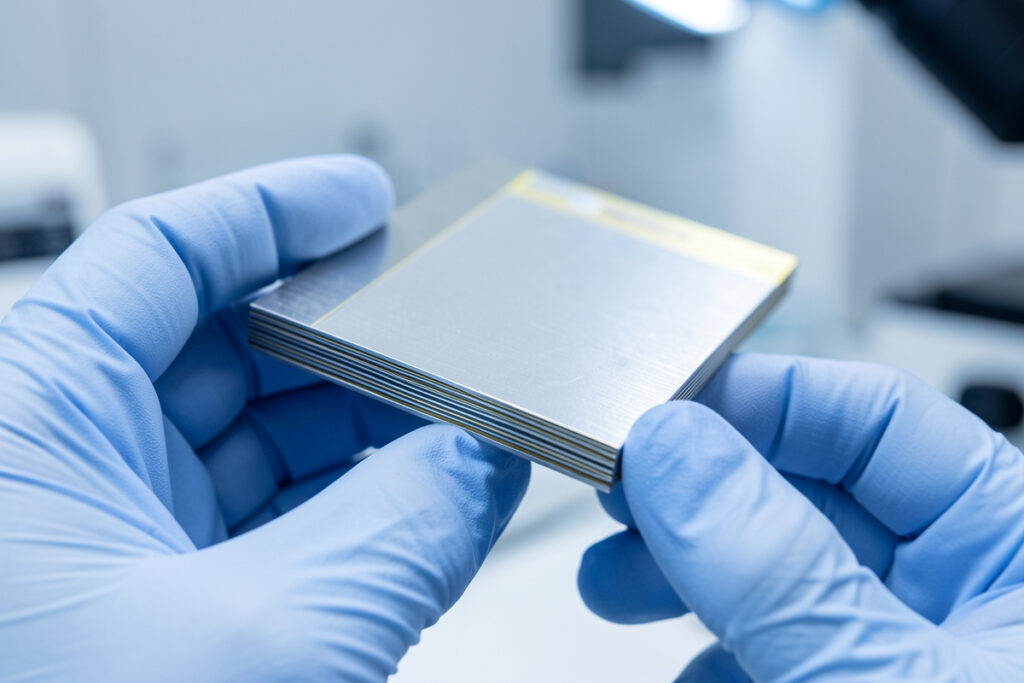
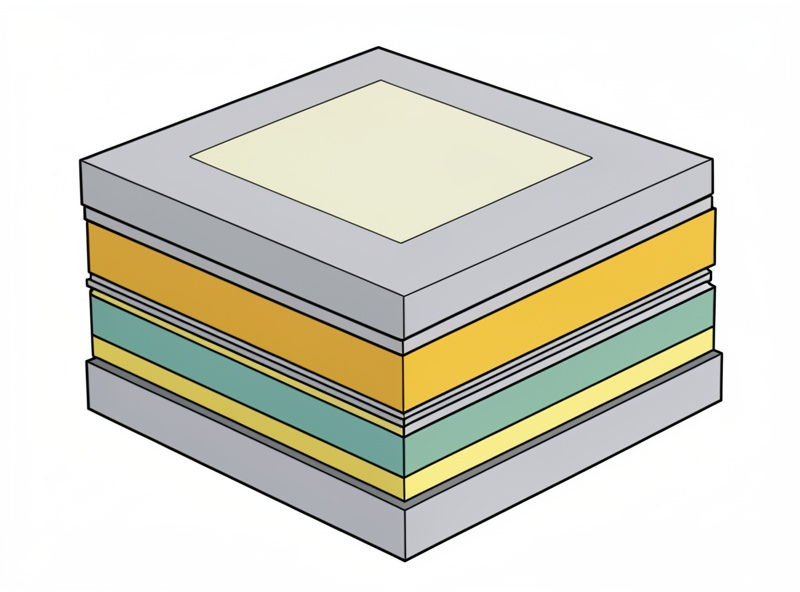
A conventional lithium cell has a liquid electrolyte and a thin porous separator keeping the electrodes apart. A solid-state cell replaces both with a solid electrolyte — usually an oxide, a sulfide, or a polymer — that conducts ions while physically separating the electrodes. Removing the liquid removes the most flammable ingredient and, in theory, allows a lithium-metal anode that stores far more energy per gram.
That is the promise: more energy in less space, faster charging, and a safer failure mode all at once. On a single lab cell, parts of that promise are real today. The gap between a lab cell and a product you can buy, warranty, and bolt to a wall is where a decade of “two years away” announcements have died.
The Manufacturing Wall
Three problems keep solid-state out of mass production. First, dendrites: lithium metal tends to grow needle-like filaments through the solid electrolyte during charging, eventually shorting the cell — the very failure the solid was supposed to prevent. Second, the solid-solid interface between electrolyte and electrodes is hard to keep in intimate contact as the cell expands and contracts each cycle, which degrades capacity. Third, many solid electrolytes are brittle, air- or moisture-sensitive, or need elevated temperature and high stack pressure to work, none of which suits a cheap, mass-produced cell.
Each of these is being chipped away in labs and pilot lines, but “solvable in a lab” and “yields well on a gigafactory line at a competitive cost” are very different statements. Until yield and cost are solved together, solid-state stays expensive and scarce. That is not pessimism — it is the same supply-chain reality that still makes sodium-ion hard to buy as loose cells, which I cover in the sodium-ion home storage guide.
Why Home Storage Is the Wrong First Market
Here is the part the headlines never mention: solid-state’s headline advantages are energy density and weight, and a stationary home bank cares about neither. I bolt cells to a wall in a garage. I am not weight-constrained like an EV or volume-constrained like a phone. Doubling energy density is thrilling for a car’s range and almost irrelevant for a bank that just needs to sit there and cycle.
Meanwhile the one thing solid-state improves that I do care about — safety — is a problem LiFePO4 already solved. LFP fails gently near 270°C and does not need a liquid-electrolyte fire story to begin with. So solid-state would have to beat LFP not on density or safety, but on cost per usable kWh and cycle life — and that is exactly where it is weakest today. The honest comparison sits in the battery chemistry comparison and the LiFePO4 vs NMC cycle-life math.
Semi-Solid and Hybrid: The Honest Middle
The interesting near-term reality is not fully solid-state at all — it is the semi-solid and hybrid cells that keep a small amount of liquid or gel electrolyte to fix the contact problem while capturing some of the density and safety gains. These are easier to manufacture than a true all-solid cell and are showing up in some EV and grid products already. They are a sensible engineering compromise, not a revolution.
For a home builder, the lesson is to read the fine print on any “solid-state” marketing. A cell described as solid-state may really be semi-solid, with density and safety somewhere between today’s lithium-ion and the all-solid dream. That is fine — but it is not the leap the headlines imply, and it still does not change the core math: a stationary bank wants cheap, safe, long-cycle kWh, and LFP delivers that today. Treat any solid-state claim with the same four-question filter I apply to every battery breakthrough: can I buy it, what is its real cycle life, what does it cost per kWh installed, and how does it fail.
When Will Solid-State Reach Home Storage?
The credible roadmap puts the first real solid-state cells in premium vehicles in the late 2020s, in small volumes, at premium prices. Phones and laptops follow, because they also pay for density. Home storage is dead last, because it is the one application that least values what solid-state offers and most values cheap kWh — exactly where LFP wins and sodium-ion is the more relevant challenger.
My working assumption: even after solid-state ships in cars, a home-storage version that beats grade-A LFP on installed cost is many years out, possibly a decade. When it arrives, the same Home Assistant dashboard that watches my bank today will read it just fine — the monitoring does not care about chemistry. Until then, anyone telling you to wait for solid-state instead of building an LFP bank now is asking you to leave your house unbacked for years. Build the LFP bank you can buy today; watch solid-state in the trade press, not in your garage.
Frequently Asked Questions
Are solid-state batteries available for home energy storage?
No. Solid-state cells are not sold in home-storage products in 2026 and remain stuck on manufacturing yield, dendrite suppression, and cost. The first real cells are targeting premium vehicles late this decade. A wall-mountable, cost-competitive home version is many years away, so LiFePO4 stays the practical choice now.
Why are solid-state batteries so hard to manufacture?
Three problems block mass production: lithium dendrites growing through the solid electrolyte and shorting cells, maintaining intimate solid-to-solid contact as the cell expands and contracts each cycle, and brittle electrolytes that often need heat and high pressure. Each is being solved in labs, but not yet at competitive cost and yield on a production line.
Are solid-state batteries safer than lithium-ion?
In principle yes, because removing the flammable liquid electrolyte removes the main fire ingredient. But LiFePO4 is already very safe, failing gently near 270 Celsius. For home storage, solid-state’s safety edge over LFP is small, so it would need to win on cost and cycle life instead, which is where it is weakest today.
How much energy density do solid-state batteries offer?
Lab cells reach roughly 300 to 500 Wh/kg, about double conventional lithium-ion, mainly by enabling a lithium-metal anode. That density is valuable for cars and phones that are weight and volume constrained, but largely irrelevant for a stationary home bank bolted to a garage wall, which cares about cost per kWh instead.
Should I wait for solid-state instead of buying LiFePO4 now?
No. A cost-competitive solid-state home battery is years away, possibly a decade, and waiting means leaving your home unbacked in the meantime. Build a LiFePO4 bank you can buy and warranty today. Solid-state will reach cars and phones long before it makes sense for home storage, where LFP already wins on cost.
Further Reading
If you are mapping the alternatives, start with the emerging battery chemistries overview, then compare the nearer-term challenger in the sodium-ion guide and the safety fundamentals in the NMC vs LFP safety comparison. When you are ready to build something real today, the DIY LiFePO4 build guide is the place to begin, and the battery chemistry comparison puts solid-state’s promised lab numbers side by side with the chemistries you can actually buy and bolt to a wall today.