Important Disclaimer
BatteryStorageHQ provides educational content and estimates only. We are not certified installers, financial advisors, or electricians. Always consult with licensed professionals.
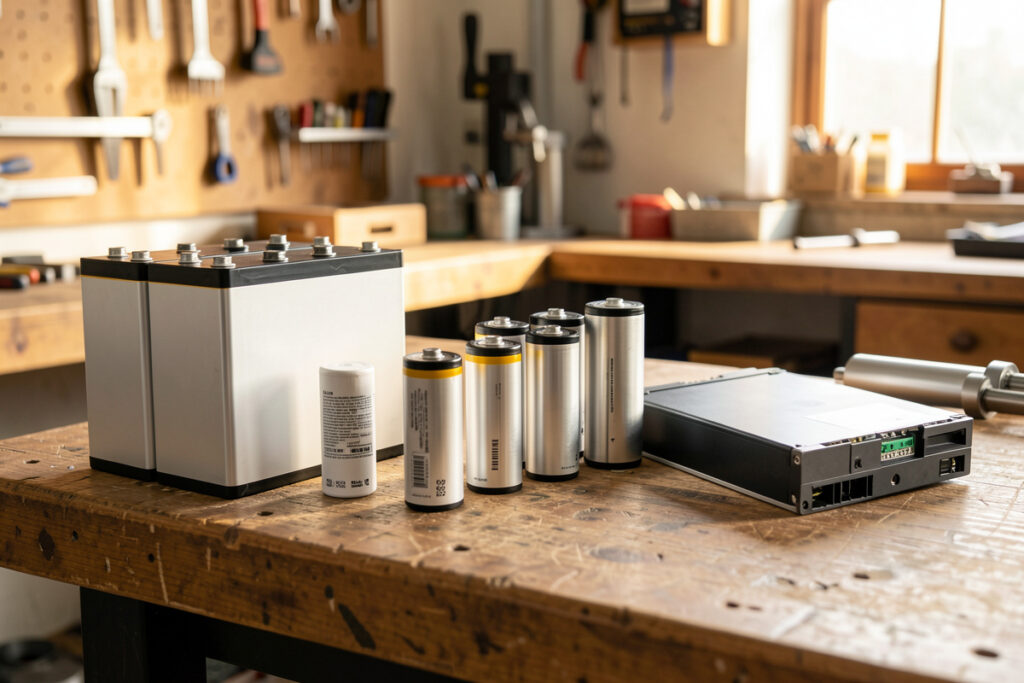
The home-storage market runs on one chemistry today — LiFePO4 — and for good reason: it is the safest, longest-lived option you can actually buy and bolt to a wall. But the cells on my bench are not the whole story. Sodium-ion is shipping in real packs, solid-state keeps slipping its launch date, saltwater and flow batteries chase the long-duration corner LFP handles badly, and a steady river of second-life EV modules is hitting the used market. This guide is the honest map of the emerging battery chemistries a home builder should understand — what is real, what is a press release, and what changes nothing for a 16S wall pack in a Swedish garage.
I build LiFePO4 banks from bare prismatic cells. I top-balance them on a bench supply, compression-fixture them between end plates, commission the BMS, and tune the inverter’s charge profile by hand — then watch the whole thing age through real northern winters in my Home Assistant logs. That lens matters here, because most “battery breakthrough” coverage is written by people who have never lived with a pack. The question is never “is this chemistry impressive in a lab.” It is “would I wire it into the bank that runs my workshop, and at what total cost.” Most of these answers are “not yet,” and I will tell you exactly why.
Why LiFePO4 Still Wins — And Where the Cracks Are
LiFePO4 (LFP) won home storage on the only metrics that matter at the wall: roughly 4,000–6,000 cycles to 80% capacity, a flat thermal-runaway threshold near 270°C versus around 150°C for NMC, and a price per usable kWh that nothing else touches in 2026. For a stationary bank where weight does not matter, that combination is hard to beat.
The cracks are specific, not fatal. LFP loses real capacity in the cold and must never be charge-current-loaded below freezing without a heater — the rule people break most. Its energy density is mediocre, which only matters if you are mobile. And it has a soft floor on very long-duration storage: backing a house for five sunless days means buying five days of lithium you rarely cycle, which is where flow chemistries get interesting on paper. Every emerging chemistry below is competing against this baseline, so I will keep coming back to it. If you want the established-chemistry comparison in full, I keep that in the battery chemistry comparison for home storage and the LiFePO4 vs NMC cycle-life math.
It helps to be precise about what “winning” means here, because the emerging-chemistry pitches all attack one of these pillars. LFP wins on safety margin, on cycles per dollar, and on a flat discharge curve that makes state-of-charge easy to estimate. It does not win on energy density, on cold performance, or on very-long-duration economics. When a sodium or flow or solid-state story claims a breakthrough, the useful question is which pillar it actually moves — and whether that pillar was ever the binding constraint for a stationary home bank. In my experience the binding constraints at the wall are cost, safety, and the cold; density and weight almost never are. That single reframing kills most of the hype before you read the second paragraph.
Sodium-Ion: The First Real Challenger
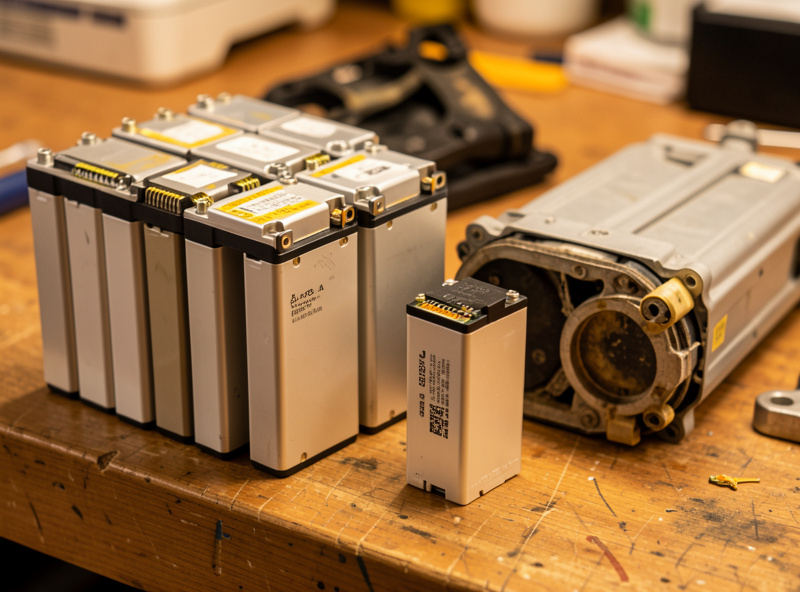
Sodium-ion is the only emerging chemistry on this list I would actually consider for a stationary bank today. It trades energy density for two things a home builder cares about: it tolerates cold far better than lithium, and it can be discharged to zero volts for safe shipping. Density is roughly 75–160 Wh/kg — below LFP — but a wall pack does not care about weight.
The catch is the same one every new chemistry hits: the ecosystem. BMS support, inverter charge profiles, and cell availability are all immature, and the price advantage that was promised has not fully arrived because LFP got cheaper faster than anyone expected. I treat sodium-ion as the one to watch seriously, not the one to build this year — the full reasoning is in the sodium-ion battery home storage guide.
Solid-State: Real Physics, Perpetual Timeline
Solid-state replaces the liquid electrolyte with a solid one, which on paper removes the flammable component and pushes energy density well past lithium-ion. The physics is real. The problem is manufacturing: dendrite suppression, interface stability, and yield at scale have kept solid-state in “two years away” territory for a decade.
For home storage specifically, solid-state solves a problem stationary builders mostly do not have. We are not weight- or volume-constrained in a garage, and LFP’s safety is already excellent. Solid-state will land in cars and phones first, and the home-storage version — if it ever beats LFP on cost — is many years out. I unpack the gap between the announcements and a wall-mountable product in the solid-state battery technology guide.
Saltwater and Flow: The Long-Duration Corner
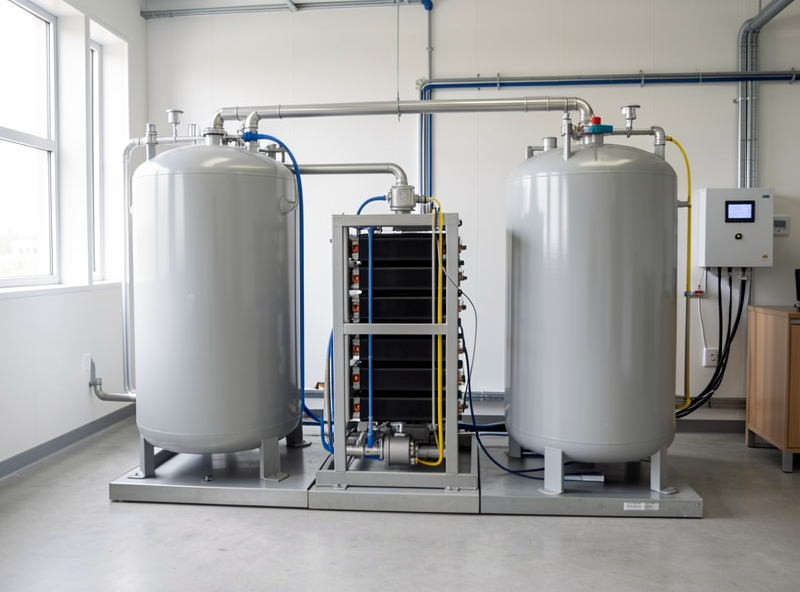
Saltwater (sodium aqueous) and flow batteries (vanadium redox the most common) chase the niche LFP handles worst: many hours to days of storage with deep daily cycling and zero fire risk. Flow batteries decouple power from energy — you size the tanks for capacity and the stack for output independently — and they shrug off 100% depth of discharge for 20,000+ cycles.
The honest verdict for a typical home is that the economics do not work yet. Flow systems carry high upfront cost, low round-trip efficiency (65–80%), bulky tanks, and pumps that need maintenance. They make sense at small-commercial and microgrid scale, far less in a single-family install — which is exactly the level the U.S. Department of Energy targets with its Long Duration Storage Shot, a grid-and-commercial program, not a residential one. That tells you where these chemistries actually belong. Saltwater promised non-toxic, recyclable storage and the most prominent maker went bankrupt — a cautionary tale I cover in the saltwater and flow battery guide.
Lithium Titanate (LTO): The Niche Specialist
LTO swaps the graphite anode for lithium titanate, and the result is a genuinely extreme-duty cell: 15,000–20,000 cycles, charging well below freezing, and surge tolerance that laughs at high C-rates. If cycle life and cold-charging were the only spec, LTO would win outright.
They are not. LTO carries two killers for home storage — a low cell voltage (about 2.3V nominal, so you need far more cells in series) and a price per kWh several times that of LFP. It earns its place in transit, grid-frequency regulation, and brutal industrial duty, not in a residential wall pack where LFP’s 6,000 cycles already outlive the inverter. The full case is in the lithium titanate LTO battery guide.
Supercapacitors: Power, Not Energy
Supercapacitors store charge electrostatically, which makes them the opposite of a battery: enormous power density and a million-cycle life, but tiny energy density. A supercap bank can deliver a brutal surge and recharge in seconds, yet holds a fraction of the kWh a same-size battery does and self-discharges fast.
That makes them complements, not replacements. For home storage they are a misfit — you cannot economically store a day of house energy in capacitors. They shine in surge buffering, regenerative systems, and grid power-quality, and the “supercapacitor home battery” headlines almost always conflate the two roles. I separate power from energy properly in the supercapacitor vs battery comparison.
Second-Life EV Modules: Used Chemistry, Real Value
This is not a new chemistry — it is mostly NMC pulled from crashed or retired EVs — but it is the most relevant “emerging source” for a budget home builder. A Nissan Leaf, Chevy Volt, or Tesla module that has dropped to 80% of original capacity is finished for a car and perfectly usable for a slow-cycling home bank, often at a steep discount per kWh.
The tradeoffs are real work, not free energy. You inherit NMC’s lower thermal-runaway threshold, unknown cell history, mismatched module health, and the need for serious balancing and fusing discipline. Done right it is a legitimate path; done lazily it is a fire risk. I keep the detailed sourcing-and-safety method in the second-life EV battery modules guide, and the Tesla-specific build in used Tesla modules for home storage.
NMC vs LFP: The Safety Decision Behind All of It
Most of these emerging options are really a chemistry-safety decision in disguise. NMC (and second-life EV modules) carry higher energy density but a thermal-runaway threshold around 150°C and a more energetic failure mode; LFP fails far more gently near 270°C and does not off-gas oxygen the same way. For a bank living inside or beside a home, that gap is the whole argument.
This is where I draw the hardest line. Energy density is a convenience; failure mode is a safety system. I will run second-life NMC in an outbuilding with proper fusing and ventilation, but the indoor bank that backs the house stays LFP. The full side-by-side is in the NMC vs LFP battery safety comparison, and the fundamentals live in the below-freezing BMS cutoff guide and the battery system wiring safety guide.
Emerging Chemistry Comparison at a Glance
Here is how the contenders stack against the LFP baseline on the specs a home builder actually weighs. Treat density and cost as ballpark 2026 figures, not warranty numbers — every one of these markets moves quarter to quarter.
| Chemistry | Energy density (Wh/kg) | Cycle life (to 80%) | Cold charging | Relative cost/kWh | Home-storage fit (2026) |
|---|---|---|---|---|---|
| LiFePO4 (baseline) | 90–160 | 4,000–6,000 | No (needs heater) | Low | Best all-round |
| Sodium-ion | 75–160 | 2,000–4,000 | Good | Low–medium | One to watch |
| Solid-state | 300–500 (claimed) | Unproven at scale | Expected good | Very high | Not yet shipping |
| Flow (vanadium) | 15–25 (system) | 15,000–20,000+ | Tolerant | High | Long-duration / commercial |
| LTO | 50–80 | 15,000–20,000 | Excellent | Very high | Extreme-duty niche |
| Supercapacitor | 5–15 | 500,000–1,000,000 | Excellent | High per kWh | Surge buffer only |
| Second-life NMC | 150–220 | Reduced (used) | No | Very low | Budget, outbuilding |
Total Cost of Ownership: Why the Cheapest Cell Isn’t the Cheapest Bank
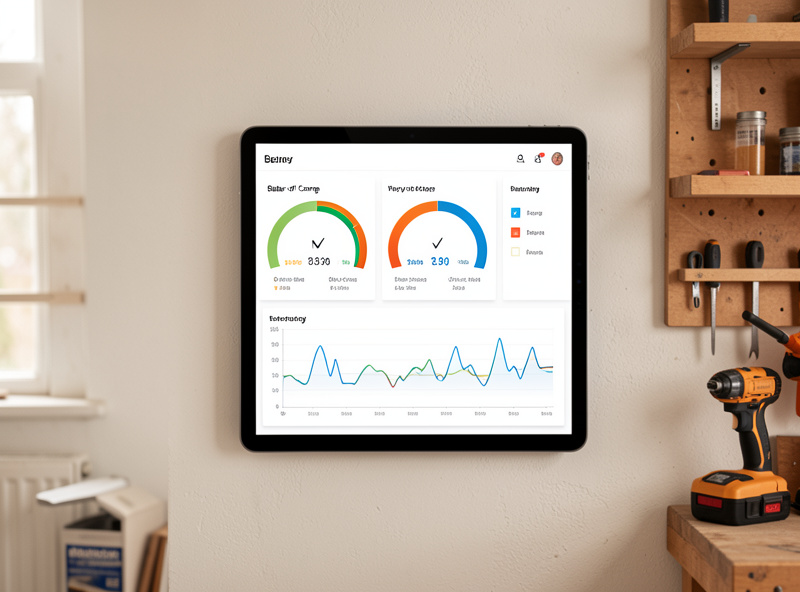
The single biggest error I see in emerging-chemistry hype is comparing sticker price per kWh and stopping there. The bank I built taught me that the cell is maybe half the real cost. The BMS, the busbars, the Class-T fuse, the compression hardware, the enclosure and its ventilation, and the hours of top-balancing all ride on top — and a chemistry with an immature ecosystem makes every one of those line items harder and more expensive.
Sodium-ion is the clean example. Even when a sodium cell undercuts LFP per kWh, you may pay it back in a BMS that does not have a tuned profile for it, an inverter that does not list it as a battery type, and a smaller cycle-life budget that means you replace the bank sooner. The same logic sinks LTO and flow for residential use: a cell that lasts 20,000 cycles is wasted money when your inverter dies at year twelve and your LFP bank would have outlived it anyway. I do the same math the long way in the DIY vs prebuilt cost analysis and the cycle life versus depth of discharge chart. Total cost of ownership, not headline density, is the number that decides what goes on my wall.
This is also where grade matters more than chemistry name. A bargain “LFP” cell of unknown grade can underperform a carefully sourced one badly enough to erase any chemistry-level advantage a competitor claims — which is why I keep the grade A vs grade B cells and EVE vs CATL cell quality breakdowns as required reading before anyone gets excited about an exotic chemistry.
How to Read a Battery “Breakthrough” Headline
I read battery breakthrough stories the way I read inverter datasheets — looking for the spec they buried. Almost every “10x energy density” or “charges in 5 minutes” headline is a single lab metric, achieved on a coin cell, at a temperature and C-rate no home bank lives at, with nothing said about cycle life, cost, or whether it can be manufactured at scale. The chemistry might be genuinely good; the article still tells you nothing about whether you can buy it.
My filter is four questions. Can I actually purchase cells today, or is this a research paper. What is the cycle life at a realistic depth of discharge, not the headline number. What does it cost per usable kWh installed, not per cell. And what is the failure mode — does it fail gently like LFP or energetically like NMC. If a story cannot answer all four, it changes nothing for the bank in my garage. Apply that filter and the noise collapses: in 2026 the only emerging chemistries that survive all four questions for home use are sodium-ion (barely, on availability) and second-life NMC (on price, with caveats). Everything else is a headline, not a product.
What I’d Actually Build Right Now
If you are sizing a bank in 2026, the answer for nearly every home is still grade-A LFP prismatics, top-balanced, in a compression fixture, behind a proper BMS and a Class-T fuse. Nothing on the emerging list beats it on total cost of ownership for a stationary residential install — yet. Start from the DIY LiFePO4 build guide and the best home battery storage roundup if you want a sealed unit instead.
The two emerging paths worth real attention are sodium-ion (watch it; do not build the first generation unless you enjoy being a beta tester) and second-life EV modules (a legitimate budget route if you respect the safety work). Everything else — solid-state, flow, LTO, supercaps — is either years out, scale-wrong, or solving a problem your garage does not have. The same Home Assistant rule engine that watches my LFP bank’s state of charge would happily watch a sodium-ion pack the day the ecosystem matures; the dashboard does not care about chemistry, but my fuse box does. For the sizing math behind any of these, the off-grid power system design guide and whole-home backup sizing method are the place to start. Beginners should read the beginner’s guide to battery storage first.
Frequently Asked Questions
Will sodium-ion batteries replace LiFePO4 for home storage?
Not soon. Sodium-ion charges better in cold and ships safely at zero volts, but its energy density is lower and BMS and inverter support are immature in 2026. LFP got cheaper faster than expected, eroding sodium-ion’s promised price edge. Watch it, but do not build first-generation packs unless you enjoy beta testing.
Is solid-state battery technology available for home energy storage yet?
No. Solid-state cells are not shipping in home-storage products and remain stuck on manufacturing yield, dendrite suppression, and cost. The technology will reach cars and phones first. Even when it arrives, it solves weight and density problems a stationary garage bank does not have, so LFP stays the practical choice for years.
Are flow batteries worth it for a single home?
Rarely. Flow batteries excel at long-duration deep cycling with zero fire risk and 20,000-plus cycles, but they carry high upfront cost, 65 to 80 percent round-trip efficiency, bulky electrolyte tanks, and pumps to maintain. They make sense at microgrid and small-commercial scale, not in a typical single-family install where LFP is cheaper and simpler.
Can I use second-life EV battery modules for home storage safely?
Yes, if you do the work. Second-life modules are usually NMC at around 80 percent health, cheap per kWh, but they carry NMC’s lower thermal-runaway threshold near 150 Celsius and unknown cell history. They need careful balancing, DC fusing, ventilation, and ideally an outbuilding location. Lazy second-life builds are a genuine fire risk.
Why are supercapacitors not used as home batteries?
Supercapacitors store charge electrostatically, giving huge power density and a million-cycle life but tiny energy density and fast self-discharge. You cannot economically store a day of house energy in capacitors. They complement batteries as surge buffers and power-quality devices, not as the main energy store. The headlines conflate power capability with energy capacity.
Is LTO a good battery for home solar storage?
Usually not. Lithium titanate offers 15,000-plus cycles and excellent cold charging, but its low 2.3-volt cell voltage means many more cells in series, and its cost per kWh is several times that of LFP. LFP already delivers more cycles than the inverter will survive, so LTO’s advantages are wasted in a residential bank.