Important Disclaimer
BatteryStorageHQ provides educational content and estimates only. We are not certified installers, financial advisors, or electricians. Always consult with licensed professionals.
Sizing whole-home battery backup comes down to two numbers people constantly confuse: energy in kilowatt-hours, which sets how long the bank lasts, and power in kilowatts, which sets what you can run at once. A typical whole-home backup lands at 20–40 kWh of usable LiFePO4 behind an 8–12 kW inverter — but the only honest way to get your figure is to measure your real loads, not copy someone else’s bank.
I size every bank I build, mine included, from a measured load list rather than a nameplate guess, and the method below is the one I use on the workshop system in Sweden. It scales from a single critical circuit to a full house. If you have not yet decided whether you even want whole-home coverage, read the home backup power guide first — most homes are better served by a smaller critical-loads panel.
Step one: energy — how many kWh you actually use
Energy decides runtime. Take a full day of the loads you want to back up and add their watt-hours. A fridge is around 1.2–1.5 kWh per day, a chest freezer about 1 kWh, a furnace blower 400–600 W while it runs, lighting and electronics a few hundred watt-hours, and a well pump perhaps 1–2 kWh depending on cycles. A modest critical-loads day is 6–8 kWh; a genuine whole-home day with cooking, laundry and a heat pump can be 25–40 kWh.
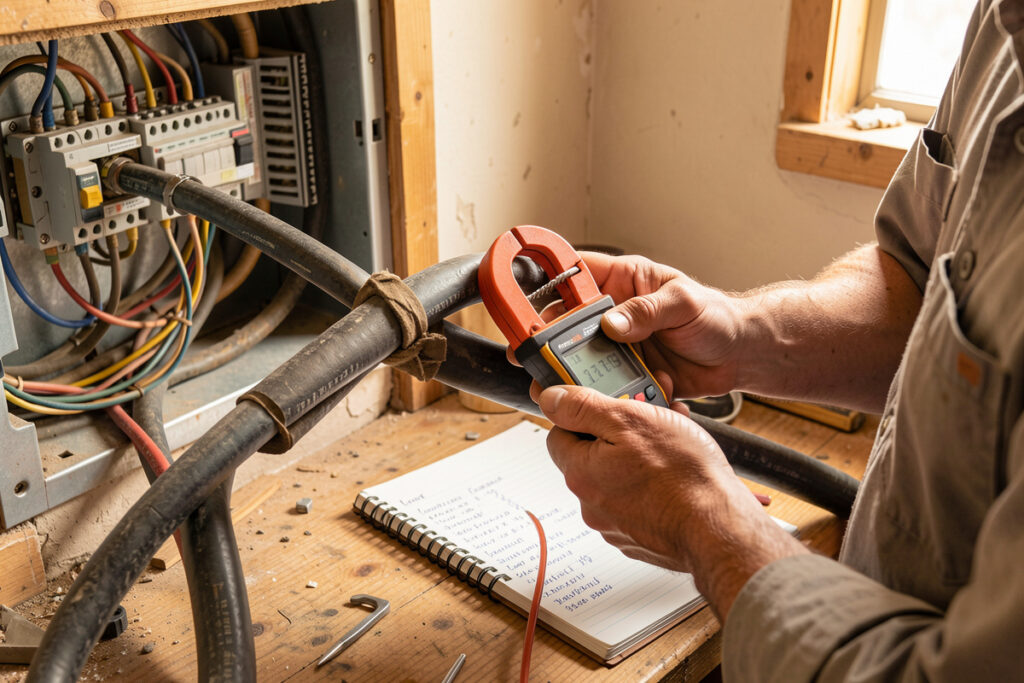
The single best thing you can do is measure rather than estimate. A clamp meter on a circuit, or a whole-home energy monitor logging for a week, turns guesswork into a real curve. In my Home Assistant logs the winter load profile looks nothing like the summer one, and sizing to the wrong season is how people end up short exactly when an outage hits. Measure the worst realistic week, not an average day — the EIA puts the average US home near 29 kWh a day, but it is your backup-only load and your worst winter week that actually size the bank.
Step two: usable capacity and depth of discharge
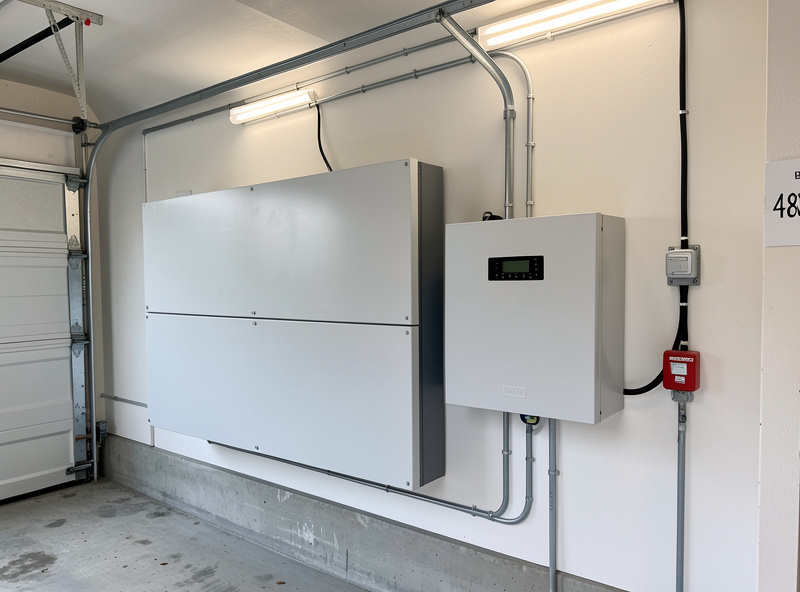
Nameplate capacity is not usable capacity. With LiFePO4 I plan around 80% depth of discharge for daily cycling — it is the sweet spot between getting your money’s worth and not stressing the cells at the knees of the charge curve. So a 10 kWh nameplate bank gives you about 8 kWh usable. To carry an 8 kWh critical-loads day you want roughly 10 kWh nameplate; to carry it for two days — the duration a real winter storm produces — you want closer to 20 kWh.
Reserve a little headroom on top. I never plan to hit 100% depth in normal use, because the day you need the reserve is the day the sun did not come back and the generator would not start. Build the buffer in at the sizing stage; retrofitting capacity onto a finished 16S bank means matching new cells to aged ones, which rarely goes well.
Step three: power — sizing the inverter to surge, not average
Energy tells you nothing about whether you can start a well pump. Power does. Add up the loads that might run simultaneously, then check the worst-case startup surge. Motor loads — pumps, compressors, the workshop tools I run — pull three to seven times their running watts for a fraction of a second as locked-rotor current (LRA) hits. A 1 hp well pump that runs at 1,200 W can spike past 4,000 W at startup.
Size the continuous inverter rating to your simultaneous running load and confirm its surge rating covers the biggest motor start stacked on top. A low-frequency inverter with a real transformer handles those surges far better than a light high-frequency unit, which is the difference between the lights flickering and the inverter faulting out. I learned that the hard way browning out a high-frequency all-in-one the first time my welder fired. The heat pump and AC guide and the well pump backup guide both turn on this surge math.
Worked example: a whole-home target
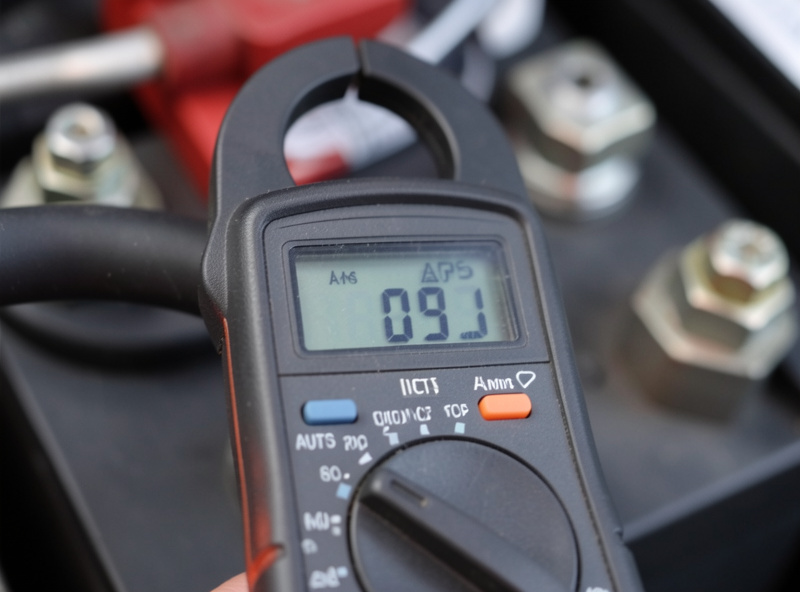
Say you measured 28 kWh on your worst winter day with the heat pump running, and your largest simultaneous draw is the heat pump (3 kW running, ~6 kW surge) plus a well pump start (~4 kW surge) plus base load (~1.5 kW). For one day of runtime at 80% depth you need about 35 kWh nameplate LFP. For power you want an inverter comfortable at ~5 kW continuous with surge headroom past 10 kW — in practice a stacked pair of low-frequency units. That is a real whole-home system, and it is roughly double the cost and footprint of the critical-loads version that would carry the same house minus the heat pump and electric range.
Bank size by coverage level
| Coverage | Daily energy | Usable target | Nameplate LFP | Inverter |
|---|---|---|---|---|
| Bare essentials (fridge, lights, internet) | 3–4 kWh | 4–6 kWh | 5–8 kWh | 3 kW |
| Critical loads (+ pumps, furnace fan) | 6–8 kWh | 10–16 kWh | 12–20 kWh | 4–6 kW |
| Whole home, no heavy heat | 15–20 kWh | 20–30 kWh | 25–38 kWh | 6–8 kW |
| Whole home + heat pump/range | 25–40 kWh | 30–48 kWh | 38–60 kWh | 8–12 kW (stacked) |
The two sizing mistakes I see constantly
The first is oversizing the solar array while undersizing the inverter — people fixate on panels because they are visible and cheap per watt, then bottleneck the whole system at an inverter that cannot start the loads. The second is sizing the bank in kWh and never checking the kW. A 30 kWh bank behind a 3 kW inverter is a beautifully large reservoir with a garden hose for an outlet. Fix the power problem first, then the energy problem; doing it in that order has saved every build I have consulted on from an expensive re-buy.
If a full whole-home bank looks daunting, a smaller LFP bank plus a generator covers long northern outages for far less — the generator backup guide covers that pairing, and for renters a power station is the no-wiring option. For seasonal context, the off-grid design guide and northern-latitude sizing show how winter changes the math.
As an Amazon Associate I earn from qualifying purchases. A shunt-based battery monitor is the one piece of test gear I would buy before sizing anything — it turns sizing from a guess into a measured number.
Frequently Asked Questions
How many kWh do I need to back up my whole house?
A genuine whole-home day with cooking, laundry and a heat pump is 25 to 40 kWh, so plan 38 to 60 kWh of nameplate LiFePO4 to ride one full day at 80 percent depth of discharge. Without heavy heating loads, 25 to 38 kWh nameplate is usually enough.
What size inverter do I need for whole-home backup?
Size continuous rating to your largest simultaneous running load, then confirm the surge rating covers the biggest motor start on top. Whole-home with a heat pump usually needs 8 to 12 kW continuous, often as two stacked low-frequency inverters for surge headroom.
Why size the inverter to surge instead of running watts?
Motors draw three to seven times their running power for a fraction of a second at startup as locked-rotor current hits. A 1,200 W well pump can spike past 4,000 W. If the inverter surge rating cannot cover that spike it faults out exactly when the pump tries to start.
What depth of discharge should I plan for LiFePO4?
Plan around 80 percent depth of discharge for daily cycling, so a 10 kWh nameplate bank gives about 8 kWh usable. Keep a small reserve on top, because the day you need the buffer is the day the sun did not return and the generator would not start.
Is whole-home backup worth it over critical loads?
Whole-home backup roughly doubles cost and footprint versus a critical-loads panel covering the same house minus the heat pump and electric range. For most homes the critical-loads version carries everything that matters through an outage at half the price.
How do I measure my real load for sizing?
Use a clamp meter on individual circuits or a whole-home energy monitor logging for a week. Measure the worst realistic week rather than an average day, because winter and summer load profiles differ sharply and sizing to the wrong season leaves you short.