Important Disclaimer
BatteryStorageHQ provides educational content and estimates only. We are not certified installers, financial advisors, or electricians. Always consult with licensed professionals.
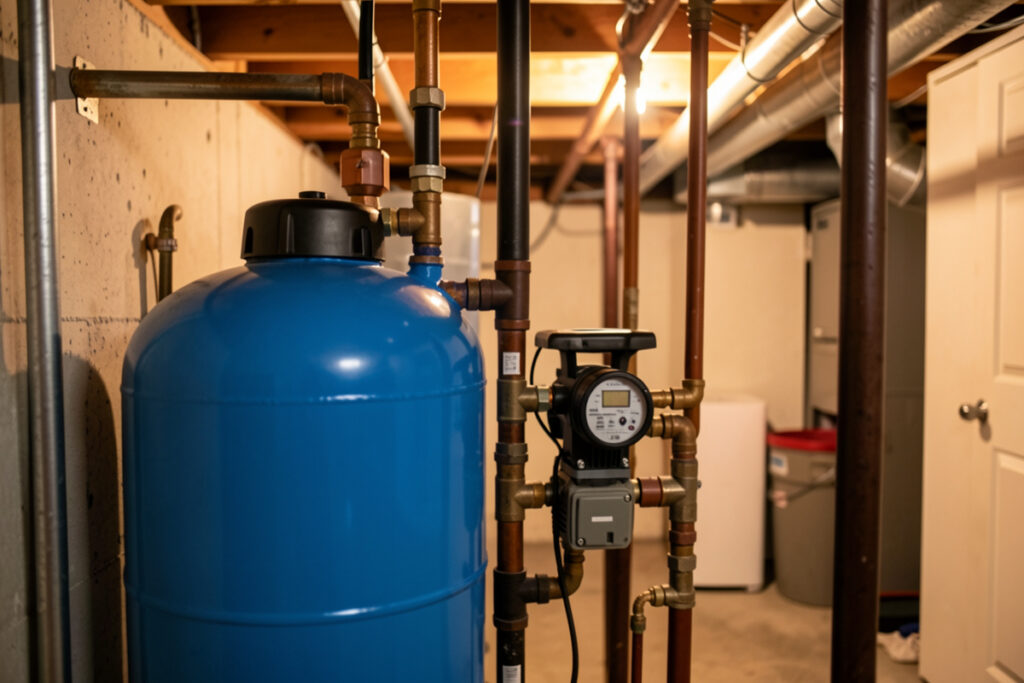
A well pump is one of the most important loads to back up and one of the most misunderstood. When the grid fails, no pump means no water — no drinking, flushing, or washing. The good news: a submersible well pump runs intermittently, so even a 5 kWh LiFePO4 bank can keep water flowing for days. The catch is the startup surge: a 1 HP submersible can spike to 4,000–6,000 W for a fraction of a second, which is what actually sizes your inverter. Federal preparedness guidance treats a secure water supply as a top-tier outage priority, and a backed well pump is how you keep yours running.
I run a 16S LFP bank with a low-frequency hybrid inverter, and water-system loads are exactly the kind of hard, brief motor surge I built it around. This guide covers how to size a well pump battery backup system properly — the surge trap, the soft-start fix, the runtime math, and the pressure-tank trick that cuts your energy use in half. For the bigger picture of which loads a bank handles, see the hub on what a battery system can power.
Why the Running Watts Lie
A well pump’s nameplate tells you the running watts, and the running watts are the easy part. A typical 1 HP submersible draws 1,200–2,000 W once it’s spinning. But a standard induction motor pulls a locked-rotor current (LRA) several times that at the instant of start — call it 4,000–6,000 W for a fraction of a second. Your inverter has to ride through that spike every single time the pump kicks on, or it faults.
This is why people are baffled when a “5,000 W” inverter won’t start their “1,500 W” pump. The continuous rating was never the problem; the surge rating was. Size the inverter to the pump’s startup surge with headroom — and read the surge spec carefully, including how long the inverter holds it and at what temperature.
Sizing the System: Pump HP, Surge, and Inverter
Here’s how common pump sizes map to the inverter you’ll actually need. The soft-start column shows how much smaller an inverter you can get away with once you’ve tamed the inrush.
| Pump | Running watts | Startup surge | Inverter (no soft start) | Inverter (with soft start) |
|---|---|---|---|---|
| 1/2 HP submersible | 800–1,200 W | 2,500–3,500 W | 3,000 W | 2,000 W |
| 3/4 HP submersible | 1,000–1,500 W | 3,500–5,000 W | 4,000–5,000 W | 3,000 W |
| 1 HP submersible | 1,200–2,000 W | 4,000–6,000 W | 5,000–6,000 W | 3,000–4,000 W |
| 1.5 HP submersible | 2,000–3,000 W | 6,000–9,000 W | 8,000 W+ | 5,000 W |
Notice the energy story is the opposite of the surge story. The pump only runs in short bursts — maybe a few minutes per fill cycle — so daily energy use for a household is often just 1–2 kWh. That’s why even a small bank lasts days for water. You size the inverter for the violent surge and the bank for the modest total energy. Two separate numbers, again.
The Soft Starter and the Pressure Tank: Two Cheap Wins
The first cheap win is a soft starter (or a pump-specific soft-start controller), which ramps the motor up and cuts inrush by 50–70%. As the table shows, that often drops you a whole inverter size — far cheaper than buying a bigger inverter and bigger bank to brute-force the surge.
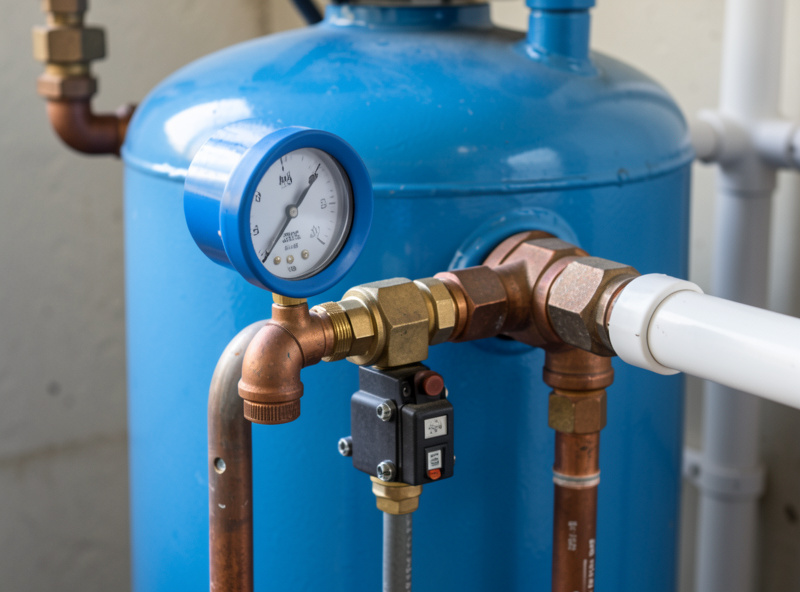
The second is the pressure tank you almost certainly already have. A properly sized and correctly pre-charged pressure tank means the pump runs less often and for longer per cycle, instead of short-cycling on every tap. Fewer starts means fewer surge events and less wasted energy. If your tank’s air pre-charge has drifted (set it ~2 psi below the pump cut-in pressure), fixing it is a free efficiency upgrade. A well pump soft-start controller pairs well with a healthy pressure tank. As an Amazon Associate I earn from qualifying purchases.
Inverter and Wiring: Get the Surge and Waveform Right
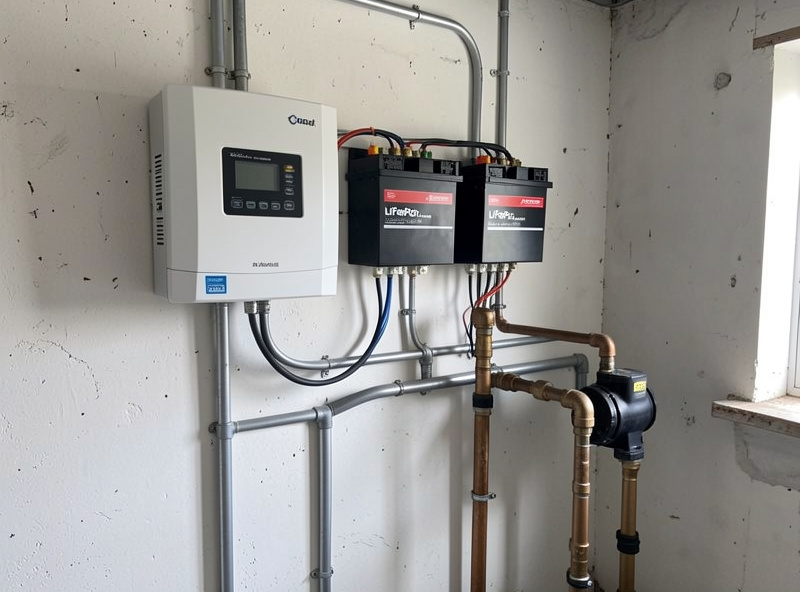
For a pump, a low-frequency inverter is the safe choice — its transformer rides through inrush where a high-frequency unit can clip and fault. My Victron MultiPlus-II is the benchmark I judge surge behaviour against. A pure sine output also matters: the pump’s control electronics and any variable-frequency drive want a clean waveform (pure sine vs modified sine). And every motor load needs proper DC protection on the battery side — a correctly rated Class-T fuse and busbars torqued to spec are not optional. If you’re choosing hardware, the best hybrid inverter guide walks through surge-first selection, and split-phase vs single-phase matters if your pump is 240 V.
Watching the Pump on the Dashboard
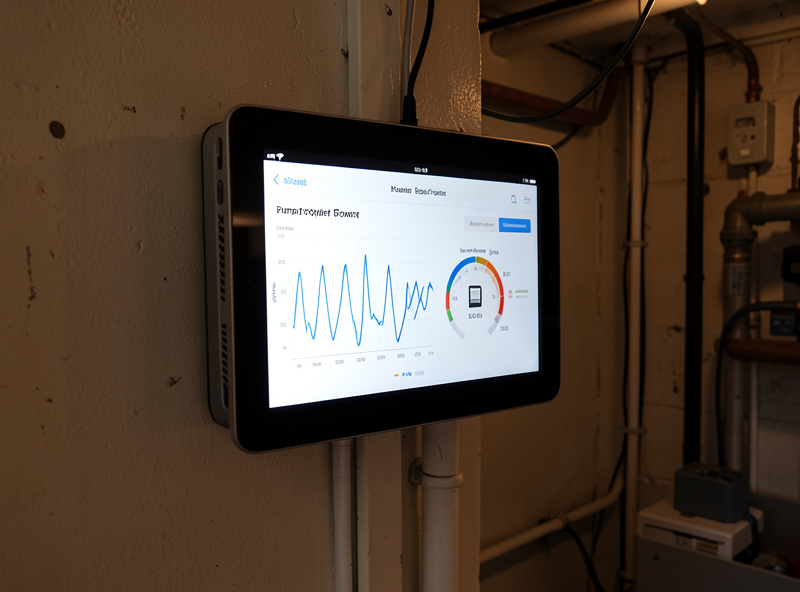
One thing I’d never skip is instrumenting the pump circuit. In my Home Assistant logs I can see every pump start as a clean spike, the run duration, and the energy per cycle — which is how I caught a drifting pressure tank pre-charge that was short-cycling the pump and quietly wasting both battery and motor life. For a backup well system, monitoring per-cycle energy tells you exactly how many days of water you have left at any state of charge, instead of guessing. The same rule engine that watches my bank’s per-cell voltage and daily solar also watches the pump, so a fault or a runaway cycle pages me before it drains the bank. If you want that visibility, smart inverter monitoring over Wi-Fi and MQTT is the foundation.
How I’d Build It
For a typical 1 HP submersible, I’d fit a soft starter, choose a low-frequency pure-sine inverter rated around 4,000 W (comfortably above the softened surge), and pair it with a 5 kWh LFP bank — which is days of water for a household given how little energy pumping actually consumes. Confirm the pressure tank’s pre-charge, fuse the DC side properly, and you have a water system that simply doesn’t notice the grid is down. Run the foundational numbers with how to size a battery storage system and decide whether a power station or a wired system fits your situation.
Frequently Asked Questions
What size battery do I need to run a well pump?
Less than people expect. A well pump runs in short bursts, so a household often uses only 1 to 2 kWh per day for water. A 5 kWh LiFePO4 bank gives days of runtime. The harder number is the inverter, which must handle the pump’s startup surge, not the modest daily energy.
Why won’t my inverter start my well pump?
Because the pump motor pulls a locked-rotor surge of 4,000 to 6,000 W for a fraction of a second at startup, several times its running watts. If that spike exceeds your inverter’s surge rating it faults instantly, even when the running load is well inside the continuous rating. A soft starter usually fixes it.
Will a soft starter help a well pump on battery?
Yes, significantly. A soft starter or pump-specific soft-start controller ramps the motor up and cuts startup inrush by 50 to 70 percent. That often lets you use an inverter one full size smaller, which saves more than the soft starter costs and reduces stress on the whole system.
How long can a battery run a well pump during an outage?
Days, for most households. Because pumping is intermittent and total daily water energy is typically only 1 to 2 kWh, a 5 kWh bank can supply a family for several days. The limiting factor in an extended outage is recharge, so pair it with solar sized for your worst month.
Does the pressure tank affect battery runtime?
Yes. A correctly pre-charged pressure tank lets the pump run longer per cycle and start less often, which means fewer surge events and less wasted energy. Set the tank’s air pre-charge about 2 psi below the pump cut-in pressure. A drifted pre-charge causes short-cycling that wastes both pump life and battery energy.