Important Disclaimer
BatteryStorageHQ provides educational content and estimates only. We are not certified installers, financial advisors, or electricians. Always consult with licensed professionals.
A mini-split is the most battery-friendly way to heat or cool a home, full stop. Because it’s inverter-driven — the compressor modulates its speed instead of slamming on and off — it soft-starts with almost no surge and runs at partial load most of the time. A 9,000–12,000 BTU (1-ton) mini-split draws just 500–1,200 W in normal operation, which means a 10 kWh LiFePO4 bank can run a single zone for the better part of a day, and a modest array can keep it going indefinitely.
I run a 16S LFP bank and a south-facing array monitored through Home Assistant, and a variable-speed heat pump is exactly the kind of well-behaved, modulating load I’d happily build a backup around. This guide covers how to size a mini-split battery backup system properly — why the surge is a non-issue, what runtime you really get by BTU, and where the cold-climate caveat bites. For where this sits among everything a bank can run, start with the hub on what a battery system can power, and the broader heat pump and AC on batteries guide.
Why Mini-Splits Are Different From Central AC
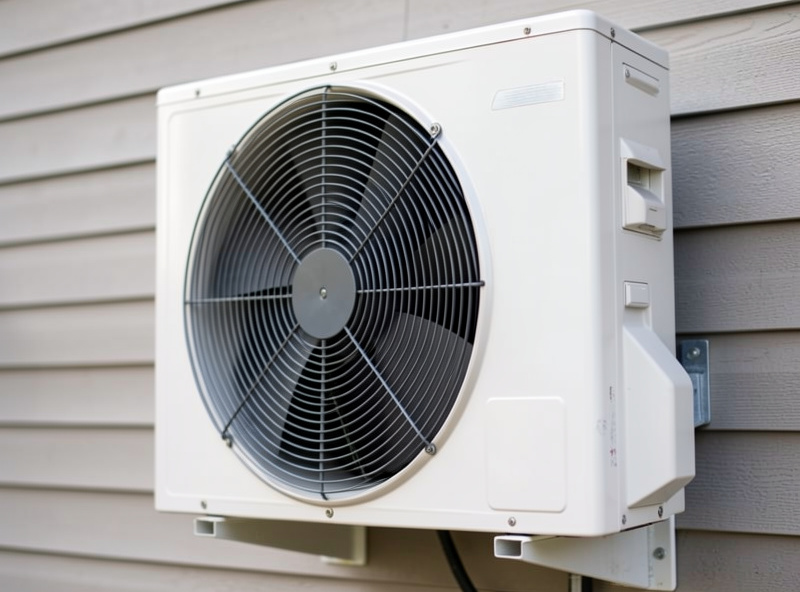
The defining feature of a mini-split is the inverter-driven compressor. A conventional single-speed central AC is binary: off, or full-blast with a brutal locked-rotor surge several times its running watts. A mini-split instead ramps the compressor up gently and then modulates its speed continuously to match the room, so there’s no violent inrush to engineer around and the average draw sits well below nameplate. That’s the whole reason it’s easy on a battery where central AC is hard.
It also means the inverter sizing problem largely disappears. Where a single-speed condenser might need 10 kW of surge headroom or a soft starter, a mini-split’s startup is gentle enough that a modest 3,000–5,000 W inverter handles even a multi-head system. You size for the steady running load plus a little headroom, not for a spike — a refreshing change from every other motor load in the house.
Runtime by BTU: What You Actually Get
Here’s how the common mini-split sizes behave on a 10 kWh LFP bank at ~90% usable. Running watts are typical steady-state draws; real consumption is often lower because the unit modulates down once the room reaches setpoint.
| Mini-split | Cooling capacity | Running watts | Runtime on 10 kWh |
|---|---|---|---|
| 9,000 BTU (3/4 ton) | small room | 400–900 W | 10–18 hrs |
| 12,000 BTU (1 ton) | large room | 600–1,200 W | 8–14 hrs |
| 18,000 BTU (1.5 ton) | open area | 1,000–1,800 W | 5–9 hrs |
| 24,000 BTU (2 ton) | multi-zone | 1,500–2,500 W | 4–6 hrs |
The takeaway is that a single small-to-medium zone genuinely runs all night, or all day, on one 10 kWh bank — and pairs beautifully with solar, since cooling demand peaks exactly when the sun is producing most. Heating from a mini-split is just as efficient in mild conditions, which is what makes it the backbone of an off-grid-leaning comfort plan rather than a luxury.
Sizing the Bank and the Inverter
Because the surge is gentle, the bank capacity (kWh) drives your runtime and the inverter rating just needs to clear the steady load with headroom. For a single 12,000 BTU head I’d pair a 5–10 kWh LFP bank with a 3,000 W pure-sine inverter — I run a Victron MultiPlus-II on my own bank and measure every other unit against it — and call it comfortable; for an 18,000–24,000 BTU or a multi-head system, step up to a 5,000 W inverter and 10 kWh or more. A pure sine output matters here — the variable-speed drive electronics want a clean waveform, which is the argument in pure sine vs modified sine. And for a unit that runs for hours, read the inverter’s continuous rating at a realistic temperature, not the headline surge.
If you’re matching solar to the load, cooling is the easy case because production and demand align; the best hybrid inverter guide covers choosing the unit, and a 12,000 BTU inverter mini-split is the size most single zones land on. As an Amazon Associate I earn from qualifying purchases.
The Cold-Climate Caveat
Here’s where my northern-latitude bias matters. A mini-split’s cooling story is uniformly good; its heating story degrades as it gets genuinely cold. A cold-climate-rated unit holds capacity surprisingly well, but every air-source heat pump draws more power and delivers less heat as the outdoor temperature drops — and many engage a resistive backup heater in deep cold, which is a battery-killer if it kicks in. In my climate I plan for the heat pump’s winter draw to climb exactly when solar production has collapsed and the bank may not recharge for days, which means metering it against state of charge and keeping any resistive backup strip off the battery entirely. The U.S. Department of Energy notes the same physics: an air-source unit’s capacity falls as the air gets colder. I learned this the expensive way on a test rig — I left the resistive backup strip enabled and it pulled the bank flat in under two hours before I noticed it had even cut in.
That seasonal reality — not the surge — is the real constraint on running a mini-split for heat off storage in a cold place. The brutal math is in northern-latitude solar sizing and the winter output collapse, and the hard chemistry rule that overrides everything in the cold: never charge LFP below freezing.
How I’d Build It
For a single-zone mini-split, I’d run a 12,000 BTU inverter unit on a 3,000–5,000 W pure-sine inverter and a 10 kWh LFP bank — all-day cooling, all-night comfort, and a near-perfect solar match in summer. For heating in a cold climate, I’d size the bank larger, keep resistive backup off the inverter, and treat winter runtime as a state-of-charge budget rather than an assumption. Run the foundational numbers with the battery sizing guide, and if you’re weighing it against central AC, the heat pump and AC guide has the full comparison.
Frequently Asked Questions
Can a battery run a mini-split all day?
Yes, for a single zone. A 9,000 to 12,000 BTU mini-split draws only 500 to 1,200 W in normal operation and modulates lower once the room is at setpoint, so a 10 kWh LiFePO4 bank can run it 8 to 18 hours. Paired with solar, a single zone can run indefinitely in summer.
Do mini-splits have a high startup surge?
No, and that is their advantage. A mini-split’s inverter-driven compressor ramps up gently and modulates its speed, so it soft-starts with almost no inrush. Unlike single-speed central AC, it needs no soft starter and no large surge headroom, which makes it the easiest HVAC load to run from a battery.
What size inverter do I need for a mini-split?
A modest one. Because there is no violent surge, you size for the steady running load plus headroom. A single 12,000 BTU head runs comfortably on a 3,000 W pure-sine inverter; an 18,000 to 24,000 BTU or multi-head system wants around 5,000 W. Use pure sine for the variable-speed drive electronics.
Is a mini-split better than central AC for battery backup?
Almost always. Mini-splits are inverter-driven, so they soft-start with minimal surge and run at partial load, making them far easier to power and far longer-running on a battery than a single-speed central system. Central AC usually needs a soft starter and a much larger inverter just to start.
Can I heat with a mini-split on battery in winter?
You can in mild cold, but it gets harder as temperatures drop. An air-source heat pump draws more power and delivers less heat in deep cold, and any resistive backup strip will drain a bank fast. Meter it against state of charge, keep resistive backup off the inverter, and never charge the pack below freezing.