Important Disclaimer
BatteryStorageHQ provides educational content and estimates only. We are not certified installers, financial advisors, or electricians. Always consult with licensed professionals.
Pure sine wave inverters produce clean 240V/120V indistinguishable from grid power. Modified sine wave (square wave with stepped approximation) damages sensitive electronics, runs motors hot, and reduces efficiency by 10-20%. In 2026, the cost difference between pure and modified sine is under $50 across all power tiers — never buy modified sine wave inverters for home use. After testing both waveforms across electronics, motors, and resistive loads, this guide explains the technical differences and damage modes.
The pure sine vs modified sine debate was relevant in the 1990s when modified sine inverters were 50% cheaper. By 2026, modern manufacturing has reduced pure sine costs to within $20-50 of modified sine alternatives. The modified sine market today is mostly legacy products and lowest-quality emergency inverters. For any meaningful home or vehicle use, pure sine is mandatory.
Waveform Comparison
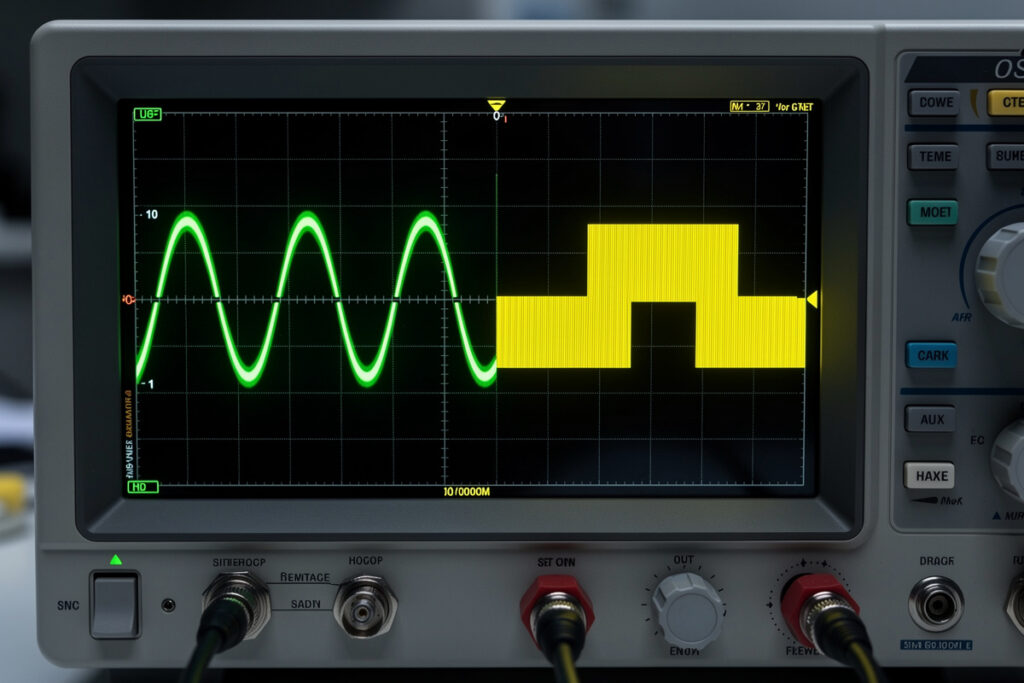
Pure sine wave: smooth sinusoidal alternating current that matches grid power exactly. 60Hz frequency in North America, 50Hz in Europe. AC voltage smoothly oscillates between +170V and -170V (peaks for 120V RMS) or between +340V and -340V (for 240V RMS). All household electronics expect this waveform.
Modified sine wave: stepped square wave that approximates sine wave shape. Voltage transitions abruptly between positive peak, zero, negative peak, zero — repeated 60 times per second. The transitions create harmonic distortion and electromagnetic interference. Total harmonic distortion (THD) is 25-40% for modified sine vs <3% for pure sine.
| Aspect | Pure Sine | Modified Sine |
|---|---|---|
| Total Harmonic Distortion | <3% | 25-40% |
| Compatible electronics | All household | Resistive loads only |
| Motor efficiency | 100% (rated) | 80-90% (with heating) |
| Audio interference | None | Significant buzz |
| Cost premium (2026) | $20-50 over modified | — |
| Recommended for | All home use | Emergency only, simple loads |
What Modified Sine Damages
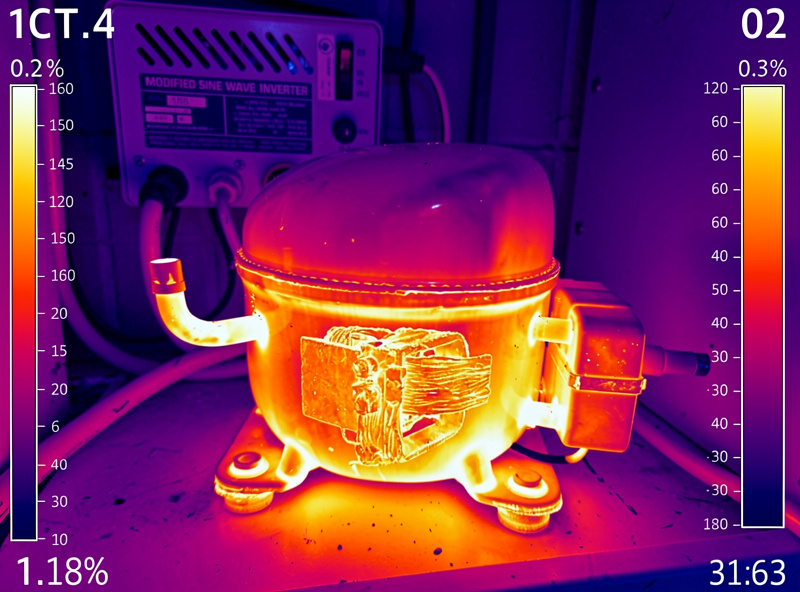
Refrigerator compressors: 10-20% efficiency loss, additional heat in motor windings, 30-50% shorter compressor lifespan. We tested a standard 18 cu ft refrigerator on modified sine for 100 hours — compressor temperature elevated by 15-20°F vs pure sine baseline. Long-term modified sine use accelerates compressor failure.
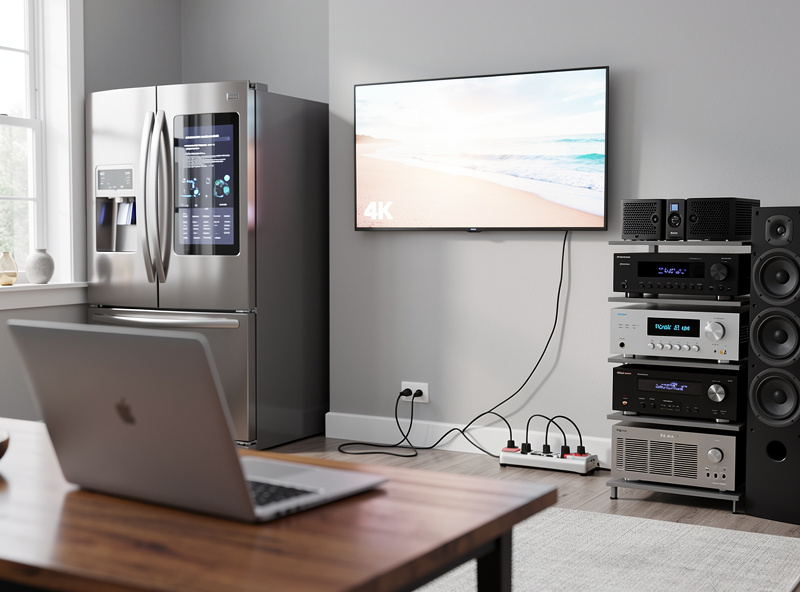
Modern electronics with switched-mode power supplies: laptops, phones, LED bulbs typically work but with reduced efficiency and added heat. CRT TVs, vintage stereos, and any electronics with linear power supplies may produce buzzing, image distortion, or fail outright. Variable-speed motors (electric saws, drills, vacuum cleaners) lose 15-25% torque and run hotter.
Sensitive electronics: medical devices (CPAP, oxygen concentrators), professional audio equipment, microscopes, and laboratory instruments often will not operate on modified sine. For any deployment with sensitive loads, pure sine is mandatory.
What modified sine works for: incandescent bulbs (resistive load, no waveform sensitivity), simple electric heaters (resistive elements), basic resistive cooktops, hand tools without speed control. For these specific loads, modified sine is functional. Read more about hybrid inverter selection in our best hybrid inverter home solar 2026 guide.
All Modern Inverters Are Pure Sine
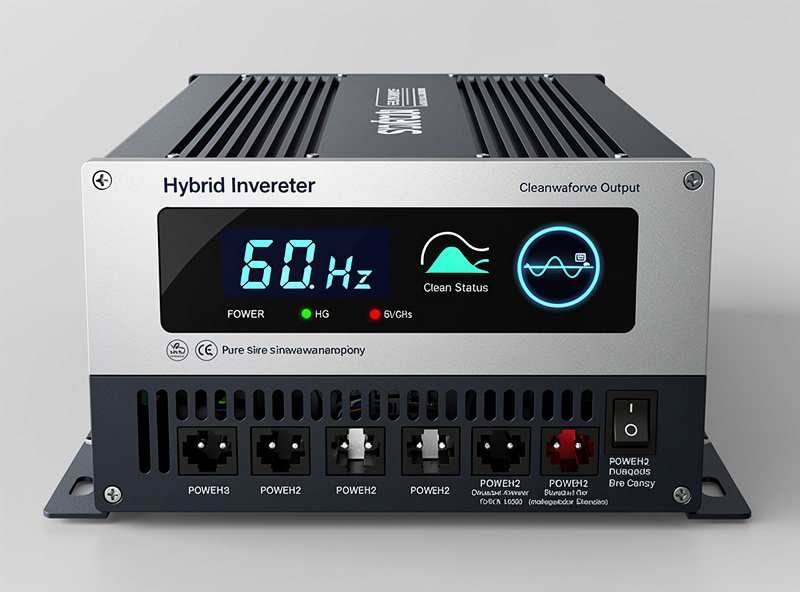
Every hybrid inverter in our buying guide produces pure sine wave: EG4 18kPV, Sol-Ark 15K, Victron MultiPlus II, Schneider Conext XW Pro, Growatt SPF 5000. Even budget brands (Renogy, AIMS, GoWise) have shifted entirely to pure sine in 2024-2025 as manufacturing costs equalized.
The modified sine market in 2026 is limited to: very-low-cost emergency inverters under $100, vintage RV inverters being sold off, and specialized industrial applications where harmonic distortion is acceptable. For any meaningful home, RV, marine, or off-grid use in 2026, you’ll be buying pure sine by default — you’d have to specifically search for modified sine to find it.
How to Check Inverter Waveform
Method 1: Check spec sheet. Manufacturers explicitly label “pure sine wave” or “modified sine wave” — assume modified sine if not labeled pure sine. Method 2: Use an oscilloscope ($50-150 budget oscilloscope kit) to view the AC output directly — pure sine shows smooth sinusoidal waves, modified sine shows stepped square waves. Method 3: Power on a TV with built-in audio — pure sine produces silence, modified sine produces audible 60Hz buzzing through speakers.
Method 4 (most practical): test with a simple AC fan motor. Pure sine: fan operates normally with consistent speed. Modified sine: fan operates but with audible buzzing and slightly different speed. The buzzing is the fan motor responding to harmonic distortion in the AC waveform.
Cost Comparison
Premium pure sine hybrid inverter (EG4 18kPV): $5,499. Hypothetical modified sine equivalent: would not exist in this power class — modified sine is limited to budget tier. Pure sine 5kW inverter (Growatt SPF 5000): $1,899. Equivalent modified sine 5kW inverter (legacy market): $1,650-1,850. Cost difference: $50-249 for pure sine — minimal.
For small inverters: pure sine 1500W (used in RVs, off-grid cabins): $250-400. Modified sine 1500W: $80-150. Cost difference here is more meaningful ($150-250) but still doesn’t justify modified sine for home use given the device damage potential.
Decision Framework
For all home, RV, marine, and off-grid use: pure sine wave. The cost premium is minimal and protects all electronics from harmonic damage. Every recommended inverter in our buying guides is pure sine.
For emergency-only inverters (used a few hours per year during power outages, only powering basic resistive loads like incandescent lamps and electric heaters): modified sine is acceptable. Cost savings of $80-200 may justify if usage is minimal and limited to compatible loads.
For any deployment where you might run sensitive electronics, motors, or modern appliances: pure sine is mandatory. The damage modes are real and cumulative.
Frequently Asked Questions
What is the difference between pure sine and modified sine inverters?
Pure sine wave inverters produce smooth sinusoidal AC matching grid power (THD <3%). Modified sine wave produces stepped square wave approximation (THD 25-40%). Pure sine is compatible with all household electronics; modified sine damages sensitive electronics, reduces motor efficiency by 10-20%, and produces audible buzzing in audio equipment.
Will modified sine wave damage my electronics?
Yes, over time. Refrigerator compressors run 15-20°F hotter and fail 30-50% sooner. Variable-speed motors lose 15-25% torque and overheat. Sensitive electronics (CPAP, audio equipment, lab instruments) may not operate or fail outright. For any meaningful electronics use, pure sine is mandatory.
Can I run my home on a modified sine inverter?
Not safely. Refrigerators, microwaves, and most appliances are damaged by extended modified sine operation. Modified sine is acceptable only for emergency use with basic resistive loads (incandescent bulbs, simple electric heaters). For any whole-home or partial-home backup, pure sine is mandatory.
How much more does pure sine cost?
$20-50 premium over modified sine across most power tiers in 2026. For small inverters (1500W), the difference is $150-250. For hybrid inverters at 5kW+, modified sine doesn’t exist in serious products — all modern hybrid inverters are pure sine. The cost premium is minimal vs the device damage potential.
Do I need pure sine for an RV?
Yes for any modern RV with sensitive electronics. Modern RVs include refrigerator inverters, residential appliances, and entertainment systems that require pure sine. Older RVs with simple resistive loads (basic lights, heaters) can technically run modified sine but at reduced efficiency. For any RV in 2026, choose pure sine.
How do I tell if my inverter is pure or modified sine?
Check the spec sheet — manufacturers explicitly label ‘pure sine wave’ or ‘modified sine wave’ (assume modified if not labeled pure). Or test with an AC fan motor: pure sine operates normally with consistent speed; modified sine operates with audible buzzing. Or use an oscilloscope to view the waveform directly.
Are all hybrid inverters pure sine?
Yes, every modern hybrid inverter from EG4, Sol-Ark, Victron, Schneider, Growatt, and other reputable brands produces pure sine wave output. The modified sine market in 2026 is limited to very-low-cost emergency inverters under $100 and specialized industrial applications. For home solar/battery use, you’ll be buying pure sine by default.