Important Disclaimer
BatteryStorageHQ provides educational content and estimates only. We are not certified installers, financial advisors, or electricians. Always consult with licensed professionals.
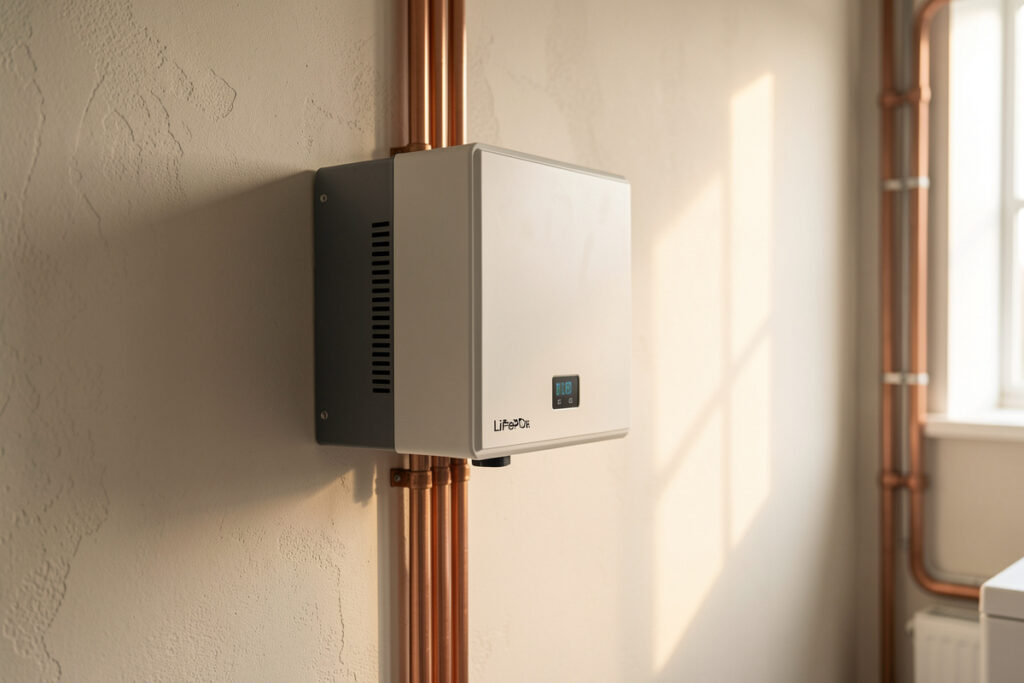
A properly sized LiFePO4 battery system can power almost anything in your house — the real question is never can it, but for how long and at what surge. A 10 kWh bank will run a fridge, lights, internet and a few outlets for the better part of a day. Point that same bank at an electric stove, a clothes dryer, or an EV charger and you measure runtime in minutes, not hours.
That gap between running watts and surge watts, and between a small continuous load and a brief brutal one, is the whole game. I build LiFePO4 banks from bare prismatic cells here in Sweden — a 16S, ~280 Ah EVE LF280K pack at 51.2 V nominal, fed by a south-facing array and tuned through a hybrid inverter I set by hand. Over the years I have run that bank against the workshop’s worst loads: the welder, the CNC, the sauna pre-heat, the curing chambers. This guide is the honest map of what a home battery can and can’t power, built from the loads I actually push through mine — not a brochure that promises “whole-home backup” and hopes you never plug in a kettle.
The Two Numbers That Decide Everything: Running Watts vs Surge Watts
Every load has two power figures: the running watts it draws continuously, and the surge watts it pulls for a fraction of a second at startup. For resistive loads — a heater, a kettle, an incandescent bulb — the two are nearly identical. For anything with a motor or a compressor, the surge can be three to seven times the running figure, and it is the surge that trips a battery system, not the average.
This is why inverter sizing is a surge problem, not a wattage problem. My Victron MultiPlus-II is the reliability benchmark I measure everything else against precisely because its surge behaviour is honest and its low-frequency design rides through motor inrush without folding. A budget high-frequency all-in-one can carry the same continuous load on the spec sheet and still brown out the instant a well pump’s locked-rotor current (LRA) hits it. Size the inverter to the surge of your single worst load, then add headroom — never to the sum of the running watts.
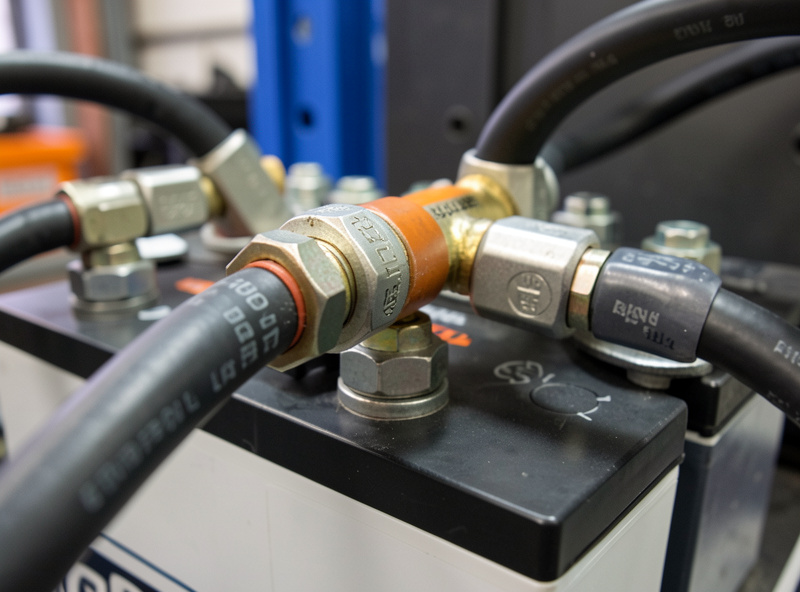
The second number to internalise is the continuous inverter rating. A 5,000 W inverter does not mean “5 kW forever and 5 kW surge.” It means roughly 5 kW continuous and often 8–10 kW for a few seconds. Read the surge spec, the duration it holds it for, and whether the manufacturer quotes it at 25 °C or at a realistic 40 °C in a hot garage. Heat derates inverters, and the spec sheet rarely leads with that.
Runtime Math: How Long Will the Bank Actually Last?
Runtime is simple arithmetic once you stop trusting nameplate capacity. Usable energy is your bank’s rated kWh multiplied by its depth of discharge (DoD). With LFP I plan around 90% usable on a 10 kWh bank, so 9 kWh of real energy. Divide that by the load’s running watts and you get hours — minus inverter overhead, which is real. If you want a sanity check on any appliance’s real consumption, the U.S. Department of Energy’s appliance energy-use guide is the reference I point people to before they trust a nameplate.
The formula I use in my head: Runtime (hours) = (kWh × DoD × 0.92 inverter efficiency) ÷ load in kW. A 150 W fridge cycling at maybe 50% duty draws ~75 W average, so a 10 kWh bank carries it well over a day. A 1,500 W space heater pulls continuously, so the same bank lasts about five to six hours. A 7,200 W EV charger empties it in a bit over an hour. Same battery, three completely different stories — because the load, not the battery, sets the clock.
One number people forget: parasitic and inverter idle draw. My inverter alone burns 20–40 W just being on. Over a 12-hour outage that is half a kilowatt-hour gone before a single appliance runs. On a small bank backing only critical loads, idle draw matters; size for it.
The Load Tiers: From Trivial to Bank-Killing
After enough time watching per-load current in my Home Assistant logs, I sort household loads into tiers by how hard they hit a battery system. The table below is the honest version — running and surge figures are typical ranges, and the runtime column assumes a healthy 10 kWh LFP bank carrying only that load.
| Load | Running watts | Surge watts | Runtime on 10 kWh | Difficulty |
|---|---|---|---|---|
| LED lights + Wi-Fi + phone charging | 30–100 W | negligible | days | Trivial |
| Refrigerator or chest freezer | 100–200 W | 600–1,200 W | 1–3 days | Easy |
| Sump pump (1/2 HP) | 800–1,050 W | 2,000–4,000 W | cycles for days | Surge-limited |
| Well pump (1 HP submersible) | 1,200–2,000 W | 3,500–6,000 W | cycles for days | Surge-limited |
| Mini-split / heat pump (1 ton) | 500–1,500 W | 1,500–4,500 W* | 6–18 hrs | Moderate |
| Central AC / heat pump (3 ton) | 3,000–5,000 W | up to 15,000 W* | 2–3 hrs | Hard |
| Electric dryer | 3,000–5,000 W | ~5,000 W | ~2 hrs | Hard |
| Electric stove/oven | 2,000–5,000 W | ~5,000 W | ~2 hrs | Hard |
| Level 2 EV charger | 7,200–11,500 W | ~rated | ~1 hr | Bank-killer |
*Inverter-driven (variable-speed) heat pumps soft-start and have far lower surge than the single-speed compressors in the same table — which is exactly why I tell people the model number matters more than the tonnage.
Resistive Heat: Why Stoves, Dryers, and Heaters Eat Banks
Resistive heat is the most honest load there is and the most expensive to run from a battery. There is no surge trickery, no efficiency to exploit — a 4,000 W oven element turns 4,000 watts of your stored sun into heat for exactly as long as it is on. Watts in equal watts out, and your bank drains in a straight line.
That is why I steer people away from backing an electric range or a clothes dryer on battery at all. The math doesn’t fail; the value does. Running a dryer for 45 minutes can consume a third of a 10 kWh bank you’d rather spend keeping the fridge, the well, and the heat going for a day. During an outage, hang the laundry and cook on gas or a single induction burner you can meter. If you genuinely need backed electric cooking and drying, that is its own sizing exercise — I cover the real numbers in the guide on running an electric stove and dryer on battery backup.
Motors and Compressors: The Surge Problem
Motors are where battery backup gets interesting, because the running watts lie about the difficulty. A 1 HP submersible well pump might run at 1,500 W, but its locked-rotor inrush can spike past 5,000 W for a fraction of a second every time it starts. That spike is what your inverter has to survive, and it is why a “5 kW” inverter can fail to start a “1.5 kW” pump.
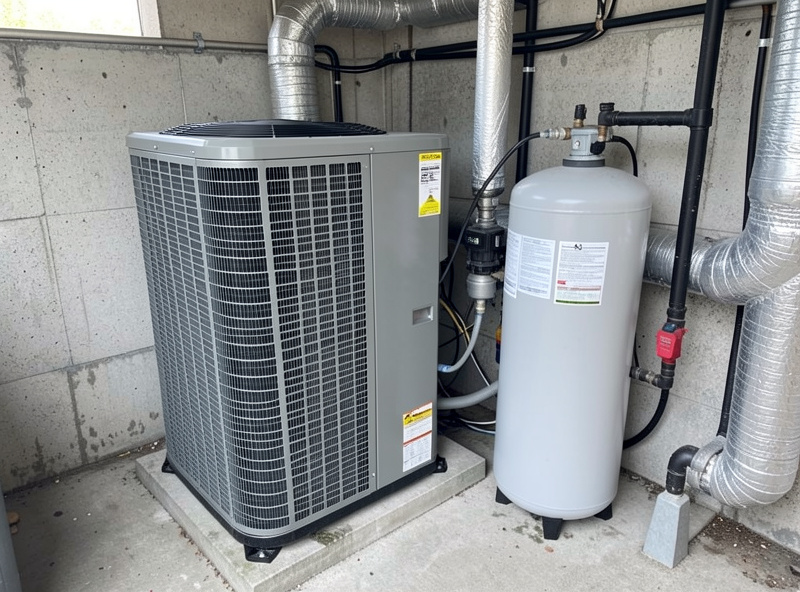
The fix is almost always a soft starter rather than a bigger inverter. A soft starter ramps the motor up over a second or two instead of slamming it to full voltage, cutting inrush by 50–70% and letting a modestly sized inverter handle a load it could never start cold. I keep this in mind for every motor load on the bank, and it is the single highest-leverage upgrade for anyone trying to back a pump or compressor. If you want a soft starter for an AC compressor, a compressor soft starter is far cheaper than upsizing the whole inverter. As an Amazon Associate I earn from qualifying purchases.
Each motor load has its own quirks, so I broke them into their own deep dives: the well pump backup battery system, the sump pump battery backup, the refrigerator and freezer backup, the heat pump and AC on batteries, and the gentler mini-split on battery backup. Read the one that matches your load — the surge numbers and the soft-start advice differ enough that a generic answer will steer you wrong.
EV Charging: The Biggest Load Most People Underestimate
An EV charger is the single largest load most homes will ever connect, and it changes how you think about a battery entirely. A Level 2 charger at 32 A pulls about 7,700 W continuously for hours — it doesn’t surge, it just sits at the top of your inverter’s continuous rating and drains the bank in a straight, fast line. You do not back an EV charger off a battery during an outage; you charge the car directly from the bank or, better, from live solar during the day.
The honest framing is that battery-buffered EV charging is a solar self-consumption play, not a backup play. Charge the car from the sun while it’s shining, or trickle it overnight from a bank big enough to spare the kWh. Trying to fast-charge a car off a 10 kWh wall battery just shuttles energy through two conversions and empties it. I walk through the real sizing — and why kilowatt-hours, not kilowatts, are the number that matters — in the dedicated guide to EV charging from solar and batteries, which builds on the broader home EV charging integration guide and the question of how much solar an EV actually needs.
Whole-House vs Critical-Loads: The Honest Split
The most common mistake I see is people trying to back the entire main panel. You almost never want to. The professional approach — and the one that actually works on a residential bank — is a critical loads subpanel: you move the circuits that matter (fridge, freezer, well, furnace fan or boiler, a few outlets, internet, a light circuit) onto a separate panel the inverter feeds, and let the dryer, oven, AC and EV charger stay on the grid side.
This is the difference between a system that carries you through a multi-day outage and one that trips on the first thermostat call. A 10 kWh bank backing a well-chosen critical-loads panel is genuinely useful for a day or more. The same 10 kWh trying to be a whole-house UPS is a disappointment waiting for the first big appliance. Decide what must stay on, size to that, and stop romanticising “whole-home backup.” If you’re wiring this yourself, the NEC code for home energy storage covers what the inspector will actually look for.
Surge Capacity Is Not Theory — It’s the Whole Point
Surge capacity stops being an abstraction the moment the welder fires in my workshop or the sauna heaters cycle on. The same 16S bank that backs the critical circuits also runs hard, brief, ugly loads, and watching how the inverter handles inrush taught me more than any datasheet. I learned it the hard way: the first time the welder fired with an undersized inverter on the bench, the whole bus browned out and the unit dropped the load — a humbling reminder that the surge spec, not the continuous rating, is what fails you, and always at the worst possible moment. A low-frequency inverter with a real transformer rides through those spikes; a lightweight high-frequency unit clips and faults. If your loads include any motor, compressor, or tool, weight your inverter choice toward low-frequency designs and honest surge specs — I compare them in the best hybrid inverter guide and the head-to-head on Sol-Ark vs EG4.
It also matters which inverter waveform you feed sensitive electronics. Motors tolerate a lot; switch-mode power supplies and audio gear do not. Anything with a transformer or a microprocessor wants a true sine wave, which is why I never recommend a modified-sine unit for a home — the reasons are laid out in pure sine vs modified sine. For US homes running 240 V loads, you also need to get the split-phase vs single-phase inverter decision right before any of this works.
What I Actually Power From My Bank
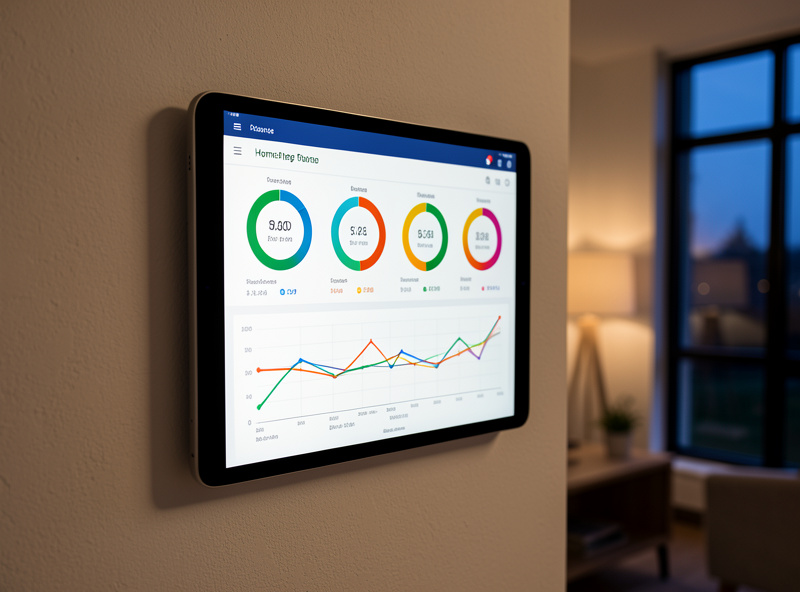
For the record, here’s the real-world load list off my own 16S LFP bank, because the polymath crossover is the honest test of “what can a battery power”: the workshop welder and CNC (surge loads, low-frequency inverter), the infrared sauna pre-heat, the curing chambers, the hydroponic reservoir pumps, and the network rack. That last one is its own discipline — running switches and routers efficiently means going 48 V DC straight off the battery where you can, the same logic behind building a LiFePO4 server rack. One Home Assistant rule engine watches per-cell voltage, state of charge, daily PV and every one of those loads on a single dashboard — the same engine that watches the reservoir levels and the curing-chamber humidity.
None of that requires exotic gear. It requires sizing to the real loads, choosing an inverter for surge, and being honest about depth of discharge. If you want the foundational math, start with how to size a battery storage system and the portable-power sizing method, then come back and apply it to whichever load above is keeping you up at night. And because a battery only matters when the grid is down, the outage backup plan and the generator-for-the-winter-gap piece round out the picture for a northern climate where the sun quits in November.
The Northern-Latitude Reality: Sizing for the Dark Months
What a battery can power and what it can keep powered are different questions once you live somewhere the sun genuinely quits. Here in Sweden my array produces a fraction of its nameplate in December — the panels are fine, the daylight simply isn’t there. A bank that breezes through a summer outage carrying the well, the fridge and the heating can be flat by morning in January because there is no meaningful recharge between cycles.
That changes the load list. In the dark months I plan around the assumption that the battery may not refill from solar at all for days, which means resistive heat comes off the table entirely and even the heat pump gets metered against state of charge. This is the part the sunbelt brochures skip, and it is why I’m allergic to “energy independence” copy — a northern winter is the honest stress test. The full math lives in northern-latitude solar array sizing and the brutal numbers behind the winter output collapse, while the cold itself imposes a hard rule I never break: never charge LFP below freezing. Plan the worst month, not the average, and your “what can it power” answer stays true in February as well as July.
Frequently Asked Questions
Can a home battery power my whole house?
Technically yes for short bursts, but practically no for any useful duration. A 10 kWh bank trying to back the dryer, oven, AC and EV charger drains in under two hours. The working approach is a critical-loads subpanel feeding only the fridge, well, heat and essentials, which a 10 kWh LFP bank can carry for a day or more.
How long will a 10 kWh battery last?
It depends entirely on the load, not the battery. At 90 percent usable you have about 9 kWh. That runs a 75 W average fridge for over a day, a 1,500 W heater for roughly six hours, or a 7,200 W EV charger for a bit over an hour. Divide usable kWh by the load in kilowatts to get hours.
Why won’t my inverter start my well pump or AC?
Because motors and compressors draw a locked-rotor surge three to seven times their running watts for a fraction of a second at startup. A 5 kW inverter can fail to start a 1.5 kW pump if the inrush exceeds its surge rating. A soft starter cuts that inrush by 50 to 70 percent and usually solves it more cheaply than a bigger inverter.
Can I charge my EV from a home battery?
You can, but it is a solar self-consumption strategy, not a backup one. A Level 2 charger pulls around 7,700 W continuously and empties a 10 kWh bank in roughly an hour. The sensible move is charging the car directly from live solar during the day, or trickling it overnight from a bank large enough to spare the energy.
What loads should I avoid putting on battery backup?
Resistive heat: electric ranges, ovens, clothes dryers and resistance space heaters. They convert your stored energy straight to heat with no efficiency to exploit, draining the bank in a straight line. During an outage, cook on gas or a single metered induction burner and skip the dryer entirely to protect runtime for the fridge, well and heating.
Does the inverter waveform matter for what I can power?
Yes. Motors tolerate modified-sine output, but switch-mode power supplies, audio gear, some furnace control boards and anything with a microprocessor want a true pure sine wave. A pure-sine inverter is the only safe default for a home, which is why I never recommend modified-sine units for whole-home or critical-loads backup.