Important Disclaimer
BatteryStorageHQ provides educational content and estimates only. We are not certified installers, financial advisors, or electricians. Always consult with licensed professionals.
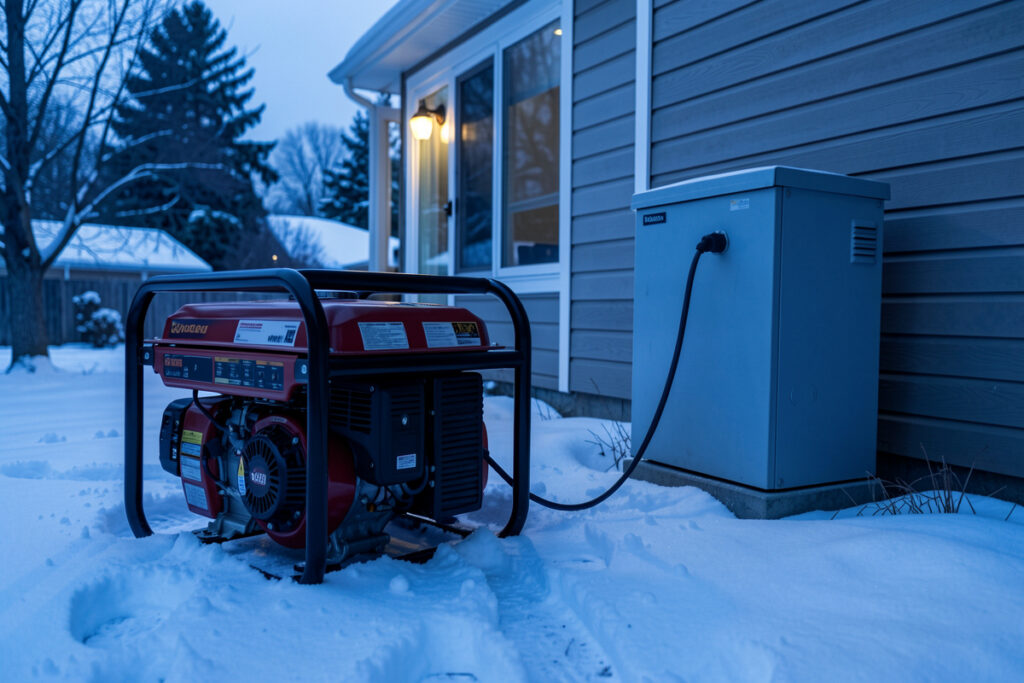
For about ten months of the year my generator sits in the shed doing nothing, and I am perfectly happy about that. It exists for the two or three deep-winter weeks when the array has effectively quit, the bank is sliding, and no amount of honest solar math closes the gap. A backup generator is not an admission that the solar failed — it is the part of an honest northern system that lets the solar be sized sanely in the first place. Without it you either oversize the array into absurdity or you go cold in January. With it, you size the panels for the eight good months and let the genset cover the floor.
This is the gap-filling half of the winter problem. It builds on the production reality I cover in the winter solar storage guide and on the off-grid system design picture. Here I want to be concrete about why the generator belongs in the design, how to integrate it cleanly, and how to size it so it runs rarely and briefly rather than constantly.
Why the generator is a design choice, not a failure
The arithmetic is unforgiving at high latitude. When your array spends days at a stretch making an eighth of its summer output, the only ways to carry a multi-week deep-winter load on solar alone are a preposterously large array (that then sits idle eight months) or a preposterously large bank (weeks of storage, enormous cost). Both are worse engineering — and worse economics — than a modest generator that runs for a handful of hours across the worst weeks.
So the honest northern architecture is solar plus storage plus a backup source. If you have a grid connection, the grid is that backup and you rarely need a generator at all. If you are genuinely off-grid, the generator is the backup, and treating it as a designed component rather than an emergency afterthought is the difference between a system that hums along and one that browns out at 3 a.m. because nobody decided what happens when the panels make nothing for four days.
How to integrate it cleanly
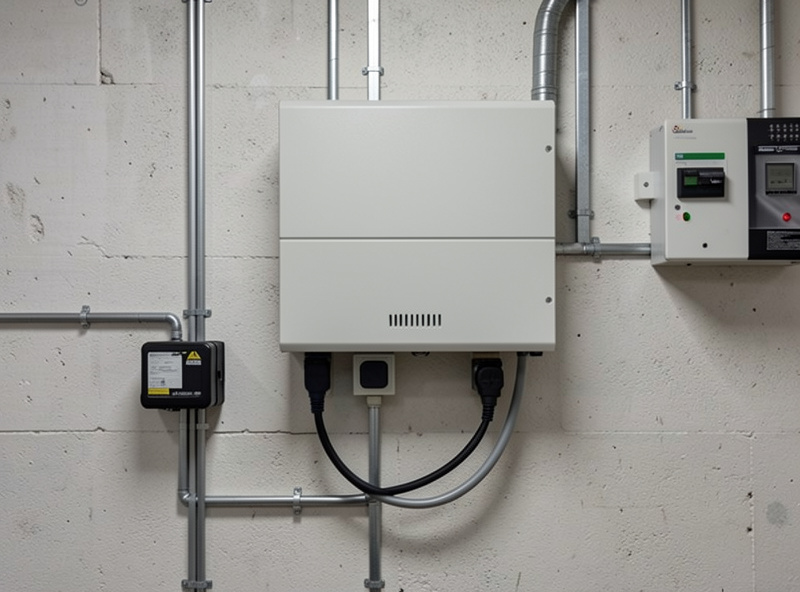
The single most important integration decision is to charge the bank through your inverter/charger, not with a separate dumb charger bolted on the side. Most hybrid inverters and all-in-one units — the Victron MultiPlus-II I run as my reliability benchmark, and the low-frequency all-in-ones in the same class — accept an AC input specifically so a generator can feed them. The generator runs into that AC-in, and the unit charges the bank using the same LFP-correct charge profile (absorption and float set to your cells) it uses for solar. You get clean, controlled charging and a single point of configuration.
That arrangement buys you three things a bolt-on charger cannot. First, correct charge behaviour — the inverter respects your absorption voltage, float, and the BMS, so the generator does not bulk-charge a bank past where it should stop. Second, pass-through power — while the genset runs, the inverter can power loads directly and charge simultaneously. Third, automatic control — many units can start a compatible generator on a two-wire signal when the bank hits a low state of charge, run it until a target SoC, and shut it down, so you are not babysitting it at midnight.
The trigger I favour is a state-of-charge floor rather than a clock. You pick an SoC at which the generator kicks in (low enough that solar gets first crack at refilling the bank on any day that offers sun, high enough that you are never near empty), and a target SoC at which it stops — not 100%, because finishing the last stretch slowly on a generator is wasteful; let solar top it off or accept a partial charge. In the very darkest weeks I will sometimes switch to a scheduled run instead, because I already know solar will not contribute meaningfully.
Sizing the generator
The instinct is to size a generator to power the whole house. For a battery-based system that is the wrong target and usually leads to an oversized, inefficient, lightly-loaded genset. Size it to charge the bank in a reasonable run. Your panel count and array size feed directly into how large a gap you need to fill — for the full latitude-and-angle math, see the northern latitude solar sizing guide before finalising generator run-time targets., plus any loads you want to carry while it runs. The inverter/charger has a maximum charge current; the generator needs to comfortably supply that charge power plus whatever the house is drawing at the time, with headroom so it is not lugging at full load the whole run.
A generator runs most efficiently and lasts longest at a healthy fraction of its rated load — not idling, not redlined. So the goal is a genset that, while charging the bank near the inverter’s max charge rate and carrying typical loads, sits in that comfortable middle band. Undersize it and it strains and cannot keep up; oversize it wildly and it sips fuel inefficiently at light load and wet-stacks. Inverter generators are worth the premium here for clean power the inverter/charger will accept happily and for good part-load efficiency.
The other half of sizing is run-time per session. You want short, infrequent runs: the generator brings the bank from your SoC floor up to your target in a bounded number of hours, then stops for the day. If your numbers say the generator would have to run most of the day to keep up, your bank is too small or your floor is set wrong — fix that rather than just running the genset longer.

The honest downsides
I am not romantic about generators. They are noisy, they need fuel, they need maintenance — oil changes, fresh fuel or stabiliser, exercise runs so they actually start when you need them — and they emit exhaust that must go safely outside, never into any occupied or enclosed space. That last point is a genuine safety line, not a footnote: generator exhaust is lethal indoors, and a carbon-monoxide alarm in any adjacent living space is non-negotiable.
But measured against the alternative — a bank that goes flat in the dark with no way to refill it — and a bank that fails because condensation corroded the busbars or cold cracked a connector. For the physical side of cold-season prep, the winterize home battery system guide covers siting, insulation, and freeze-thaw protection. — a few hours of generator noise across the worst weeks of winter — and if a cold bank is preventing charging while the generator runs, a properly sized LiFePO4 heating pad solves that before the generator ever needs to compensate for it. is a trade I make happily. The goal was never “never burn a drop of fuel”; it was a system that keeps the fridge cold and the lights on through a Nordic December. Solar does that eight months of the year. The generator does it for the two that solar cannot.
The gear that makes generator integration clean
Two accessories turn a generator from a manual chore into a designed part of the system. An automatic transfer switch handles the hand-off between sources cleanly, and a heavy-gauge generator cord rated for your charge load keeps the connection from being the weak link. Both are genuinely on the shelf, unlike the generator itself which you will usually buy locally and to local electrical standards.
As an Amazon Associate I earn from qualifying purchases. These are the integration parts I would actually buy; they cost you nothing extra.
- Automatic transfer switch — clean, safe hand-off between solar/battery and the generator backup.
- Heavy-duty generator cord — properly rated for the charge load so the cable is never the bottleneck.
- Carbon-monoxide alarm — non-negotiable in any living space near where the generator runs.
Frequently asked questions
Do I really need a generator if I have solar and batteries?
At high latitude, yes — unless you have a grid connection to act as backup. In deep winter the array can make a fraction of its summer output for weeks, and no sane array or bank size carries that gap on solar alone. A modest generator that runs a few hours across the worst weeks is better engineering and economics than oversizing the array into uselessness.
How should a generator charge my battery bank?
Through your inverter/charger’s AC input, not with a separate dumb charger. The inverter then charges the bank using the same LFP-correct profile it uses for solar, can power loads while charging, and on many units can auto-start the generator at a low state of charge and stop it at a target. This gives controlled charging from one point of configuration.
What size generator do I need?
Size it to charge the bank at the inverter’s charge rate plus any loads running, with headroom so it sits at a healthy part-load rather than idling or redlining. Do not size it to power the whole house directly. The aim is short, infrequent runs that lift the bank from your low-SoC floor to a target, then shut down.
When should the generator turn on?
Trigger on a state-of-charge floor rather than a clock, so solar still gets first chance to refill on any day with sun. Stop at a target SoC below 100% — finishing the last stretch on a generator is wasteful. In the very darkest weeks, a scheduled run can make sense because you already know solar will not contribute.
Is it safe to run a generator near the house?
Only with the exhaust safely outside and well away from any window, door, or vent — generator exhaust is lethal indoors. Keep a carbon-monoxide alarm in any adjacent living space, never run a generator in an enclosed or attached space, and follow local electrical code for the connection and transfer switch.