Important Disclaimer
BatteryStorageHQ provides educational content and estimates only. We are not certified installers, financial advisors, or electricians. Always consult with licensed professionals.
Off-grid solar design is the art of sizing for the worst week of the worst month with no utility safety net behind you. That single constraint changes everything: where a grid-tied home can lean on the mains when the sun quits, a true off-grid system must carry its own loads through the darkest, coldest stretch of the year on stored sun alone. Done honestly at a northern latitude, that means a brutally oversized array, real days of battery autonomy, a surge-rated inverter, and — almost always — a generator as the honest backstop nobody likes to mention.
I will say the unpopular thing up front: most “off-grid” homes are not actually off-grid, and grid-tied-with-backup is the better choice for the vast majority of people. But if you genuinely have no grid connection, this is how the design math actually works, building on the system-wide thinking in the home solar panel guide. The goal here is residential whole-home autonomy, not a single 12 V circuit.
Off-Grid vs Grid-Tied-With-Backup
The honest middle ground for most people is grid-tied-with-backup: solar and a battery that cover daily loads and ride through outages, but with the grid available as the infinite buffer when winter or a bad week arrives. It is dramatically cheaper because you never have to size for the absolute worst case — the grid covers the tail. True off-grid removes that buffer, so you must build for the tail yourself, which is where the cost explodes.
Small, single-purpose off-grid systems are a different and far easier problem — a cabin light, a gate, or an off-grid chicken coop’s 12 V electronics can be sized for a modest load with a few days of autonomy and a small panel. Scaling that same philosophy to a whole house is where people underestimate the winter gap by an order of magnitude. The principles are identical; the numbers are not.
The Four Pillars of an Off-Grid System
An off-grid system stands on four components, each sized to a different stress. The array is sized to energy — enough watts to refill the bank in your design month. The battery is sized to autonomy — enough kWh to carry loads through the cloudy days the array cannot cover. The inverter is sized to surge — enough peak power to start your hardest motor load. And the generator is sized to rescue — enough to recharge the bank during a prolonged dark spell. Get any one of these wrong and the system fails in a predictable way.
The classic mistake is sizing all four to the same “average” assumption. Average load sizes the array; it does not size the inverter, which must handle the instantaneous surge when a well pump or compressor starts — four to seven times running current. I cover that surge-first inverter logic in the hybrid inverter guide and the split-phase discussion; for off-grid it is non-negotiable, because there is no grid to absorb a brownout.
Days of Autonomy: The Number That Sizes the Battery
Days of autonomy is how many days the battery alone can carry your loads with zero solar input — the cloudy-week insurance. For a grid-tied backup system, one day is often plenty. For genuine off-grid, you design for two to five days depending on how cloudy your worst stretch gets and how much you are willing to lean on a generator. More autonomy means a bigger, more expensive bank, so this is a direct cost-versus-resilience dial.
With LiFePO4 you can usefully discharge 80–90% of nameplate capacity, which makes the autonomy math kinder than the old lead-acid days when you dared not go below 50%. So a 15 kWh LFP bank genuinely delivers around 12–13 kWh of usable energy. Pair that with the battery sizing method and the cold-weather rules — autonomy is worthless if the bank is too cold to charge when the sun finally returns.
The Northern Winter Gap
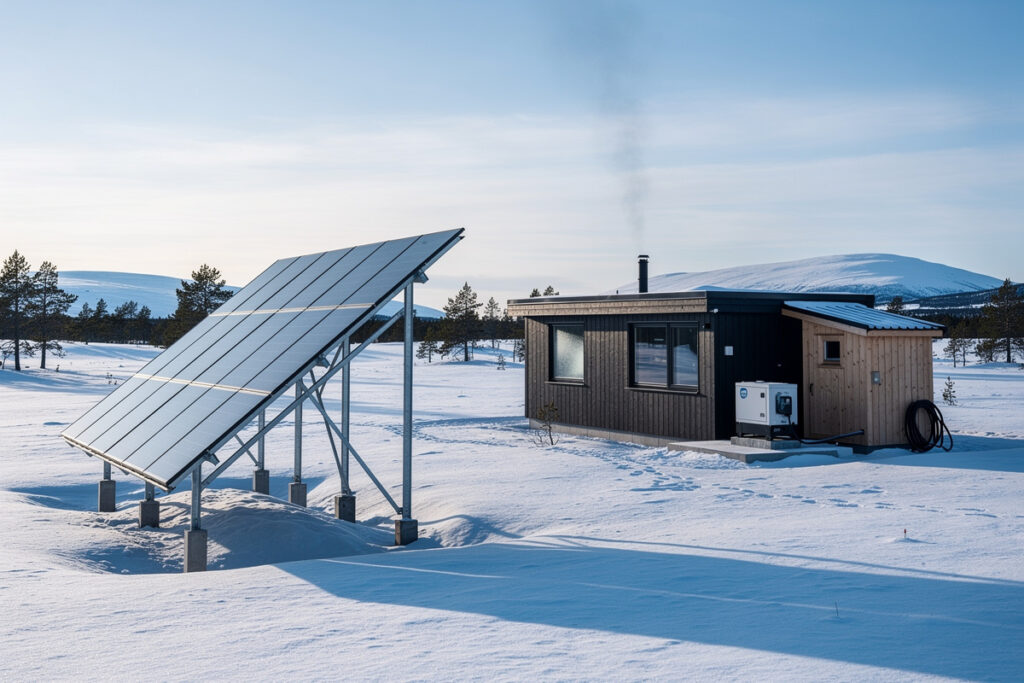
This is the part the off-grid-homestead fantasy skips. At high latitude, December can deliver under one peak-sun-hour, so an array sized to fully cover a winter home load would be financially absurd — two or three times what the rest of the year needs. No reasonable amount of battery autonomy bridges a multi-week solar drought either; you cannot store your way out of a season. So honest northern off-grid design accepts the gap rather than pretending it away.
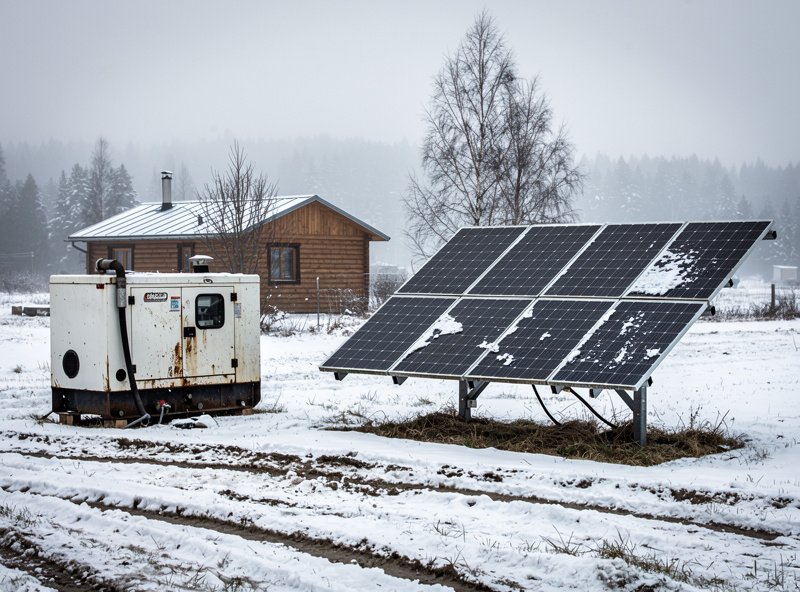
There are exactly three honest responses to the winter gap: oversize the array dramatically and accept enormous summer curtailment, accept a generator as a routine winter charging source, or ration loads hard in the dark months. In practice, real off-grid homes up north use all three in combination. The sizing calculator exists precisely to make this gap visible so you plan for it instead of being ambushed by it in January.
DC-Coupled, AC-Coupled, or All-in-One
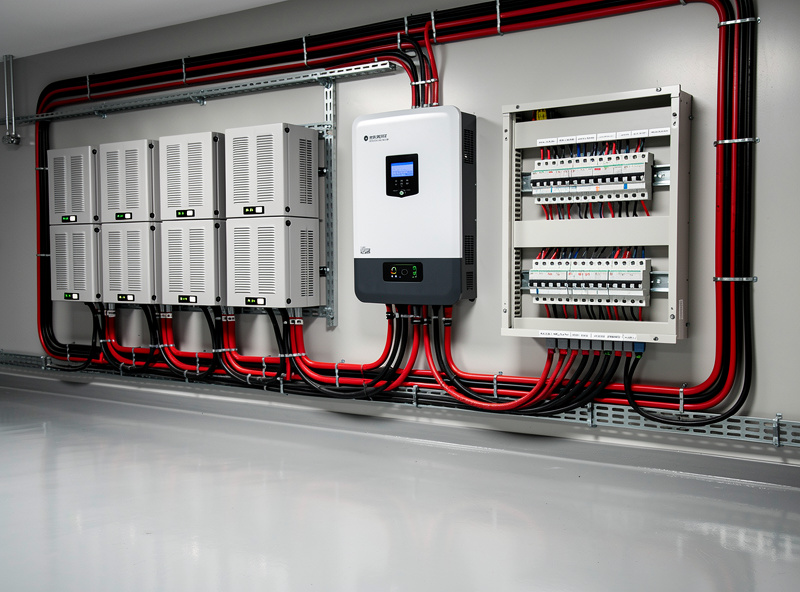
The system architecture decides how panels, battery, and loads connect. DC-coupled runs panels through an MPPT charge controller directly into the battery, then an inverter to the AC loads — simple, efficient for new off-grid builds, and the approach I favour for a from-scratch system. AC-coupled ties a grid-tie inverter to a battery inverter and suits adding storage to an existing solar array. All-in-one hybrid inverters combine the charge controller, inverter, and transfer switch in one box, trading some flexibility for simplicity and a clean install.
For most new off-grid homes, a quality all-in-one or a DC-coupled MPPT-plus-inverter stack is the pragmatic choice. Whichever you pick, the charge controller has to be MPPT — the harvest difference is too large to give up off-grid, as the MPPT vs PWM guide spells out — and the whole DC side needs proper fusing, a Class-T fuse on the battery, and the safety discipline from the storage safety guide.
Load Management and Monitoring
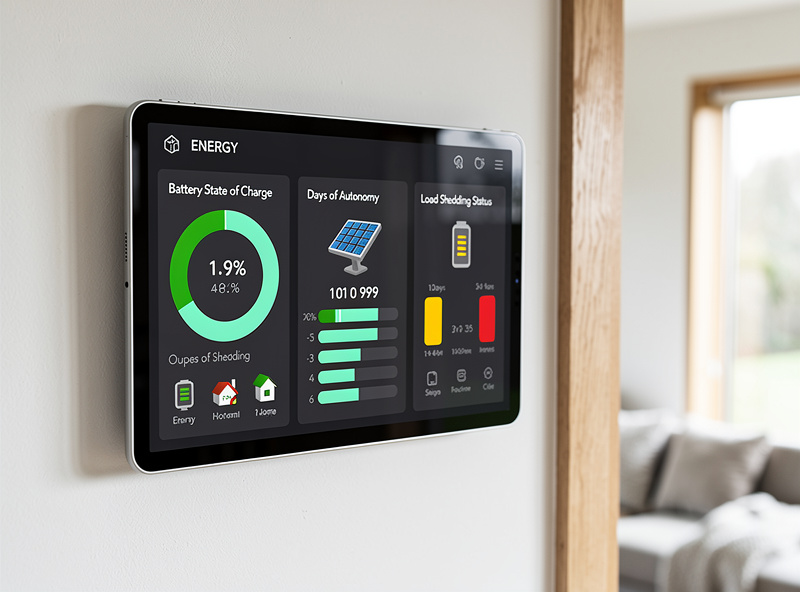
Off-grid living is as much about managing demand as generating supply. Load shedding — automatically dropping non-essential loads when the battery gets low — turns a hard outage into a soft, graceful degradation. The same Home Assistant rule engine that watches my battery state-of-charge, daily PV, and load can shed the water heater or defer the EV charge when the bank dips, which is the difference between a managed system and one that simply dies at 2 a.m. A battery monitor shunt and a generator transfer switch are the genuinely useful pieces of off-grid kit.
That crossover is the quiet advantage of an integrated off-grid home: the same dashboard and rule engine that runs the battery also watches the workshop loads, the curing-chamber humidity, and the sauna pre-heat — one brain for everything that draws power. Off-grid done well is not deprivation; it is a tightly instrumented system that knows its own limits and degrades gracefully when it hits them.
Grid-tied-backup vs true off-grid
| Factor | Grid-tied with backup | True off-grid |
|---|---|---|
| Array sizing | To daily load; grid covers tail | To worst design month |
| Battery autonomy | ~1 day typical | 2–5 days |
| Generator | Optional | Usually essential |
| Winter gap | Grid fills it | You fill it (oversize/genset/ration) |
| Relative cost | Lower | Much higher |
| Best for | Most homes | No grid connection available |
My Verdict
If a grid connection exists, take it and build grid-tied-with-backup — it is cheaper, simpler, and you never size for the impossible worst case. If you are genuinely off-grid, design the four pillars to their separate stresses, build two-to-five days of LiFePO4 autonomy, choose MPPT and a surge-rated inverter, and plan honestly for the winter gap with oversizing, a generator, and load management. Off-grid is entirely achievable; it just rewards math and honesty and punishes the brochure fantasy.
Frequently Asked Questions
What does off-grid solar design actually require?
Sizing for the worst week of the worst month with no grid backup. That means an array sized to your design month, two to five days of battery autonomy, a surge-rated inverter, and usually a backup generator. Each component is sized to a different stress, not one average figure.
Is true off-grid better than grid-tied with backup?
For most people, no. Grid-tied with backup covers daily loads and outages while using the grid as an infinite buffer for bad weeks, so it is far cheaper. True off-grid removes that buffer and forces you to build for the worst case, which is costly. Choose off-grid only without grid access.
How many days of battery autonomy do I need off-grid?
Typically two to five days for genuine off-grid, depending on how cloudy your worst stretch gets and how much you will rely on a generator. Grid-tied backup often needs only one day. More autonomy means a bigger, costlier bank, so it is a resilience-versus-cost decision.
Can solar alone power an off-grid home in winter?
At high latitude, rarely. A northern December can deliver under one peak-sun-hour, so a winter-sufficient array would be uneconomically large and no battery stores a multi-week drought. Honest off-grid design accepts the gap and bridges it with oversizing, a generator, and load rationing.
Do I need a generator for off-grid solar?
Almost always at a northern latitude. A generator is the honest backstop that recharges the bank during prolonged dark spells the array cannot cover. Sizing it as a routine winter charging source, not just an emergency, is part of realistic off-grid planning rather than a design failure.
What inverter setup is best for off-grid?
A DC-coupled MPPT-plus-inverter stack or a quality all-in-one hybrid inverter, sized to your hardest surge load, not your average draw. Off-grid has no grid to absorb a brownout, so surge rating is critical, and the charge controller must be MPPT to avoid wasting scarce winter harvest.