Important Disclaimer
BatteryStorageHQ provides educational content and estimates only. We are not certified installers, financial advisors, or electricians. Always consult with licensed professionals.
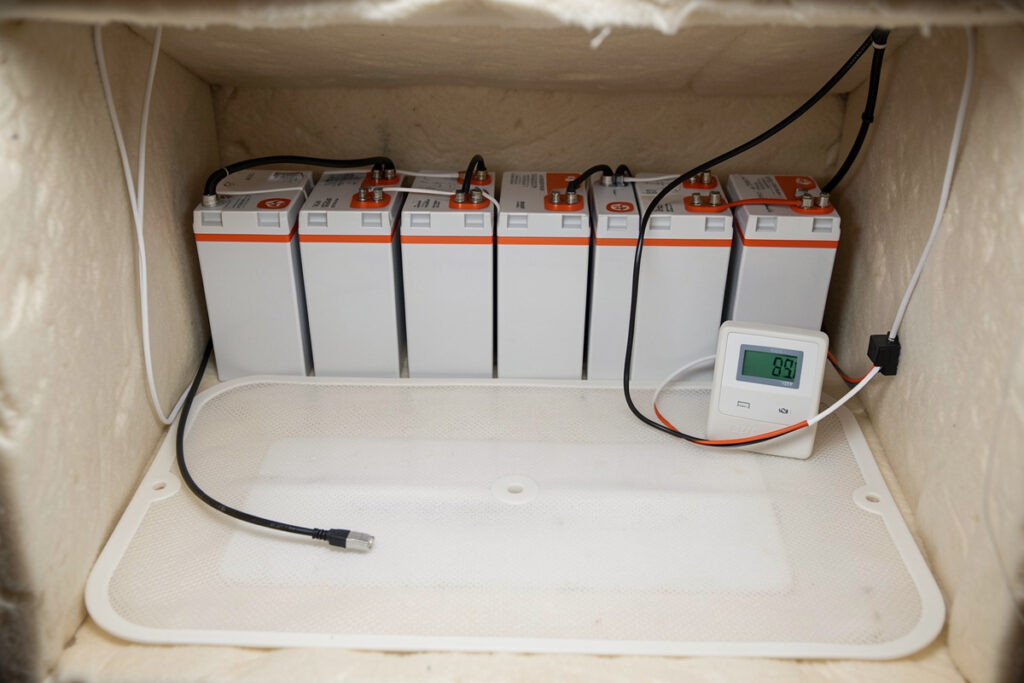
If your battery bank can drop below freezing, the heating pad is not an accessory — it is the part that lets the bank charge at all through winter. The BMS charge-temperature cutoff protects the cells by refusing charge below freezing, but the cutoff does not warm anything; it just blocks. The heating pad is what keeps the cells inside the safe charge window so that protection rarely has to act. Choose and wire one correctly and an unheated-garage or outdoor bank charges happily all winter. Choose badly and you either cook a corner of the pack, drain the bank heating empty space, or trip your own low-temperature cutoff every cold morning.
This guide is the selection-and-installation half of cold-bank charging, sitting alongside the winterizing the install decisions and the broader winter solar storage system. Let me walk through what actually matters when picking a pad, because most of the choosing is about the controller and the placement, not the heater itself.
What the heating pad is actually for
The job is narrow and specific: keep the cells above freezing — with a little margin — so the BMS will authorise charging. It is not to make the cells warm, or to heat the enclosure, or to run all the time. A LiFePO4 cell charges fine at a few degrees above zero; you do not need it cosy, you need it past the plating threshold. That narrowness is what makes a heating pad efficient: it only has to nudge the cells over a line, not heat a room.
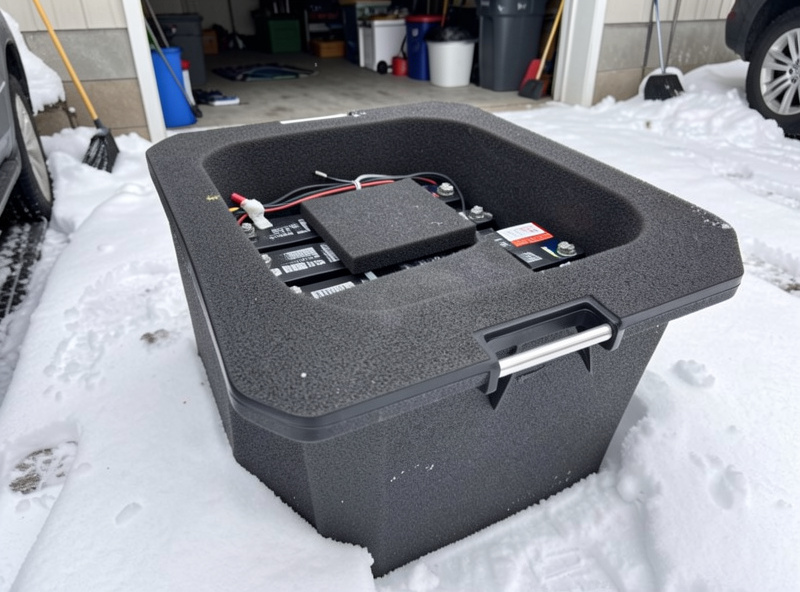
Crucially, the energy to do this comes from the bank itself (or from incoming solar/grid before charging proper begins). That is fine — the trickle a thermostatically controlled pad draws to hold a well-insulated bank above freezing is small compared to the capacity it unlocks by allowing winter charging. The efficiency comes from two things: thermostatic control so it only heats when needed, and insulation around the bank so the heat it adds stays in.
The four things that actually matter when choosing
The pad element is the least interesting part of the decision. Here is what I actually weigh.
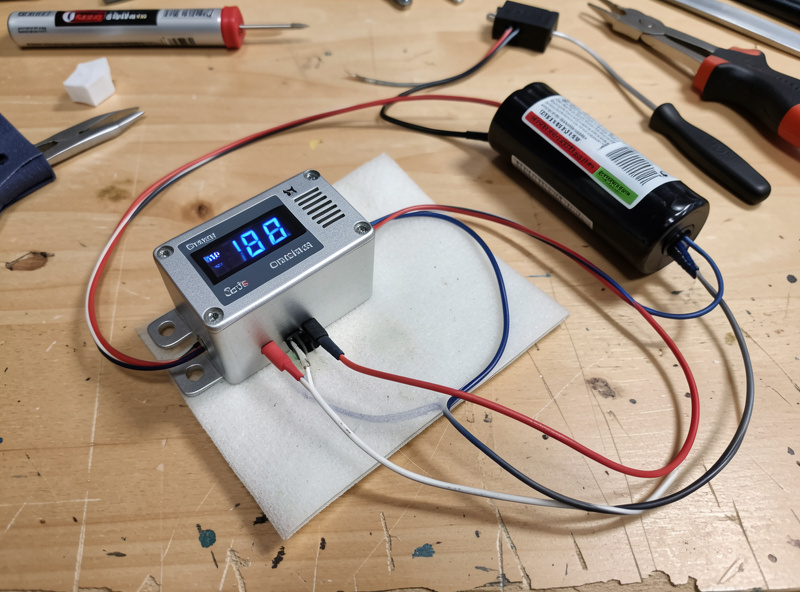
1. Thermostatic control. The single most important feature. A pad with a built-in thermostat (or driven by an external temperature controller) heats only when the cells are near the threshold and stops once they are safe, giving you efficiency and preventing overheating. A bare, always-on pad is a mistake — it wastes energy and can overheat a cell in milder spells. If a pad does not have thermostatic control, add an external temperature controller; do not run it open-loop.
2. Voltage match to your system. Pads come in 12 V, 24 V, and 48 V variants, plus AC-powered versions. For a DIY bank the cleanest approach is usually a pad that runs from the bank’s own DC voltage so it works during an outage with no inverter involved; an AC pad only helps while the inverter is up. Match the pad to your system voltage and never improvise a mismatch.
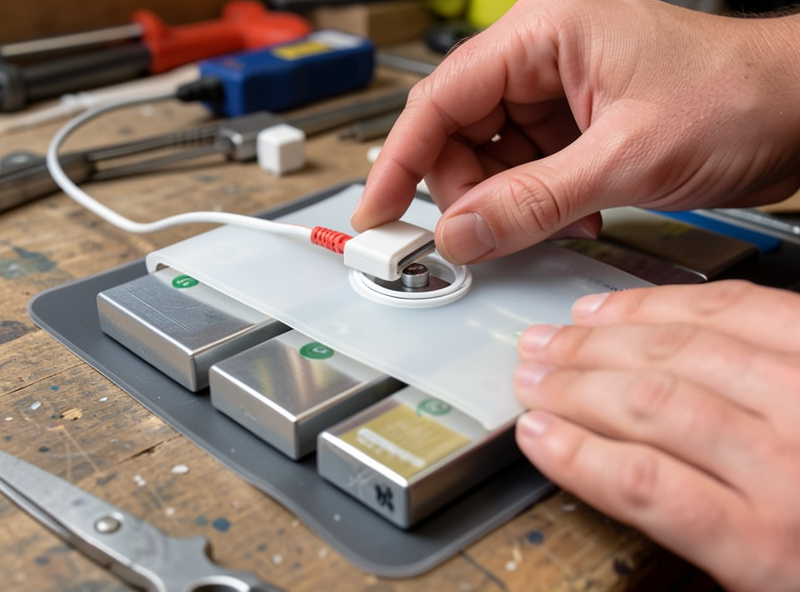
3. Size and coverage. The pad should cover enough of the cells’ surface to warm them evenly without hot spots. For a multi-cell prismatic bank that usually means a pad (or pads) sized to sit under or against the cell faces, not a tiny patch heating one corner while the far cells stay frozen. Even warming matters — a bank with one warm corner and one frozen corner is still partly blocked by the cutoff.
4. Placement. Under or against the cell bodies, paired with insulation around the bank so the heat is retained. The temperature sensor that controls the pad — and the one feeding the BMS — must read the cells, ideally the coldest one, so the system protects and heats based on reality, not on warm air near the heater.
Pad types compared
Here is how the common options stack up for a home LiFePO4 bank, from the lens of someone who cares about outage-proof operation and efficiency.
| Type | Power source | Best for | Watch-out |
|---|---|---|---|
| DC self-regulating pad (with thermostat) | Bank DC (12/24/48 V) | DIY banks; works during an outage with no inverter | Match the voltage exactly; confirm thermostatic control |
| DC pad + external temp controller | Bank DC | Builders who want a tunable cut-in/cut-out | One more component to wire and fuse correctly |
| AC silicone heating pad | Mains/inverter AC | Banks that are always inverter-up or grid-tied | Useless if the inverter is down — defeats outage resilience |
| Heated enclosure / heating film | DC or AC | Full outdoor enclosures needing even warmth | More build effort; still needs thermostatic control and insulation |
For most of the DIY banks I help people with, a thermostatically controlled DC pad sized to the cells, run from the bank’s own voltage, inside an insulated enclosure, is the right answer. It keeps working when everything else is dark, and that is the whole point of having storage in the first place.
Wiring it safely
A heating pad is a load on the bank, so it gets treated like one. Fuse the pad circuit appropriately for its current draw, use wire rated for that current, and make the connections to spec — the same discipline as any DC load. If the pad runs from the bank, decide whether you want it to keep running when the BMS has cut other loads at very low SoC; usually you want a low-priority cutoff so heating a near-empty bank does not flatten it completely, but you also do not want to lose freeze protection entirely. This is a judgement call I make per install, balancing freeze risk against deep-discharge risk.
And as always, the temperature sensing has to be honest. The pad’s thermostat and the BMS charge cutoff should both be reading cell temperature in the coldest part of the pack. Heat the cells based on a sensor sitting next to the warm pad and you will think the bank is fine while a far cell is still below freezing and blocked from charging. Sensor placement is half the battle.
The pads and controllers I would buy
The market is full of cheap pads with no real temperature control, which is exactly the thing you must not buy. What I look for is a self-regulating or thermostatically controlled pad in the right voltage for the bank, and — if the pad is a bare element — a separate temperature controller to drive it. A spare temperature probe to verify what the controller thinks against reality rounds it out.
As an Amazon Associate I earn from qualifying purchases. These are the parts I would genuinely fit; they cost you nothing extra.
- Thermostatic LiFePO4 heating pad — self-regulating pad sized for a prismatic bank, the core of the setup.
- DC temperature controller — drive a bare pad with a tunable cut-in/cut-out so it only heats near the threshold.
- Temperature sensor probe — verify the coldest cell really is in the safe window, not just the air near the pad.
Frequently asked questions
Do I need a heating pad for my LiFePO4 battery?
Only if the bank can drop below freezing. LiFePO4 cannot be charged below about 0°C without permanent damage, and the BMS will block charging when it is that cold. If your bank lives somewhere heated, you do not need a pad. If it lives in an unheated garage or outdoors, a thermostatic pad is what keeps it in the safe charge window all winter.
How much power does a battery heating pad use?
Less than people expect, if it is thermostatically controlled and the bank is insulated. It only heats when the cells approach the threshold and stops once they are safe, and good insulation keeps that heat in. The small trickle it draws is minor against the winter charging capacity it unlocks. An always-on, uninsulated setup wastes far more.
Should the heating pad run from the battery or from AC?
For outage resilience, run it from the bank’s own DC voltage so it works even when the inverter is down — which is exactly when you need storage most. An AC pad only helps while the inverter or grid is up. Match the pad voltage to your system and never improvise a mismatch.
Where do I place the heating pad and its sensor?
Place the pad under or against the cell bodies so it warms them evenly without hot spots, and surround the bank with insulation to retain the heat. The controlling temperature sensor — and the BMS charge-cutoff sensor — must read the coldest cell, not warm air near the pad, or you will heat based on a false reading.
Can a heating pad drain my battery flat?
It can if you let it heat an already near-empty bank with no limit. The usual approach is a low-priority cutoff so heating does not flatten the bank at very low state of charge, balanced against not losing freeze protection entirely. Fuse the pad circuit, size the wire for its current, and treat it like any DC load.