Important Disclaimer
BatteryStorageHQ provides educational content and estimates only. We are not certified installers, financial advisors, or electricians. Always consult with licensed professionals.
To charge an EV mostly from solar, the array has to be sized against the car’s annual energy appetite and your latitude’s real production, not against the charger’s kilowatt rating. The mistake almost everyone makes is matching panels to charger power — “my charger is 7 kW so I need 7 kW of panels” — when the honest variable is energy over time, measured in kilowatt-hours per day, against the brutal seasonal swing of how much sun your roof actually catches. I run a small south-facing array at a Swedish latitude, so I have lived the gap between the May number and the December number, and an EV makes that gap impossible to ignore.
This is the sizing piece of the broader EV charging and home battery integration guide, and it leans heavily on the same arithmetic as the general solar panel sizing work — just pointed at a load that is bigger and lumpier than anything else in the house.
Start from the car’s energy appetite, not the charger
The first number is how much energy your driving actually consumes. An EV uses somewhere in the region of 15 to 20 kWh per 100 km, depending on the car, the speed, and — relevant here — the temperature, because cold weather hammers EV efficiency just as it hammers solar production. Take your typical daily or weekly distance, multiply by your car’s real consumption, and you have the energy the panels need to replace. Someone driving 40 km a day needs roughly 6 to 8 kWh daily; someone doing a 200 km commute needs five times that, and no rooftop array at a northern latitude is covering that in January.
Notice what this reframes. The charger’s 7 kW rating tells you how fast the car fills; it tells you nothing about whether the sun can fill it. A small array can fully fuel a light-driving household over a sunny week and fall hopelessly short for a heavy commuter in winter, with the exact same charger on the wall. Energy, not power, is the currency of solar EV sizing. Working out how much of that energy you can actually store and shift is the same depth-of-discharge math I walk through in battery cycle life and DoD.
The latitude multiplier nobody puts on the brochure
A kilowatt of panels does not produce a fixed amount of energy — it produces wildly different amounts depending on where and when. The same array that hands me a generous daily figure in June collapses to a fraction of that around the winter solstice, and that collapse is steeper the further north you are. The honest way to size a solar-EV system is around your worst realistic month if you want year-round coverage, which usually reveals that fully solar-charging an EV through a northern winter would need an absurd, uneconomic amount of roof. The sane conclusion is the blended one: solar carries the car in the bright half of the year, and cheap off-peak grid carries it through the dark half. This is the same wall I describe in the winter solar storage guide, just with a much bigger load attached.
If you size instead around your annual average and accept seasonal grid top-ups, the array gets far more reasonable. That is the design choice most real installations make, and it is the honest one. Anyone promising year-round solar EV charging at a high latitude without a winter grid backstop is selling a summer photograph as a yearly reality.
Self-consumption: the number that actually pays
Here is the subtlety that separates a good design from a naive one. Solar production peaks at midday; many people charge their car overnight. If the car is not plugged in when the sun is highest, the surplus exports to the grid and the car later draws from the grid — and you have gained almost nothing in self-consumption. Sizing the array is only half the job; the other half is timing the charging to coincide with production, which is where solar-surplus (PV-excess) charging and a home battery come in. A home battery lets you bank the midday surplus and feed it to the car in the evening, at the cost of conversion losses I cover in the hub.
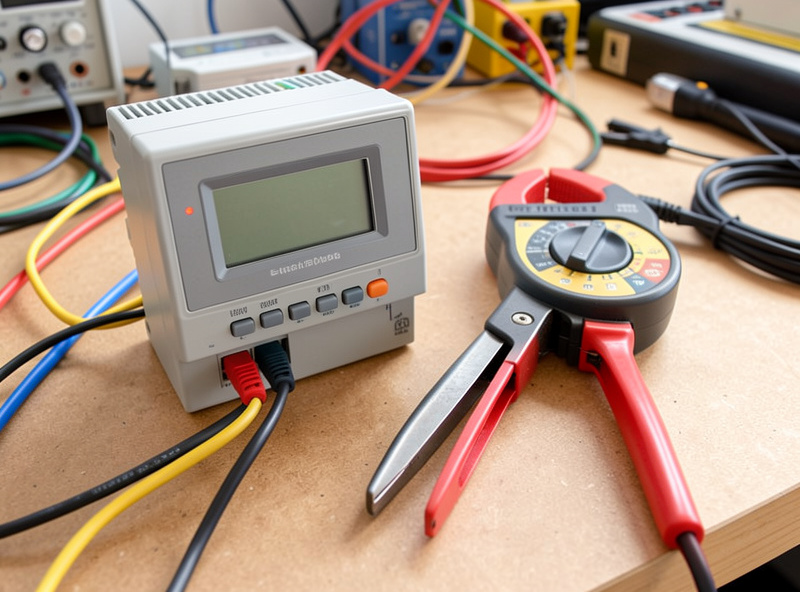
This is why I measure before I size. A plug-in energy meter on the existing household load and a clamp meter on the array tell you what your real production and consumption curves look like, and that data — not a brochure’s nameplate — is what you size against. I would not add a single panel for EV charging without first logging a few weeks of actual production and actual driving energy. The metric I care about is the self-consumption fraction: of the energy the panels make, how much of it actually ends up in the car or the house versus exported for whatever your utility pays for export. Pushing that fraction up — by timing charging to production, by adding storage, by orienting the array to your habits — is what makes a solar-EV pairing genuinely worthwhile rather than a roof full of panels feeding the grid while the car drinks grid power at night.
Orientation and the shape of the production curve
Two arrays of identical wattage can deliver very different value to an EV depending on how they face. A due-south array gives the tallest midday peak, which is great if you can charge the car at midday but wasteful if you cannot — the surplus spills to the grid. An array split east and west, or tilted toward the afternoon, produces a broader, flatter curve that often matches household and charging patterns better even though its peak is lower. For solar EV charging specifically, the array that overlaps your charging window beats the one with the higher nameplate peak. This is one of those cases where the textbook “maximise annual yield” answer and the practical “maximise self-consumption” answer diverge, and for a car you usually want the latter.
It is also worth being honest about shading and roof real estate. The clean rectangle in the brochure rarely matches a real roof with a chimney, a vent stack, and a tree that throws afternoon shade six months of the year. A few shaded panels drag a whole string down more than people expect, and that is a sizing-and-layout conversation worth having before committing, not after. The same Voc and string-behaviour considerations I obsess over for cold-weather wiring margin apply to layout too.
A worked sizing approach
Put it together in order. First, find your daily driving energy (distance × real consumption). Second, find your location’s realistic daily production per kilowatt of panels for the months you care about — summer figure for seasonal coverage, winter figure if you stubbornly want year-round. Third, divide the energy you need by the production per kilowatt to get the array size, then add margin for losses and bad weather. Fourth, decide honestly whether the winter shortfall is covered by grid or by an impractically large array. Almost always the answer is “grid covers winter,” and the array is sized to dominate the sunny months.
To actually capture the data this rests on, a plug-in kWh energy meter on the household side and a DC clamp meter on the array are the two cheap tools that turn guesswork into a real sizing exercise. As an Amazon Associate I earn from qualifying purchases. They cost a fraction of a single panel and stop you from over- or under-building the array, which is the most expensive mistake in the whole project.
If you have not yet sized the storage half of the system, do that alongside this — the battery storage sizing calculation and the install realities in the Level 2 charger installation guide are the natural next steps once the array number is settled.
Frequently asked questions
How many solar panels do I need to charge an EV?
Size against energy, not charger power. A car driven 40 km a day at typical EV efficiency needs roughly 6 to 8 kWh daily, which a modest array can cover on sunny days. Heavy commuters need several times that. The panel count depends entirely on your daily driving distance, your car’s real consumption, and your latitude’s production, so there is no universal number, only the arithmetic of kWh needed divided by kWh produced per panel.
Can solar fully charge an EV in winter?
At a northern latitude, almost never without an impractically large array. Winter solar production collapses to a fraction of the summer figure precisely when cold weather also reduces EV efficiency, so the shortfall is double. The honest design carries the car on solar in the bright months and on cheap off-peak grid through winter. Sizing for full winter solar coverage usually requires far more roof than makes economic sense.
Should I size the array to the charger’s kW rating?
No. The charger’s kilowatt rating sets how fast the car fills, not how much energy the sun can supply. Solar sizing is an energy problem measured in kilowatt-hours per day against your latitude’s real production. A 7 kW charger can be fully fed by a small array for a light-driving household or fall far short for a heavy commuter, with the identical charger on the wall. Size to energy demand, not charger power.
Why does charging timing matter for solar EV sizing?
Solar peaks at midday but many people charge overnight. If the car is not drawing while the sun is high, the surplus exports to the grid and the car later pulls from the grid, gaining little self-consumption. Sizing the array only pays off if charging is timed to production, via solar-surplus charging or a home battery that banks the midday surplus for evening use. Timing is as important as the panel count.