Important Disclaimer
BatteryStorageHQ provides educational content and estimates only. We are not certified installers, financial advisors, or electricians. Always consult with licensed professionals.
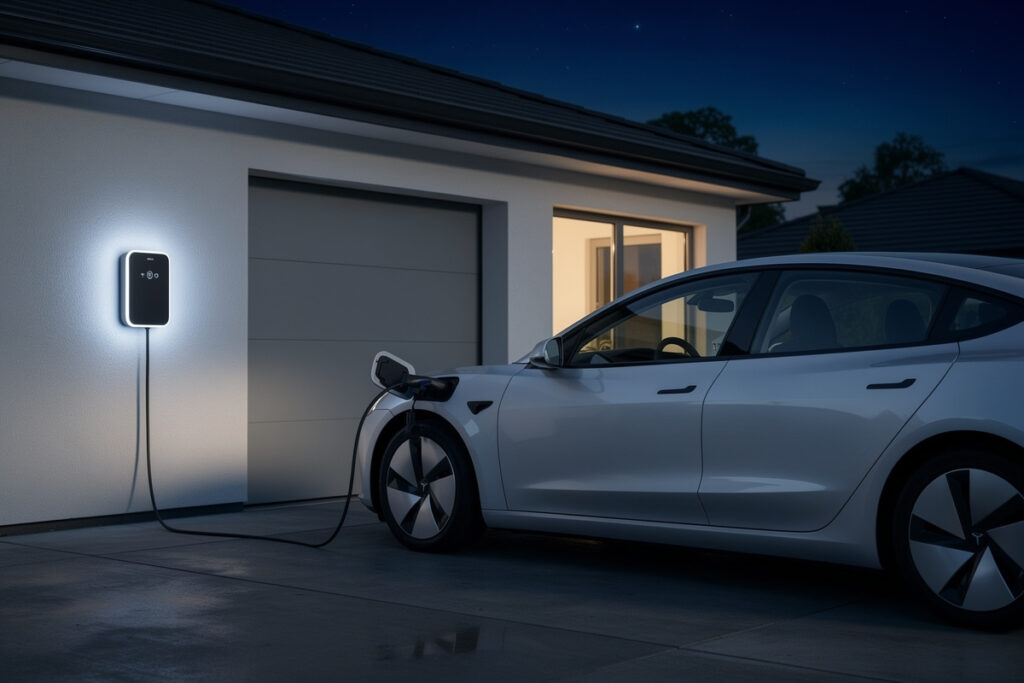
A smart EV charger with time-of-use scheduling is the single highest-return change most home charging setups can make, because it shifts the largest load in the house out of the expensive peak hours and into the cheap overnight window automatically — no solar required. I am, by reputation, allergic to “save money on your bill” marketing, but this one is real and it is arithmetic, not hype: the same kilowatt-hours bought at the off-peak rate instead of the peak rate, applied to a load big enough to matter. If you do nothing else from the broader EV charging integration guide, turn on time-of-use scheduling.
The reason it works so well is the shape of EV charging. It is flexible — the car sits plugged in for far longer than it needs to charge — and it is large. A flexible large load is exactly the kind of thing you want to push around the clock to wherever energy is cheapest, and a smart charger is the tool that does the pushing.
What “time-of-use” actually means
Time-of-use (ToU) tariffs price electricity differently depending on the hour. A simple version has a peak rate (typically late afternoon and evening, when everyone is home cooking and heating) and a cheaper off-peak rate (overnight, when demand collapses). More sophisticated dynamic tariffs change the price hour by hour, sometimes following the wholesale market, occasionally dipping very low when the grid has a surplus of wind or solar. The whole point of a smart charger is to wait for the cheap window and charge then, instead of dumping the car’s full draw onto the grid at the moment you plug in — which is often the most expensive moment of the day.
This is the same arbitrage logic that makes a home battery pay on a ToU tariff: charge cheap, use expensive. The difference is that with an EV you are not even storing energy for later — you are simply consuming it at a smarter time. That makes it the cleanest, lowest-loss version of the trick, with none of the round-trip conversion penalty a battery incurs.
The three ways to schedule charging
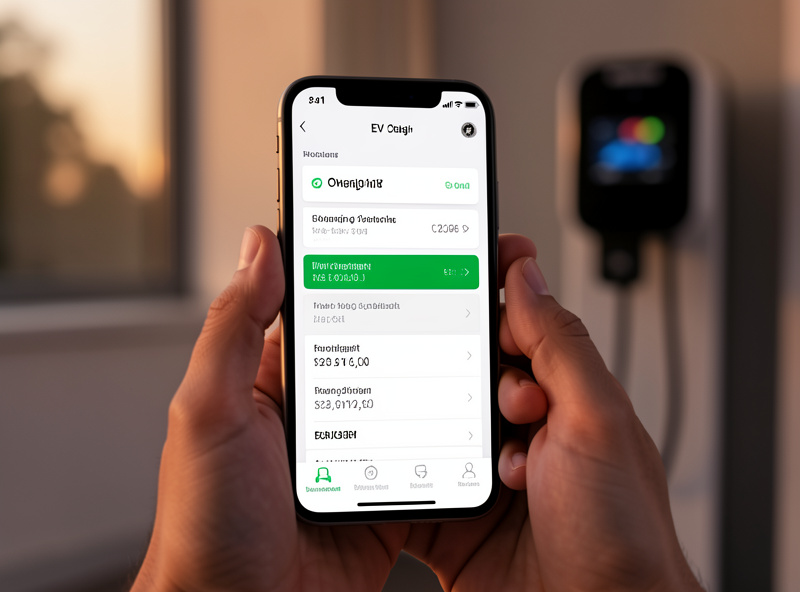
There is more than one place the scheduling intelligence can live, and they are not equally good.
| Method | Where the schedule lives | Strength | Weakness |
|---|---|---|---|
| Car’s built-in scheduler | In the vehicle | Free, no extra hardware, works anywhere | Crude on/off times; unaware of dynamic prices or solar |
| Smart charger scheduling | In the EVSE | Tariff-aware, can follow dynamic prices, can add solar logic | Costs more; quality varies by brand |
| Home-automation control | External controller / rule engine | Most flexible; coordinates car, battery, solar, prices together | Needs setup and a meter; overkill for simple needs |
For most people a good smart charger hits the sweet spot. The car’s own scheduler is fine for a fixed off-peak window and costs nothing, but it is blind to dynamic prices and to your solar production. A smart charger that can read a dynamic tariff and react to it captures the cheapest hours automatically, and the better ones add solar-surplus following on top. The home-automation route — the one I run — is the most powerful because the same rule engine coordinates the car against the battery’s state-of-charge and the live price, but it is more than most households need.
Dynamic tariffs and the smarter end of scheduling
A simple two-rate tariff is easy: charge in the cheap block, done. Dynamic tariffs are where a genuinely smart charger pulls ahead, because the price changes every hour and the cheapest hours are not always where you would guess. On a windy night the wholesale price can fall through the floor for a few hours; on a still, cold evening the peak can be brutal. A charger that reads the day-ahead or live price and schedules the session into the genuinely cheapest hours captures value a fixed timer never sees. It can also split a charge across two cheap windows if a single one is not long enough, something a crude on/off timer cannot do.
There is a subtle systemic point worth making here too. If every EV in a neighbourhood is set to start charging at the exact moment the off-peak rate begins — say midnight on the dot — you create a new demand spike at midnight, which is self-defeating and is part of why grids are moving toward dynamic pricing in the first place. The better smart chargers randomise or stagger their start within the cheap window, or follow the live price rather than a hard cutoff, which spreads the load and is genuinely better for the grid as well as your bill. It is a small thing, but it is the difference between a charger that games a fixed rule and one that actually responds to conditions.
Where it stacks with solar and a battery
Time-of-use and solar charging are not competitors; they are layers. Solar-surplus charging soaks up genuine midday excess when the sun is up; time-of-use charging covers everything else from the cheapest grid hours. A smart charger worth buying does both: it prioritises your own surplus solar when it exists and falls back to the cheap grid window when it does not. In my own system the rule is simple in principle — sun first, cheap grid second, never charge the car at the expensive peak unless I genuinely need the range now — and the smart charger plus the rule engine enforce it without me thinking about it.
Layer a home battery in and it gets even better: the battery can bank midday surplus and the smart charger can decide, hour by hour, whether to feed the car from sun, from the bank, or from cheap grid. That coordination — not charging the car out of the battery during expensive hours when the grid is cheaper, for instance — is exactly the kind of decision a rule engine handles and a dumb charger cannot. The whole-system view lives in the integration guide, and how much of that load your bank can actually carry comes back to the storage sizing math.
What to buy, and how to verify it works
The hardware is a smart Level 2 charger that supports scheduling and, ideally, dynamic-tariff and solar integration. The connector and power level have to suit your car and supply, but the scheduling capability is the feature that earns its keep here. If you already have a dumb EVSE, a surprising amount can be recovered just by using the car’s built-in scheduler — do that first, for free, before buying anything.
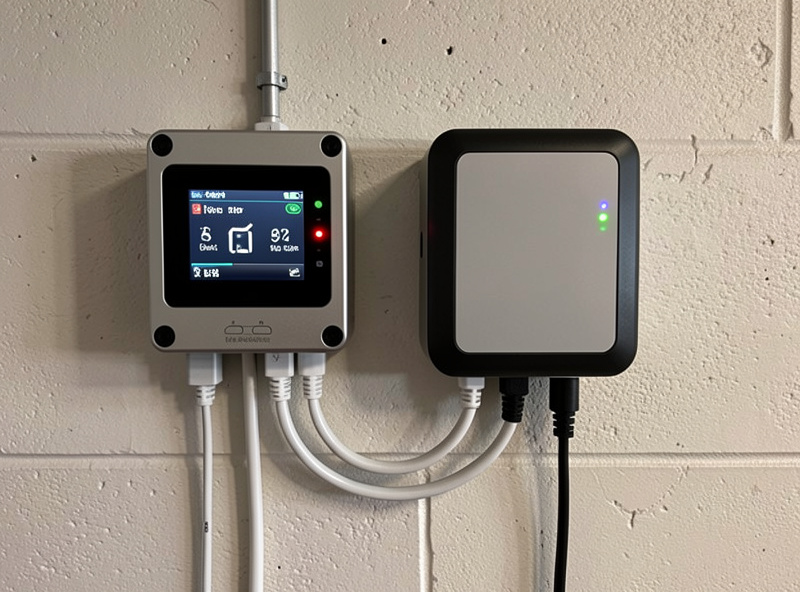
For new hardware, a smart Wi-Fi EV charger with scheduling is the core purchase, and I would pair it with a whole-home energy monitor so you can actually see the load move off peak and confirm the savings are real rather than assumed. As an Amazon Associate I earn from qualifying purchases. The energy monitor is the part people skip and then wonder whether the scheduling is doing anything — measure it, do not trust it. The same instinct I apply to my battery bank applies here: I do not believe a system is behaving until I can see it on a graph. A charger that claims to be charging off-peak but quietly tops the car up at 6 pm because of a misread setting is worse than no scheduling at all, because you think you are saving when you are not. A monitor catches that in a day.
Once the charger is scheduling, the natural next steps are getting the solar sizing right so there is surplus to chase, and making sure the install itself is solid enough to carry the continuous load the scheduler will run overnight.
Frequently asked questions
Does a smart EV charger save money?
Yes, on a time-of-use tariff, and the saving is arithmetic rather than marketing. The charger shifts the car’s charging session into the cheap off-peak window instead of the expensive peak, so you buy the same kilowatt-hours at the lower rate. Because EV charging is the largest flexible load in most homes, moving it off peak has an outsized effect. The exact saving depends on your tariff’s peak-to-off-peak spread.
Do I need a smart charger or can the car schedule charging?
Many EVs have a built-in scheduler that can delay charging to a fixed off-peak window, and that is free and worth using first. A smart charger adds value when you have a dynamic tariff whose prices change hour to hour, or when you want solar-surplus charging, because it can react to live conditions the car’s simple timer cannot. For a flat peak-and-off-peak tariff, the car’s scheduler may be enough.
Can a smart charger use solar and time-of-use together?
A good one does both as layers. It prioritises your own surplus solar when the sun is up, then falls back to charging during the cheapest grid hours when there is no surplus. The two strategies complement each other rather than compete: solar covers genuine midday excess, and time-of-use covers everything else from the off-peak window. This blended approach is what gives real year-round value at any latitude.
How do I confirm the scheduling is actually working?
Measure it with a whole-home energy monitor or the charger’s own logging. You want to see the car’s load appear in the off-peak window and not during the peak hours. People often assume scheduling works without checking, then find the car charged at the wrong time because a setting was off. A monitor turns the saving from an assumption into something you can verify on a graph.