Important Disclaimer
BatteryStorageHQ provides educational content and estimates only. We are not certified installers, financial advisors, or electricians. Always consult with licensed professionals.
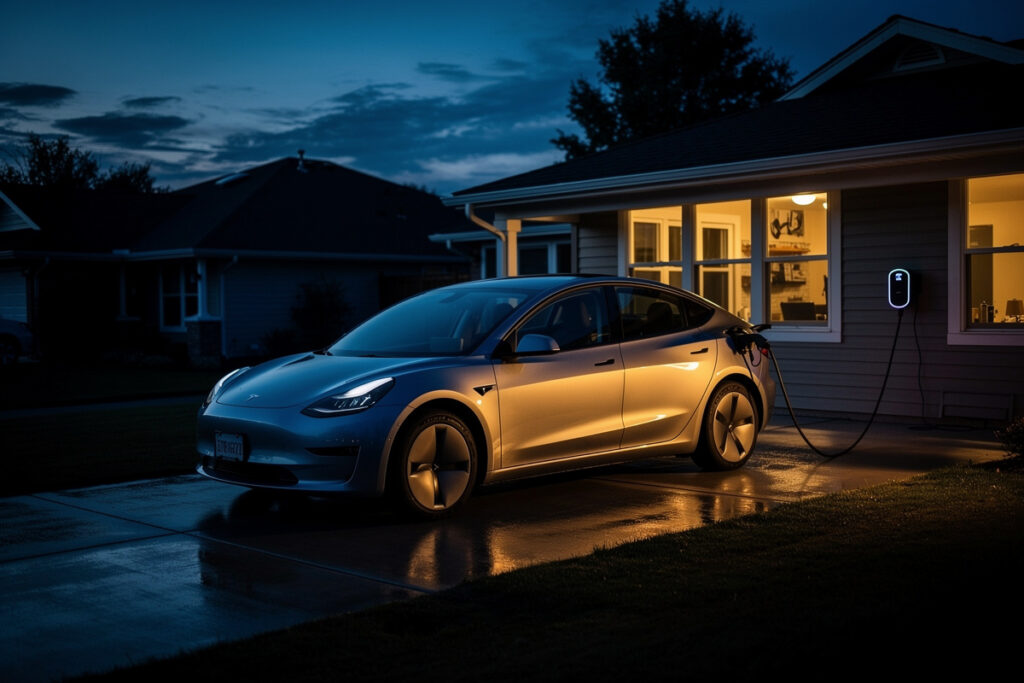
Vehicle-to-home (V2H) means using your EV’s traction battery to power your house — turning a 60-kilowatt-hour car pack into the biggest backup battery on the property — and it is finally real, but the gap between “the car can do it” and “your house is running on the car during an outage” is wider than the headlines admit. The concept is genuinely exciting to anyone who, like me, has spent years sizing stationary battery banks. An EV carries several times the energy of a generous home bank, sitting idle in the driveway most of the time. Using it to ride out a blackout or shave expensive peak hours is an obviously good idea. The caveats are all in the hardware and the certification.
This explainer sits under the broader EV charging and home battery integration guide, and it is the conceptual half; the hardware specifics — the bidirectional charger itself — deserve their own treatment, which is coming. Here I want to separate the idea from the shipping reality, because that is where most of the disappointment lives.
V2H, V2G, and V2L: three different things
The terminology gets muddled, so let me pin it down. V2L (vehicle-to-load) is the simplest and most common today: the car has an outlet that powers appliances directly, like a power station on wheels — useful for a fridge or some tools, but not for backing up your whole house through its existing wiring. V2H (vehicle-to-home) feeds power back through a special bidirectional charger into your home’s electrical system, so it can run circuits the normal way during an outage. V2G (vehicle-to-grid) goes one step further and exports to the utility grid, which brings in a whole layer of grid-operator agreements and regulation.
For a homeowner thinking about backup and self-consumption, V2H is the interesting one. V2L is handy but limited; V2G is mostly a policy-and-utility story that varies enormously by jurisdiction and is not something I would build a purchase decision around today. When someone says “my car can power my house,” they usually mean one of these three, and they are very different propositions — the difference between plugging a kettle into the car and the car silently carrying your whole house through a winter blackout is the difference between a novelty and an actual energy strategy.
Why this took so long to arrive
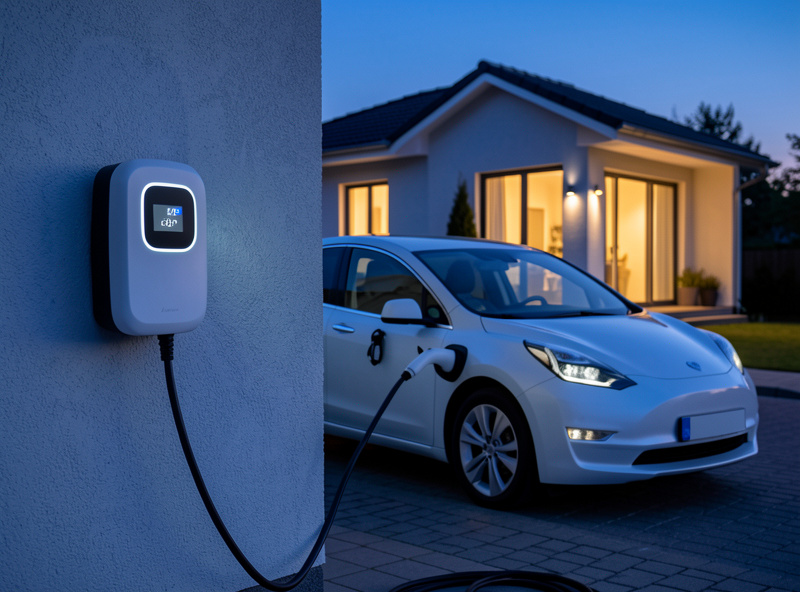
People reasonably ask why, if a car already contains a huge battery and an inverter-like power stage, V2H is not just standard. The answer is that pushing power out safely and in a way that plays nicely with a home and a grid is a genuinely harder engineering and certification problem than charging. Charging is the car as a polite consumer; discharging makes the car a power source, with all the protection, synchronisation, and standards work that implies. The connector standards and communication protocols that allow controlled bidirectional flow have been settling over years, and the home-side equipment to receive that power safely has had to mature alongside.
The encouraging trend is that the standards are converging and more manufacturers are committing to bidirectional support, which is what moves a feature from a handful of pilot vehicles to something you can reasonably plan around. But “converging” is not “converged,” and at the moment of writing the honest status is early-but-real: shipping in specific markets, on specific cars, with specific chargers, rather than a universal capability you can assume. That is why every claim in this article is framed as a direction of travel, not a finished destination.
What V2H actually requires
This is where the brochure quietly skips ahead. Real V2H needs three things to line up: a car whose battery and onboard systems support bidirectional power flow, a bidirectional charger that can both charge the car and pull power back out, and a home integration — typically a transfer arrangement and grid-protection (anti-islanding) hardware — so the system safely disconnects from the grid before back-feeding your house. That last part is not optional and not trivial: back-feeding a circuit that is still connected to the grid during an outage is exactly the hazard that anti-islanding protection exists to prevent, both for your equipment and for any lineworker repairing the fault.
The compatibility matrix between specific cars, specific bidirectional chargers, and specific home setups is still narrow. Not every EV supports it; among those that do, the supported chargers are limited; and the home-side certification regime differs by country. This is precisely the kind of multi-party, jurisdiction-specific, rapidly-changing territory where I defer to what professional installers and the manufacturers report rather than claiming a settled, lived setup. I build stationary banks from bare cells; I do not run a shipping V2H install, and I am not going to pretend otherwise.
Beyond outages: the everyday uses people overlook
Backup is the headline, but it is not the only reason V2H is interesting. On a time-of-use tariff, a bidirectional car could charge cheap overnight and discharge into the house during the expensive evening peak, doing exactly the arbitrage a stationary home battery does — only with far more capacity. The same logic that makes a home bank pay on a peak-and-off-peak tariff applies to the car, scaled up. For a household with a steep peak rate and a car that sits home in the evenings, the everyday value of peak-shaving could outweigh the once-a-year outage benefit entirely.
There is a real tension here, though, and it is worth being honest about: cycling the traction battery for home energy uses up cycles you bought for driving. Manufacturers manage this with limits and warranties precisely because every kilowatt-hour you pull into the house is a kilowatt-hour of cycle life not spent on the road. Whether that trade is worth it depends on your tariff spread, your car’s cycle budget, and how the warranty treats V2H use — another reason the manufacturer’s own terms, not a generic blog, are the authority. The cars that do this well treat it as a managed, bounded feature rather than an open invitation to drain the pack into your house every night.
The honest comparison with a stationary battery
Here is the part I can speak to firsthand, because it is my actual domain. For pure outage backup, a properly sized stationary LiFePO4 bank already does the job today, with no waiting and no compatibility lottery. It is always home, always available, dedicated to the task, and you sized it for your loads. The car, by contrast, might be away when the power fails, and using its pack for the house means it is not fuel for driving.
Where V2H genuinely wins is scale and dual-use. That 60-kilowatt-hour car pack dwarfs most home banks, so for a long outage it can carry a house far longer than a typical stationary system. And it is dual-purpose hardware you already bought for transport, so the marginal cost of the backup capability is just the bidirectional charger and integration rather than a whole separate battery. The honest framing is that V2H is a powerful complement to thinking about home energy, not a replacement for a well-sized stationary system — and certainly not a reason to buy a particular car this year on the promise of a feature that may still be narrow when you go to use it. If outage resilience is your real goal, the lesson from my own real-world backup projects is to build the stationary bank first and treat any future V2H capability as a bonus.
The cost and install reality
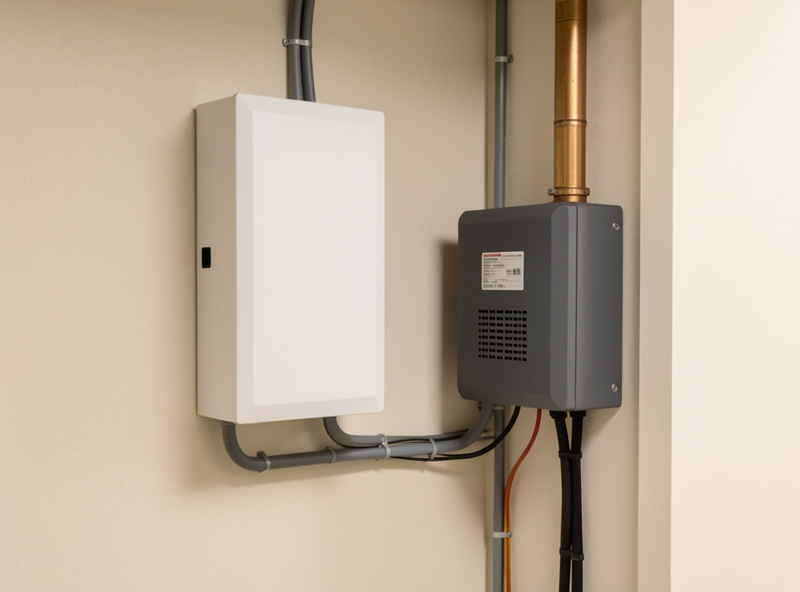
The bidirectional charger is the expensive, specialised piece, and it is meaningfully more than a one-way Level 2 unit because the power electronics have to work in both directions and the unit has to coordinate with grid-protection hardware. On top of the charger sits the install: integrating it so it can safely island your home is electrician-and-permit territory, not a plug-and-play afternoon. That is the same boundary I draw everywhere on this site — I will build a battery bank on my bench, but anything that ties into the house supply and can back-feed circuits is a licensed job done to code.
For most people, today, the math points the same way it does for stationary storage: the hardware cost and the narrow compatibility mean V2H is an early-adopter proposition with a real premium attached. That will change as more cars and chargers support common standards and as the install ecosystem matures, which is exactly why I file it under “watch closely, do not bet the plan on it.” The day your specific car, a shipping bidirectional charger, and a willing local installer all line up, the value proposition is genuinely strong — until then it is a frontier, and frontiers are where deposits get lost on features that ship late.
My standing advice
Treat V2H as a maturing capability, not a settled product category. If your next car supports it and a compatible charger and installer exist in your market, it is a genuinely attractive way to add enormous backup capacity to a home. But do not build your whole energy plan around it, do not pay a large premium for the promise alone, and do not assume the car will be there when you need it. The stationary side — a bank sized to your loads, a hybrid inverter with the right continuous output, and the sizing math done honestly — is the part you can rely on today. Once you have decided how the car will be charged in the first place, the solar sizing and Level 2 install pieces are the practical next steps, and V2H sits on top of all of it as the frontier.