Important Disclaimer
BatteryStorageHQ provides educational content and estimates only. We are not certified installers, financial advisors, or electricians. Always consult with licensed professionals.
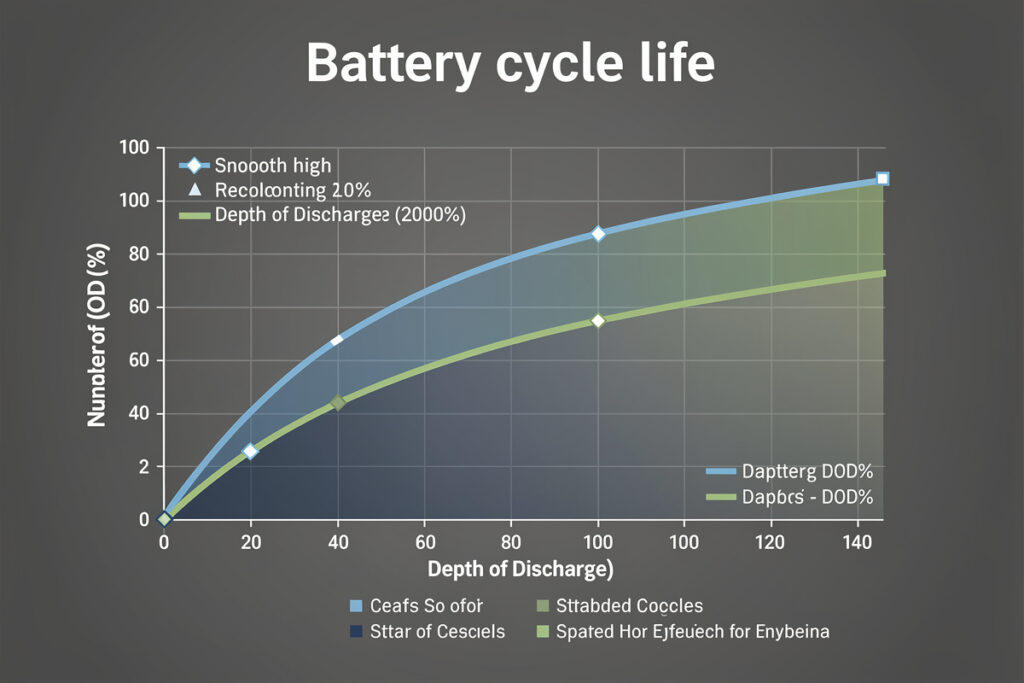
Battery cycle life depends heavily on depth of discharge (DOD) — the percentage of capacity used per cycle. In ~40 words: a LiFePO4 battery cycled to 100% DOD lasts 1,500-3,000 cycles; the same battery cycled to 50% DOD lasts 8,000-15,000 cycles. The math means oversizing your battery 2x produces 4-5x more usable system life. This non-linear relationship dominates battery economics.
This guide covers the cycle life vs DOD relationship for LiFePO4 (with comparison to NMC and lead-acid), shows how to size batteries for maximum lifetime cycles, and explains why “buying a bigger battery” is usually cheaper than “replacing a smaller battery sooner.” The math is counterintuitive but the implications dominate home storage system design.
The Cycle Life Curve
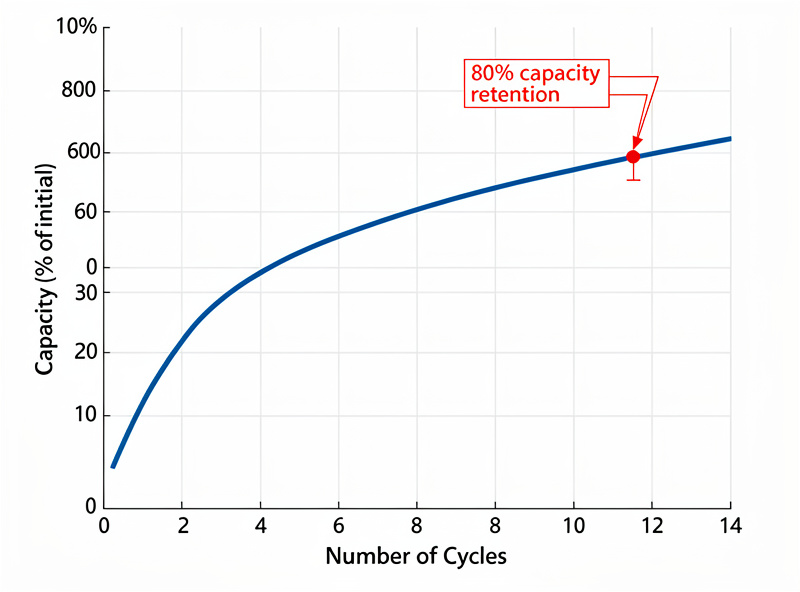
LiFePO4 cycle life follows an exponential curve relative to DOD. Approximate figures from manufacturer data:
100% DOD: 1,500-3,000 cycles to 80% capacity retention
90% DOD: 2,500-4,000 cycles
80% DOD: 3,500-7,000 cycles
60% DOD: 6,000-10,000 cycles
50% DOD: 8,000-15,000 cycles
30% DOD: 15,000-25,000 cycles
The non-linear relationship is the key insight: doubling battery capacity (which halves DOD for the same daily energy use) produces 3-5x more total cycles, not 2x. The math strongly favors oversizing.
For broader battery context, see our battery chemistry comparison.
Economic Impact of DOD
Total energy delivered over battery lifetime is the practical metric. Calculate as: daily DOD × cycles to end of life × battery capacity.
Example with a 10 kWh LiFePO4 battery:
At 100% DOD daily (10 kWh per cycle, 2,000 cycles): 20,000 kWh total over lifetime. Battery cost $3,000. Cost per kWh delivered: $0.15.
At 50% DOD daily (5 kWh per cycle, 12,000 cycles): 60,000 kWh total over lifetime. Battery cost $3,000. Cost per kWh delivered: $0.05.
The 50% DOD use case delivers 3x more total energy from the same battery for the same upfront cost. Per-kWh cost drops 67%. The trade-off: you only access 5 kWh per day for daily use, requiring a battery that’s 2x your daily consumption.
For users who can afford to oversize, the math always favors larger batteries with shallow cycling. For budget-constrained users, deeper cycling is acceptable but expects shorter system life.
Sizing for Optimal Cycle Life
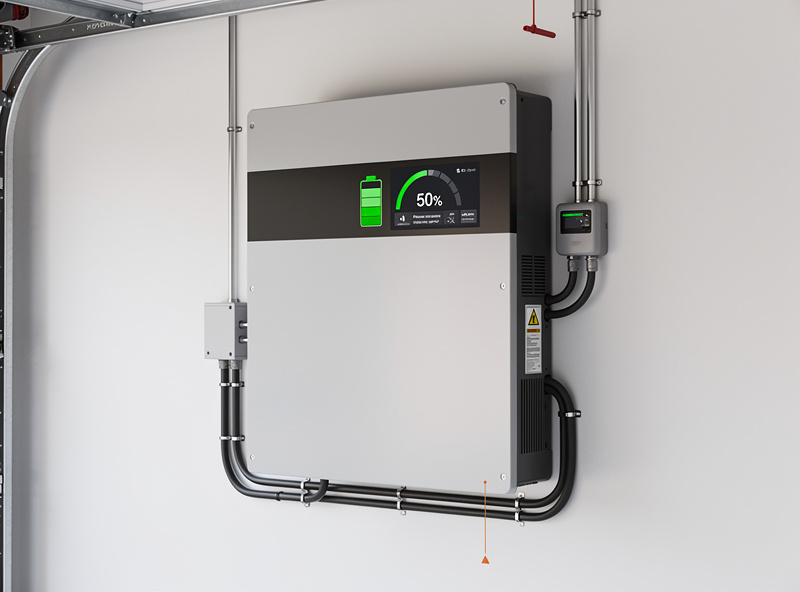
The standard recommendation: size for typical daily DOD of 50-70%. This produces:
5-7x daily consumption in installed capacity. A household using 10 kWh per day should install 15-20 kWh of battery capacity.
15-25 year system life from quality LiFePO4 cells. The pack delivers 60-80% of original capacity at end of useful life, which is when most users replace systems.
Reserve capacity for occasional deep cycling (extended grid outages, unusual cloudy weather periods). The oversize provides margin for these without dramatically reducing cycle life.
For users who specifically design for occasional deep cycles (off-grid systems with multi-day cloudy weather), expecting 80-100% DOD on those days, this is acceptable as long as it’s not daily. Occasional deep cycles barely affect overall cycle life if the average daily DOD stays in the 50-70% range.
State of Charge Management
Lithium-ion chemistries (including LiFePO4) age faster at full state of charge. Storing batteries fully charged accelerates calendar aging — the gradual capacity loss that happens regardless of cycling.
Optimal storage: keep batteries between 20-80% state of charge during prolonged inactive periods. Cycling daily between 20-80% reduces calendar aging compared to charging to 100% and discharging to 0%.
Inverter settings affect this. Set the inverter’s “Maximum SOC” to 90% (instead of 100%) and “Minimum SOC” to 20% (instead of 10%). This reduces accessible capacity 10-20% but extends cycle life 30-50%. The math favors restricting SOC for daily cycling applications.
For backup-only systems that rarely cycle, full SOC is acceptable. The cycling occurs so rarely that calendar aging dominates over cycle aging — and calendar aging is similar at any starting SOC for the brief active periods.
Real-World Cycle Data
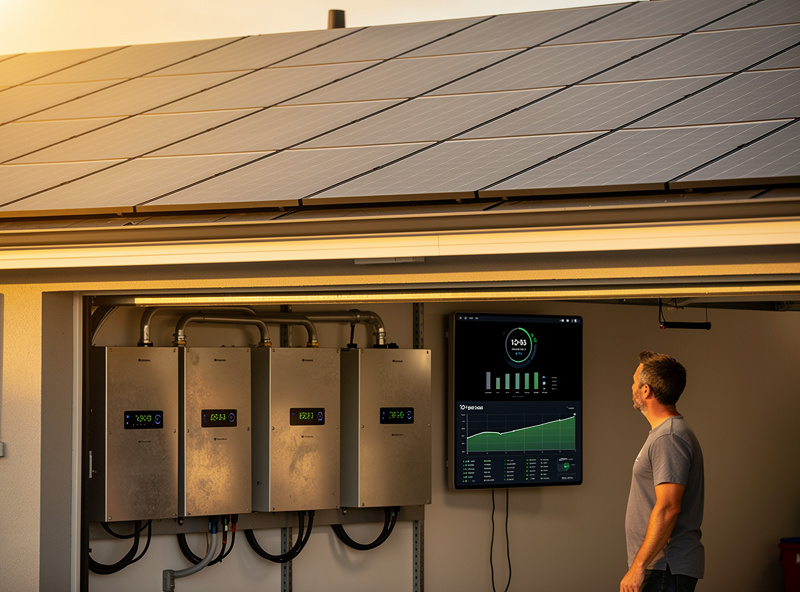
Manufacturer cycle life claims are usually optimistic compared to real-world results. Actual data from DIY home installations:
EVE LF280K cells, 50% DOD daily, 3 years: 1,000 cycles completed, capacity at 96% of original. Projected to last 12-15 years before reaching 80% retention.
CATL 280Ah cells, 70% DOD daily, 4 years: 1,400 cycles completed, capacity at 92% of original. Projected to last 8-12 years before reaching 80% retention.
Tesla Powerwall 1 (NMC), 80% DOD daily, 8 years: ~2,500 cycles completed, capacity at 78% of original. Approaching replacement threshold.
The pattern: real-world data tracks manufacturer claims when DOD is moderate (50-70%) and within typical operating conditions. Aggressive cycling (80%+ DOD daily) produces faster degradation than manufacturer charts suggest. Mild cycling (under 40% DOD) often outperforms manufacturer specs.
Charge Rate Effect on Cycle Life
Charge rate (C-rate) also affects cycle life. Slower charging produces more cycles; faster charging produces fewer.
For LiFePO4, the standard charging rate is 0.5C (140A on a 280Ah cell). Faster charging (1C, 2C+) reduces cycle life 20-40% compared to 0.5C charging. Slower charging (0.2-0.3C) extends cycle life modestly.
For typical home solar storage, this rarely matters because charge rates are limited by solar production anyway — most days the panels can’t deliver more than 0.3-0.5C charging current. The exception: grid charging (charging from grid power during off-peak hours) can hit 1C+ if the inverter allows. For grid-charged systems, set inverter charge limits to 0.5C or below.
Frequently Asked Questions
What’s end of life for a LiFePO4 battery?
Industry convention: capacity drops to 80% of original. A 10 kWh battery becomes effectively 8 kWh at end of life. Some users continue using batteries past 80% retention with reduced effective capacity; others replace at 80% to maintain system performance. The 80% threshold is convention, not a hard limit.
Should I cycle my battery to 100% DOD daily?
No, except in unusual circumstances. Daily 100% DOD reduces cycle life dramatically — 1,500-3,000 cycles vs 8,000-15,000 cycles at 50% DOD. Oversize the battery so daily DOD stays in the 50-70% range. Same upfront cost, 3-5x more total energy delivered over system lifetime.
How does temperature affect cycle life?
Heat accelerates calendar aging. Operation above 35°C (95°F) reduces cycle life 30-50% versus 25°C operation. Cold weather (below 0°C) doesn’t damage cycle life directly but charging below freezing damages cells permanently. Optimal operating temperature: 15-30°C. Mitigation: install batteries in conditioned spaces with stable temperatures.
Can I cycle deeper occasionally without damaging the battery?
Yes — occasional deep cycles (during unusual grid outages, multi-day cloudy weather) barely affect overall cycle life. The damage comes from sustained deep cycling, not occasional events. Daily 50-70% DOD with occasional 80-90% DOD is essentially the same as daily 60% DOD averaged.
What does ‘cycle’ actually mean for a battery?
One full discharge of rated capacity, regardless of how it’s delivered. 50% DOD twice per day = 1 cycle. 100% DOD once per day = 1 cycle. The total energy through the battery counts, not the number of charge/discharge events. This matters for batteries that cycle multiple times per day at lower DOD.
Why do manufacturer cycle life claims vary so much?
Different test conditions, temperatures, charge/discharge rates, and DOD levels. EVE’s 6,000+ cycle claim is at 80% DOD, room temperature, 0.5C charge rate. Manufacturer A and Manufacturer B can both claim ‘6,000 cycles’ under different test conditions. Compare specs at identical conditions for fair comparison.
Should I replace inverter settings to limit SOC?
Yes for daily cycling applications. Setting Min SOC to 20% (instead of 10%) and Max SOC to 90% (instead of 100%) reduces accessible capacity 10-20% but extends cycle life 30-50%. The trade-off favors longer life for systems that cycle daily. Backup-only systems can use full SOC range.