Important Disclaimer
BatteryStorageHQ provides educational content and estimates only. We are not certified installers, financial advisors, or electricians. Always consult with licensed professionals.
Sodium-ion is the first emerging chemistry I would actually put on a watch list for home storage rather than dismiss as a lab toy. It runs on abundant sodium instead of lithium, cobalt, or nickel, charges in the cold where lithium will not, and ships safely at zero volts. The trade is energy density — roughly 75–160 Wh/kg against LFP’s 90–160 — but a wall-mounted bank in a garage does not care what it weighs. The honest 2026 verdict: promising, real, and not yet the cell I would build my main bank from.
I build LiFePO4 banks from bare prismatic cells and watch them age through Swedish winters in my Home Assistant logs, so my interest in sodium-ion is specific: it targets the one weakness I fight every January, which is charging a battery in the cold. That makes it worth understanding properly rather than through breathless headlines. This guide covers what sodium-ion actually is, where it beats LFP, where it loses, and whether it belongs in a home pack today. For the wider context, it sits inside the emerging battery chemistries guide.
What Sodium-Ion Actually Is
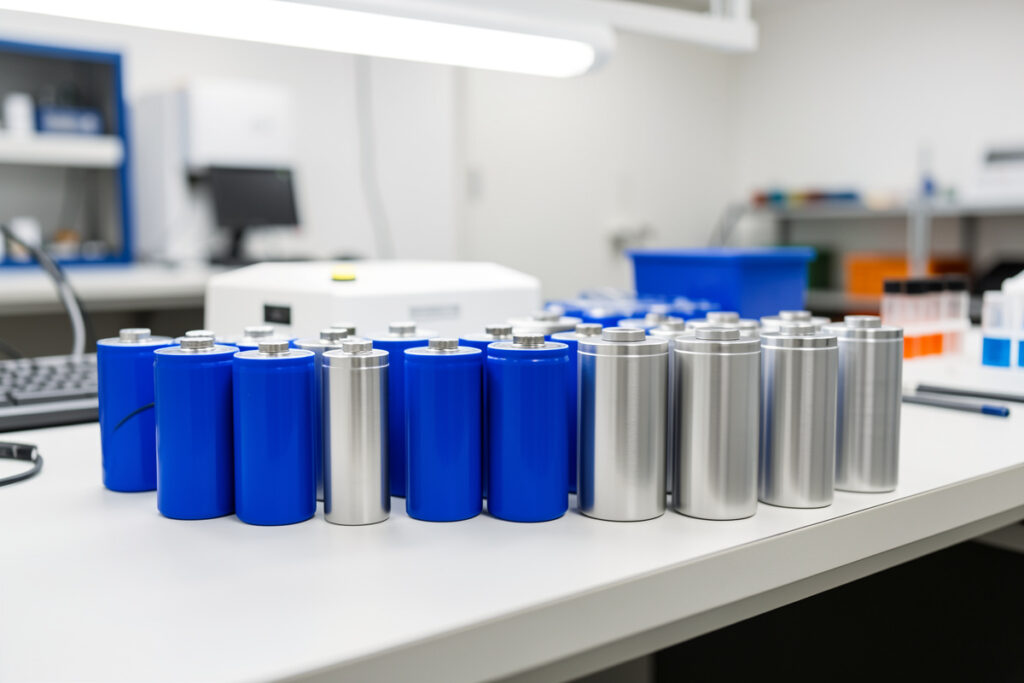
Sodium-ion works on the same rocking-chair principle as lithium-ion — ions shuttle between anode and cathode — but uses sodium ions, a hard-carbon anode, and a cathode that is usually a layered oxide or a Prussian-blue analogue. None of the expensive, supply-constrained metals are required, which is the entire economic argument: sodium is everywhere and cheap.
The practical numbers a builder needs: nominal cell voltage sits around 3.1V with a noticeably wider voltage window than LFP’s famously flat 3.2V curve. That flatter-versus-sloped difference matters because your BMS and inverter estimate state of charge from voltage, and a sodium cell’s sloped curve actually makes SoC easier to read — but only if the firmware knows it is a sodium cell. In 2026, most BMS boards and inverters do not have a tuned sodium profile, which is the first real friction point.
Where Sodium-Ion Beats LFP
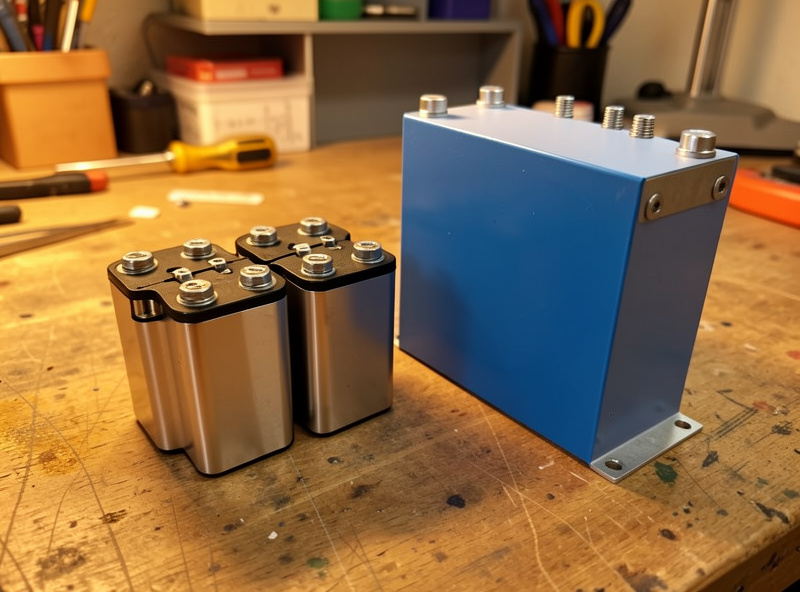
Two advantages are genuine and home-relevant. First, cold performance: sodium-ion holds a large share of its capacity well below freezing and, critically, tolerates charging at low temperatures far better than lithium chemistries. The below-freezing charge rule that forces me to wire heaters and a BMS charge-temperature cutoff onto every LFP bank is a much smaller problem with sodium.
Second, safety and shipping: a sodium-ion cell can be fully discharged to zero volts without damage, which makes it safe to transport and store dead. Its thermal behaviour is stable and its fire risk is low — broadly in LFP’s league rather than NMC’s. For a northern-latitude builder who fights the cold every winter, those two traits are exactly the right strengths. The cold-weather problem is the one I describe in the LiFePO4 cold weather guide, and sodium-ion is the first chemistry that meaningfully attacks it.
Where It Still Loses
The losses are about maturity, not physics. Energy density is lower than LFP, so a sodium bank is bigger and heavier for the same kWh — irrelevant in a garage, annoying in a vehicle. Cycle life today lands around 2,000–4,000 cycles depending on the maker, below LFP’s 4,000–6,000, though it is climbing fast. Self-discharge runs a touch higher.
The real blocker is the ecosystem. Cell availability for DIY buyers is thin, prices have not undercut LFP as dramatically as promised (LFP got cheaper faster than anyone forecast), and several high-profile makers have stumbled or collapsed, which has slowed the supply chain. You can build an LFP bank from cells, a well-supported BMS, and an inverter that lists LFP as a battery type on day one. Sodium-ion does not yet offer that turnkey path.
Who Is Actually Making Sodium-Ion Cells
The supply picture is the part most “sodium is here” articles gloss over. The largest cell makers have all announced sodium-ion lines, and grid-scale and starter-battery products are shipping in volume in some markets. That is real momentum — but it is momentum aimed at vehicles, grid installations, and OEM products, not at the loose-cell DIY market that an LFP home-builder relies on.
What that means in practice: you can read about gigawatt-hours of sodium production and still struggle to buy a matched set of cells with a datasheet, a known grade, and a vendor who will honour it. That gap is exactly why I treat availability as the binding constraint, not chemistry. When sodium cells are stocked, graded, and matched the way EVE and CATL LFP cells are today — covered in my grade A vs grade B cells guide — a home build becomes realistic. We are not there yet, but the trajectory is the right one to watch.
Sodium-Ion vs LiFePO4 for Home Storage
Here is the head-to-head on the specs that decide a stationary build. The takeaway is not that one is universally better — it is that sodium-ion trades density and ecosystem maturity for cold tolerance and shipping safety.
| Spec | Sodium-ion | LiFePO4 |
|---|---|---|
| Energy density | 75–160 Wh/kg | 90–160 Wh/kg |
| Nominal cell voltage | ~3.1 V | 3.2 V |
| Cycle life (to 80%) | 2,000–4,000 | 4,000–6,000 |
| Cold charging | Good | No (needs heater) |
| Ship/store at 0 V | Yes | No |
| Fire risk | Low | Low |
| BMS / inverter support (2026) | Immature | Universal |
| Cost per usable kWh | Low–medium | Low |
Should You Build a Sodium-Ion Bank Today?
My answer for nearly every home in 2026 is: not as your main bank, but keep watching it closely. If you build sodium-ion now you are a beta tester — sourcing cells is hard, the BMS profile may need manual tuning, and your inverter may not officially support the chemistry. That is fine if experimenting is the point, and genuinely interesting for a cold-climate cabin where the charge-in-the-cold advantage is worth real money.
For the load-bearing bank that backs a house, grade-A LFP is still the correct call: top-balanced, compression-fixtured, behind a proper BMS and a Class-T fuse, as I lay out in the DIY LiFePO4 build guide. The day a major BMS maker ships a tuned sodium profile and cells are stocked like LFP is the day this changes — and the same Home Assistant rule engine that watches my LFP bank’s state of charge will not care which chemistry is under it. Until then, sodium-ion is the one emerging chemistry I track monthly, not the one I would wire into the wall this year. If you are weighing it against the established options, the battery chemistry comparison and the NMC vs LFP safety comparison put it in full context.
Frequently Asked Questions
Is sodium-ion better than LiFePO4 for home storage?
Not overall in 2026. Sodium-ion charges better in cold and ships safely at zero volts, but LFP still wins on energy density, cycle life, and a mature BMS and inverter ecosystem. Sodium-ion is the strongest emerging challenger, but for a main home bank LFP remains the practical choice this year.
Can sodium-ion batteries charge in cold weather?
Yes, much better than lithium chemistries. Sodium-ion tolerates charging at low temperatures and holds a large share of capacity below freezing, which is its standout advantage for northern climates. LiFePO4 by contrast must not be charge-loaded below freezing without a heater, making sodium-ion appealing for cold-climate cabins.
How many cycles does a sodium-ion battery last?
Current sodium-ion cells deliver roughly 2,000 to 4,000 cycles to 80 percent capacity, depending on the manufacturer and cathode chemistry. That is below LiFePO4’s 4,000 to 6,000 cycles, though sodium-ion cycle life is improving quickly as the technology matures and production scales up.
Why is sodium-ion not cheaper than LiFePO4 yet?
Sodium-ion should be cheaper because it avoids lithium, cobalt, and nickel, but LFP prices fell faster than forecast and sodium-ion production is still scaling. Immature supply chains, thin cell availability for DIY buyers, and several stumbling manufacturers have kept sodium-ion’s real-world price from undercutting LFP decisively.
What voltage is a sodium-ion cell?
Sodium-ion cells sit around 3.1 volts nominal with a wider, more sloped voltage window than LiFePO4’s flat 3.2 volt curve. The sloped curve actually makes state-of-charge estimation easier, but only if your BMS and inverter have a sodium-ion profile, which most do not yet in 2026.
Are sodium-ion batteries safe?
Yes. Sodium-ion is thermally stable with low fire risk, broadly comparable to LiFePO4 and far safer than NMC. It can also be fully discharged to zero volts without damage, which makes shipping and storage safer. Safety is one of sodium-ion’s genuine strengths, not a weak point.