Important Disclaimer
BatteryStorageHQ provides educational content and estimates only. We are not certified installers, financial advisors, or electricians. Always consult with licensed professionals.
The Grade A vs Grade B cell question is the most asked in DIY battery storage forums — and the answer is more nuanced than the binary labeling suggests. In ~40 words: legitimate Grade A cells from premium manufacturers (EVE, CATL) cost 30-50% more than Grade B equivalents but produce predictable systems with manufacturer-spec performance. Most “Grade B” cells in the DIY market are actually mystery cells with unknown history — distinct from real manufacturer-rejected cells.
This guide breaks down what Grade A and Grade B actually mean, when Grade B saves real money, when “Grade B” labels are misleading, and how to verify what you’re actually buying. The cell sourcing decision is one of the most important in DIY battery builds — get it wrong and you get a system that doesn’t match your expectations.
What Grade A and Grade B Actually Mean
Battery cell manufacturers test every cell after production. Tests include capacity (does it hold 280Ah?), internal resistance (typically 0.18-0.25 mΩ for 280Ah cells), voltage stability (consistent 3.2V at 50% SOC), self-discharge rate (under 3% per month), and thermal behavior under load.
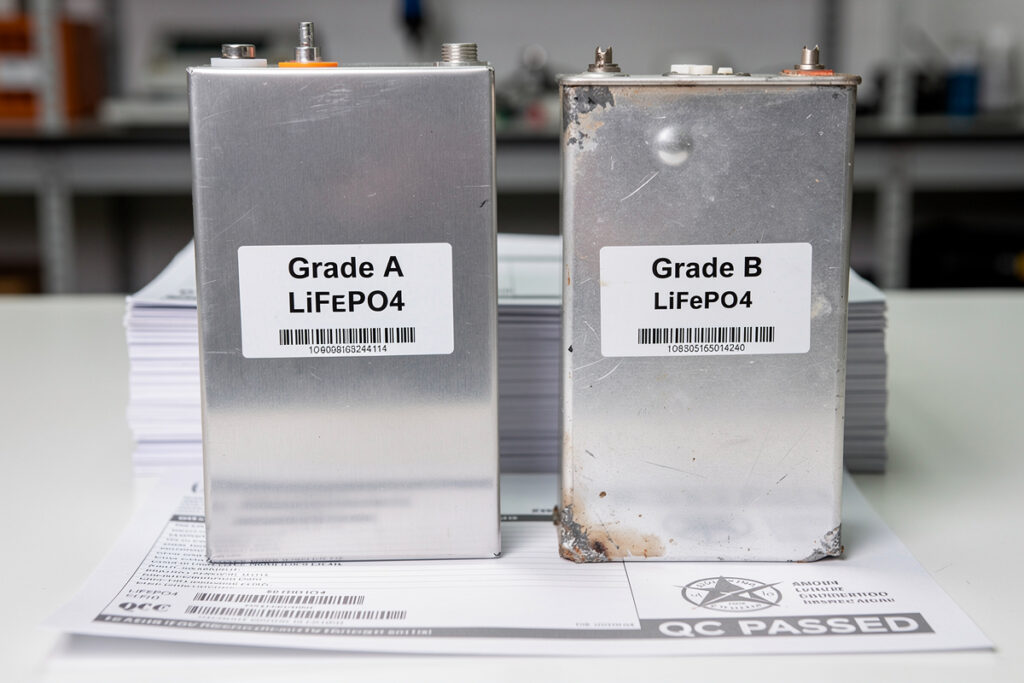
Grade A cells pass all tests with full specifications. The cells are sold to OEMs (production system manufacturers) at premium pricing. Some Grade A cells make it to the DIY market through reseller programs.
Grade B cells fail at least one test. The failure modes vary: slightly reduced capacity (270Ah instead of 280Ah), elevated self-discharge (5%+ per month vs 3%), higher internal resistance, or cosmetic defects (dents, stains) that don’t affect performance. Grade B sells at 30-50% discount from Grade A pricing.
For broader cell context, see our EVE vs CATL vs CALB cell comparison.
Legitimate Grade B vs Mystery Cells
The critical distinction most DIY guides miss: there are two very different things sold as “Grade B” cells.
Legitimate Grade B: Manufacturer-rejected cells from EVE, CATL, or other premium brands sold through authorized channels. The reject reason is documented or testable. Failure modes are typically minor (5-10% capacity reduction, slightly elevated self-discharge). These cells produce systems that work, just with predictable limitations.
Mystery cells (often labeled “Grade B”): Used cells from various sources, manufacturing rejects from unknown brands, cells that may have been dropped, exposed to extreme temperatures, deeply discharged, or otherwise abused. These cells are sold cheaply because the seller doesn’t actually know their history. Performance is unpredictable.
Most “Grade B” listings in the DIY market are mystery cells. Premium manufacturers don’t typically flood the DIY market with Grade B — most Grade B production goes to budget production manufacturers (cheap power tools, low-tier home storage). Mystery cells appear from various sources: surplus from canceled production runs, used cells from decommissioned systems, defective cells that should have been recycled.
When Grade B Saves Real Money
Legitimate Grade B from a verified reseller can save real money for the right buyer:
Grade A 16x EVE LF280K: ~$1,400-1,600 ($85-100 per cell). Builds 14-16 kWh of capacity at 48V.
Legitimate Grade B 16x EVE LF280K: ~$900-1,200 ($55-75 per cell). Same capacity, slightly more variable performance.
Mystery cells 16x labeled “EVE”: $400-700. Capacity unknown, history unknown, lifespan unknown.
The Grade A vs legitimate Grade B savings is meaningful (~$400-500 on a 16-cell pack) and worth considering for experienced builders. The mystery cell savings is large but the risk is real — many builders end up with packs that fail within 6-12 months.
Testing Cells Before Committing
Whether buying Grade A or Grade B, testing cells before assembly is essential. The capacity test takes 2-3 days but reveals the actual cells you have.
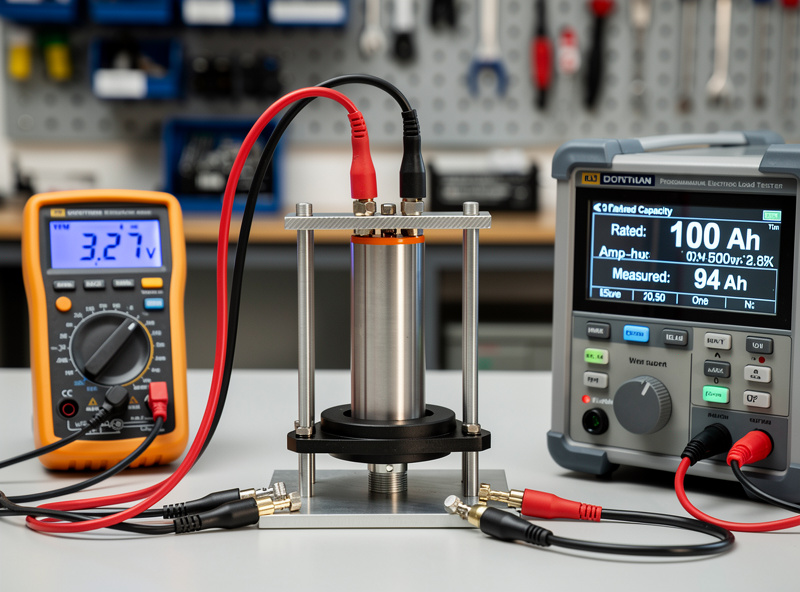
Capacity test procedure: charge the cell to 3.65V (full LiFePO4 voltage). Discharge at 0.5C (140A for a 280Ah cell — most DIY testers use 50-100A loads to avoid heat issues). Measure cumulative discharge in Ah. The result should be within 5% of rated capacity.
Cells significantly below rated capacity (more than 10% off) are suspicious. Test multiple cells from a batch — if 2-3 of 16 are weak, the batch quality is questionable. Return the cells if the seller offers warranty; otherwise mark them and use them as the lowest-priority cells in the pack.
The capacity test rig: any DC load capable of constant-current discharge plus a voltage meter and Ah counter. Commercial testers like the BYD-style rig cost $300-500. DIY rigs using car alternator loads, power resistors, or active electronic loads work for $100-200 in parts.
Top-Balancing Cells Before Assembly
After capacity testing, all cells must be top-balanced — charged to identical voltage (typically 3.4-3.5V) before connecting in series. Without top-balancing, voltage differences in newly-assembled packs cause initial cell imbalance that the BMS can’t correct.
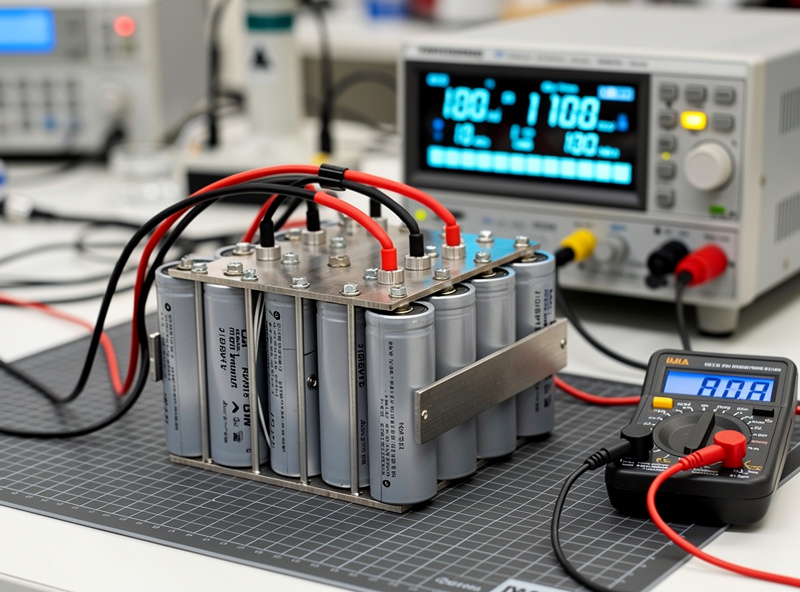
Top-balancing process: connect all cells in parallel using bus bars. Apply a power supply at 3.5V with appropriate current limit (5-10A is typical). Let the cells charge in parallel for 24-48 hours. All cells reach exactly 3.5V because they’re directly connected.
After top-balancing, remove the parallel connections. Each cell now sits at exactly 3.5V independently. Connect cells in series for the actual pack — voltage matching is now ideal.
This process is mandatory regardless of cell grade. Grade A cells from the same batch are usually within 10mV of each other; without top-balancing, that’s still meaningful drift in a 16-cell pack. Top-balancing eliminates the drift entirely. See our DIY LiFePO4 build guide for top-balancing procedure details.
BMS Implications of Cell Grade
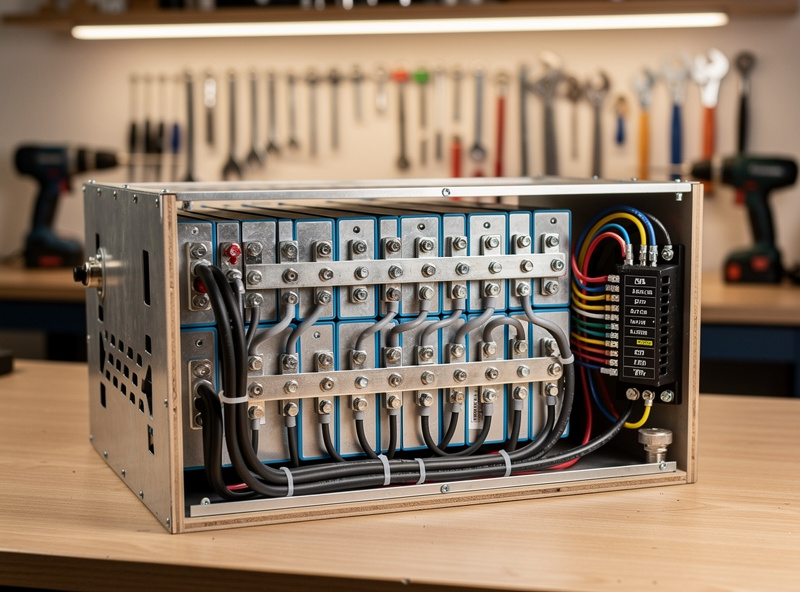
The BMS (Battery Management System) handles cell-to-cell variations during operation. Better-matched cells reduce BMS workload; mismatched cells require more aggressive BMS balancing.
Active balancing BMS units (JK BMS, Heltec, etc.) shuffle charge between cells continuously, equalizing them at every charge cycle. Active balancing handles modest cell mismatches well — Grade A or Grade B cells with up to 5% capacity variation work fine.
Passive balancing BMS units (Daly, JBD basic, etc.) only balance during charging by burning excess energy from high cells. Less effective for mismatched cells; works better with Grade A cells where mismatches are smaller.
For Grade B builds, choose an active-balancing BMS. The slight cost increase ($30-50 over passive equivalents) significantly improves long-term pack reliability with imperfect cells.
Frequently Asked Questions
Should beginners buy Grade A or Grade B cells?
Grade A. First-time builders have enough variables to manage without adding cell variability. Spend the extra $400-500 on Grade A from a verified reseller. After completing your first successful build, consider Grade B for the next one when you have experience to handle the additional balancing complexity.
How can I tell if Grade B cells are legitimate or mystery cells?
Reseller reputation is the main signal. Established resellers (Battery Hookup, Big Battery’s cell program) sell legitimate Grade B with clear documentation of failure mode. Random eBay or Alibaba listings labeled ‘Grade B’ are usually mystery cells. If the seller can’t tell you why a cell is Grade B, assume it’s mystery.
What capacity should Grade B cells deliver?
Legitimate Grade B typically delivers 90-95% of rated capacity (270Ah on a 280Ah cell). Mystery cells can range from 50% to 100% of rated. The variability is the main difference — Grade A and legitimate Grade B both deliver predictable results; mystery cells don’t.
Are used Tesla / EV cells worth considering?
Generally no for typical DIY home storage. Used EV cells are NMC chemistry (worse cycle life than LiFePO4), require expert handling, lack BMS compatibility with home storage inverters, and have unknown history. The exception is for experienced DIYers building specifically for EV-style use cases. For home storage, new LiFePO4 wins almost every time.
Can I mix Grade A and Grade B cells in one pack?
Not recommended. Mixed-quality cells produce unpredictable capacity (limited by worst cell) and accelerate uneven aging. Grade A cells with smaller capacity tracking variation will outlast Grade B cells; the pack becomes increasingly mismatched as cells age differently. Use uniform cell quality in any single pack.
What’s the warranty on Grade B cells?
Typically 30-90 days from quality resellers (testing/refund window). Manufacturer warranty doesn’t apply to Grade B (they’re rejects). The reseller’s testing-based refund window is the practical protection — capacity-test the cells immediately after delivery, return them within the window if they don’t meet expectations.
Why is BMS more important for Grade B cells?
Grade B cells have larger capacity variations and slightly more variable internal resistance. The BMS must balance these mismatches actively. Active balancing BMS units (JK, Heltec) handle this well; passive balancing struggles. The BMS hardware investment ($150-300 for active vs $80-150 for passive) is justified for Grade B builds.