Important Disclaimer
BatteryStorageHQ provides educational content and estimates only. We are not certified installers, financial advisors, or electricians. Always consult with licensed professionals.
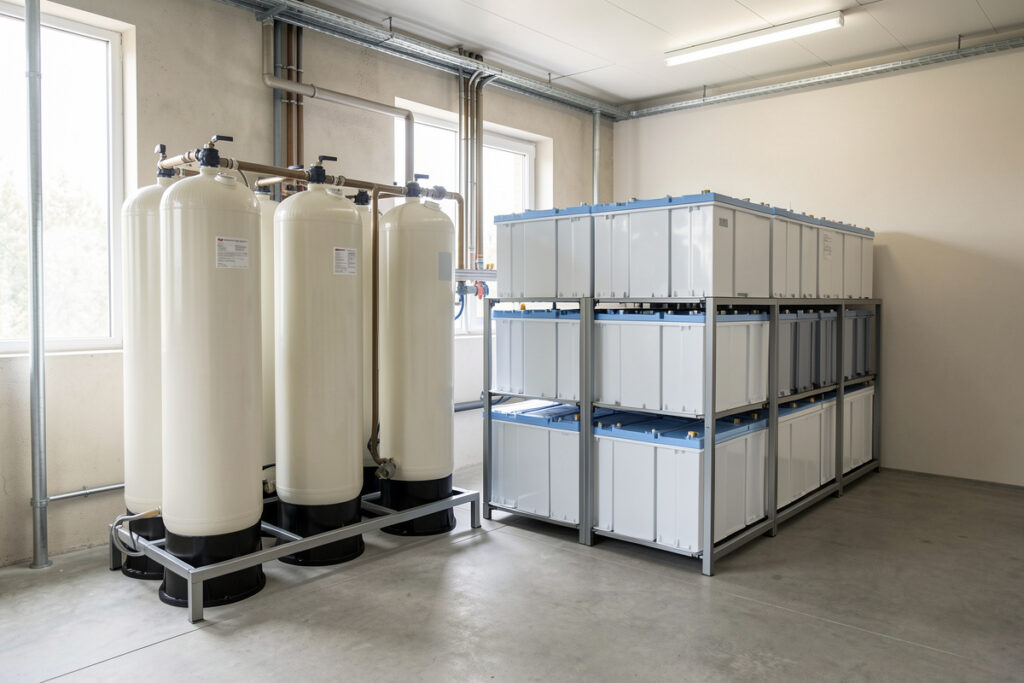
Saltwater and flow batteries chase the one corner LiFePO4 handles worst: long-duration storage — many hours to days of deep cycling — with zero fire risk and non-toxic materials. Flow batteries can run 100% depth of discharge for 15,000–20,000+ cycles and last 20 years; saltwater cells use a literal saltwater electrolyte you could put your hand in. Both are genuinely safe and genuinely interesting. Both are also, for a typical single-family home in 2026, economically wrong — too bulky, too inefficient, and too expensive per usable kWh.
I build LFP banks and live a northern winter on stored sun, so the long-duration problem is real to me: backing a house through five sunless days means buying lithium you rarely cycle. Flow and saltwater are the chemistries that, on paper, fix exactly that. This guide is the honest accounting of why they still do not fit most homes, and where they actually make sense. It sits inside the broader emerging battery chemistries guide.
How Saltwater Batteries Work
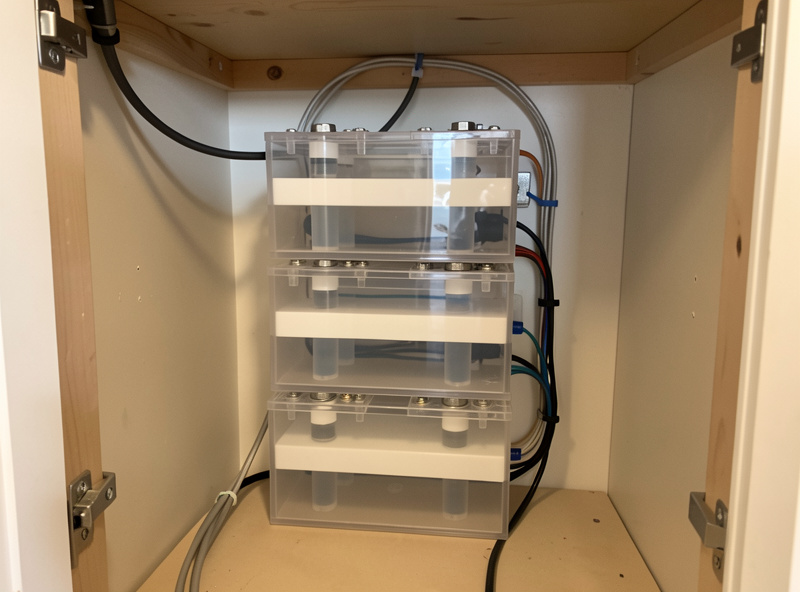
A saltwater (sodium aqueous) battery uses a saltwater electrolyte, a manganese-oxide cathode, and a carbon anode. The chemistry is about as benign as energy storage gets: non-flammable, non-toxic, and largely recyclable. You cannot make it catch fire, which is a legitimate selling point for anyone nervous about lithium indoors.
The trade-offs are severe for a home. Energy density is very low, so the bank is large and heavy for its capacity. Round-trip efficiency is modest. And the most prominent saltwater manufacturer went bankrupt, which gutted the supply chain and left buyers stranded — a hard lesson that a safe chemistry does not survive without a viable business behind it. Today saltwater is more a cautionary tale than a shipping option, which is why I would not design a home around it.
How Flow Batteries Work
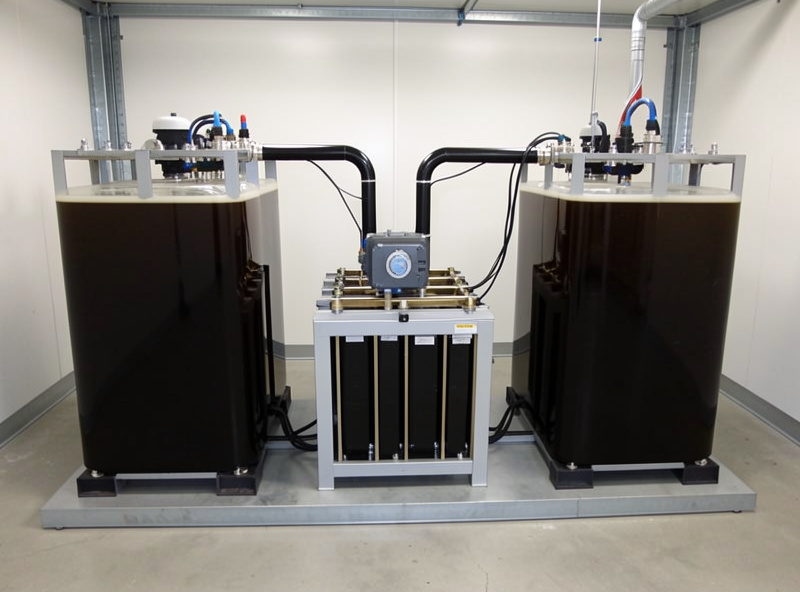
Flow batteries store energy in two tanks of liquid electrolyte (vanadium redox is the most common chemistry) and pump it through a central stack that converts chemical energy to electricity. The defining feature is that power and energy are decoupled: the stack sets how many kilowatts you can deliver, and the tank size sets how many kilowatt-hours you store. Want more storage? Use bigger tanks. Want more power? Use a bigger stack.
That decoupling is genuinely elegant for long-duration storage. A flow battery shrugs off 100% depth of discharge, runs 15,000–20,000+ cycles, lasts two decades because the electrolyte does not degrade, and cannot thermally run away. For a microgrid that needs to shift large amounts of energy over many hours, it is a serious tool — far more sensible there than at the scale of a single house.
Vanadium is not the only flow chemistry. Zinc-bromine and iron-based flow systems exist and chase lower material costs, and iron flow in particular gets attention for using cheap, abundant ingredients. The trade-offs rhyme with vanadium, though: low energy density, pumped complexity, and a system designed for hours-to-days duration rather than the daily solar shuffle most homes actually do. The chemistry varies; the residential-scale verdict does not move much.
Why Neither Fits a Typical Home
The math is unforgiving at residential scale. Flow systems carry high upfront cost, 65–80% round-trip efficiency (you lose a fifth to a third of every kWh to the pumps and conversion losses), bulky tanks that eat floor space, and pumps and seals that need maintenance — a moving-parts maintenance burden an LFP bank simply does not have. Saltwater adds its own low density and a wrecked supply chain on top.
Against that, a grade-A LFP bank is compact, 95%+ efficient, has no moving parts, and costs far less per usable kWh installed. For the overwhelming majority of homes, LFP wins on every metric that pays the bill. The only place the calculus flips is genuine long-duration need at small-commercial or community scale — and even there I would run the numbers hard. If you are sizing for the worst-case sunless stretch, the honest approach is in the whole-home backup sizing method and the off-grid power system design guide, not a flow-battery brochure.
Saltwater vs Flow vs LiFePO4
Here is the three-way reality check on the specs that decide a build. Notice that the safety column is where the alternatives shine and the efficiency, density, and cost columns are where they lose.
| Spec | Saltwater | Flow (vanadium) | LiFePO4 |
|---|---|---|---|
| System energy density | Very low | 15–25 Wh/kg | 90–160 Wh/kg |
| Round-trip efficiency | ~70–80% | 65–80% | 95%+ |
| Depth of discharge | High | 100% | ~90% |
| Cycle life | 3,000–5,000 | 15,000–20,000+ | 4,000–6,000 |
| Fire risk | None | None | Low |
| Moving parts | No | Yes (pumps) | No |
| Cost per usable kWh | High | High | Low |
| Best scale | Niche | Microgrid / commercial | Home |
The Honest Verdict
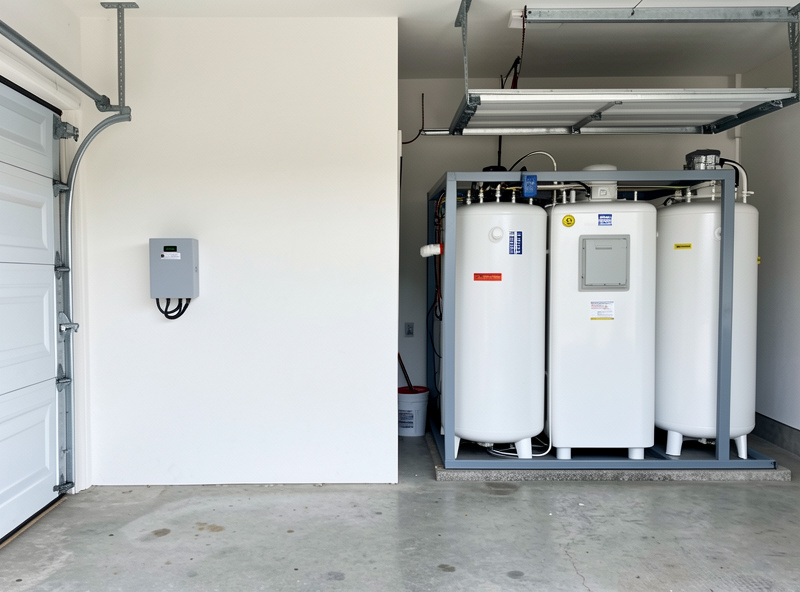
I love the safety story of both chemistries, and I will not pretend the appeal of an unburnable, non-toxic battery is nothing. But appeal is not economics. For a home in 2026, the long-duration corner that flow and saltwater own is better solved by sizing an LFP bank correctly and pairing it with a generator or grid backup for the rare deep-deficit days, exactly the grid-tied-with-backup middle ground I argue for in the home backup power guide.
Keep an eye on flow at the community and small-commercial level, where its decoupled power-and-energy design and 20-year electrolyte genuinely shine. For the bank that backs your house, build LFP — the DIY LiFePO4 build guide and the battery chemistry comparison are where to start. The same Home Assistant rule engine that watches my bank would happily watch a flow stack’s pumps and tank levels too — but my floor space and my budget both vote LFP.
Frequently Asked Questions
Are flow batteries good for home energy storage?
Rarely. Flow batteries excel at long-duration deep cycling with zero fire risk, 100 percent depth of discharge, and 20-year life, but they carry high upfront cost, 65 to 80 percent round-trip efficiency, bulky electrolyte tanks, and pumps to maintain. They make sense at microgrid and small-commercial scale, not in a typical single-family home where LFP is cheaper and simpler.
Are saltwater batteries still available to buy?
Barely. Saltwater batteries are non-flammable, non-toxic, and recyclable, but the most prominent manufacturer went bankrupt, gutting the supply chain. Availability is thin and support uncertain in 2026. A safe chemistry does not survive without a viable business behind it, so saltwater is more a cautionary tale than a practical home option today.
What makes flow batteries last so long?
Flow batteries store energy in liquid electrolyte that does not degrade the way solid electrodes do, so they tolerate 100 percent depth of discharge for 15,000 to 20,000-plus cycles and roughly 20 years. The trade-off is low energy density, bulky tanks, pumps that need maintenance, and round-trip efficiency of only 65 to 80 percent.
Why are flow batteries less efficient than lithium?
Flow batteries lose energy to the pumps that circulate electrolyte and to the conversion losses in the stack, giving 65 to 80 percent round-trip efficiency versus 95-plus percent for LiFePO4. You lose roughly a fifth to a third of every kWh, which matters greatly when energy is scarce, as in a northern winter.
Can a flow or saltwater battery catch fire?
No. Both use water-based or non-flammable electrolytes and cannot thermally run away like lithium chemistries. That safety is their genuine strength. But for home storage, LiFePO4 is already very safe while being far more compact, efficient, and affordable, so the safety edge alone does not justify the size, cost, and complexity penalty.