Important Disclaimer
BatteryStorageHQ provides educational content and estimates only. We are not certified installers, financial advisors, or electricians. Always consult with licensed professionals.
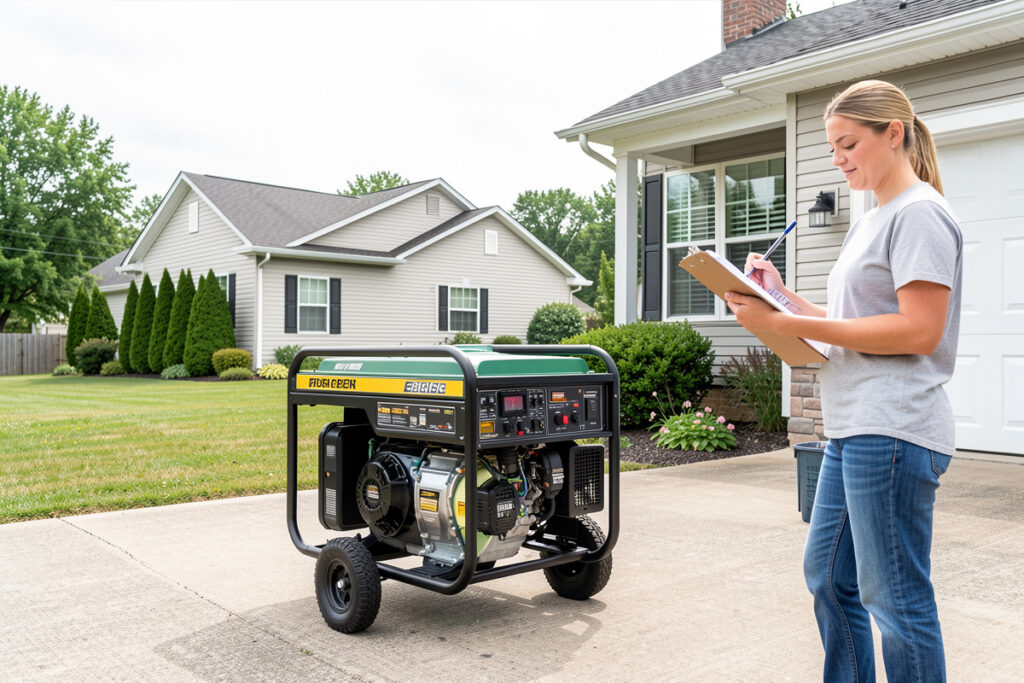
To size a whole-house generator, add the running watts of every load you’ll run at once, add the starting surge of your single biggest motor on top, then add about 20% margin. Most homes that run the generator directly land between 7,500 and 12,000 running watts. Add a battery and that number can fall by half, because the bank absorbs the surge.
I size systems for a living on my own property, and the mistake I see in every “generator sizing calculator” online is the same one: they sum nameplate ratings and surge factors until they hand you a 22 kW recommendation, because a bigger number is a safer sale. That’s not sizing — it’s padding. Here’s the actual method, with measured numbers, and the one variable that changes everything.
The Calculator Logic, in One Pass
Generator sizing is two separate calculations that people blur together. The first is the continuous (running) watts: the steady draw of everything energized at the same moment. The second is the peak (starting) watts: the brief inrush when the largest motor in that set kicks on, stacked on top of everything already running. Your generator must satisfy both — its running rating covers the first, its surge rating covers the second. Get a measured figure for each and the calculator is just arithmetic.
The reason this matters: a generator sized only to running watts will stall when the well pump fires, and a generator sized to the sum of every appliance’s surge (as if they all start at once) is two sizes too big. Real loads don’t all start simultaneously — only one motor surges at a time in practice. That single distinction is the difference between a right-sized machine and an oversold one.
Step 1: Inventory the Loads That Actually Matter
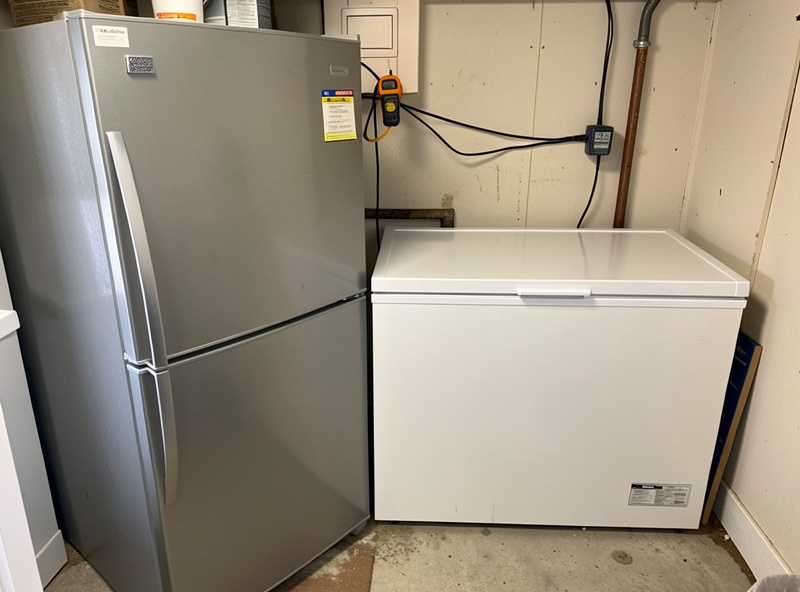
Walk the house and list only what you need running during an outage. Use measured numbers from a clamp meter or plug-in watt meter where you can; the table below is a realistic starting point for common loads. Note how far starting watts can exceed running watts on anything with a motor — that gap is the whole game.
| Load | Running Watts | Starting Watts |
|---|---|---|
| Refrigerator | 150 | 1,200 |
| Chest freezer | 100 | 600 |
| Furnace blower (1/2 hp) | 800 | 2,350 |
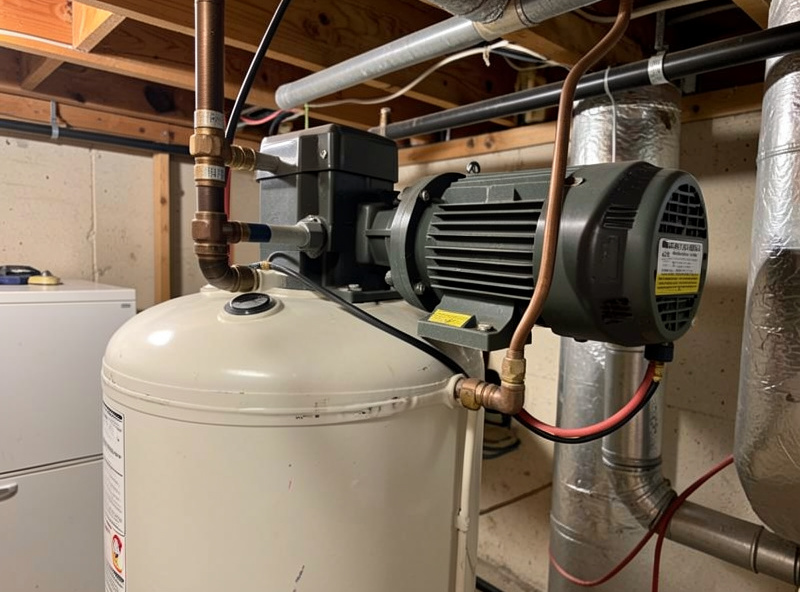
| Well pump (1 hp) | 1,500 | 4,500 |
| Sump pump (1/3 hp) | 800 | 1,500 |
| Mini-split (12k BTU) | 900 | 1,800 |
| LED lighting (whole house) | 200 | 200 |
| Internet / network gear | 100 | 100 |
| Microwave | 1,000 | 1,000 |
| Electric water heater | 4,500 | 4,500 |
The big resistive loads — the electric water heater, the range, the dryer — are what blow your sizing apart; the U.S. Department of Energy documents just how power-hungry electric water heating is. They don’t surge, but their running draw is brutal. The honest move for most outages is to leave them off the generator and heat water or cook by other means, which is exactly the discipline a battery system enforces anyway.
Step 2: Build the Surge Stack
Now find your peak. Add up the running watts of everything you’ll have on simultaneously — say the fridge, freezer, furnace blower, lights, and internet, which lands around 2,050 running watts. Then identify the single largest starting load you might trigger while all that runs. If it’s the well pump at 4,500 starting watts, your peak demand is roughly 2,050 + (4,500 − 1,500) = 5,050 watts at the instant the pump kicks, because you replace the pump’s running figure with its starting figure for that moment.
That stacked peak is the number your generator’s starting rating must clear. Your running rating only needs to cover the steady 2,050 plus the pump’s 1,500 once it’s spinning — about 3,550 watts. So a generator rated around 5,500 running / 7,000 starting handles this house comfortably with margin to spare. Notice how far that is from a 22 kW recommendation.
Step 3: Margin, Derating, and Fuel
Add roughly 20% to your running figure for the loads you forgot and for the headroom that keeps the engine off its redline. Then derate for reality: engines lose about 3–4% of output per 1,000 feet of elevation, a few percent more in extreme heat, and roughly 10% on propane or natural gas versus gasoline, reflecting propane’s lower energy content per the DOE Alternative Fuels Data Center. If you’ll run the generator on propane — sensible for a unit stored for winter outages — bake that 10% in before you finalize. Fuel choice genuinely changes the rated number, which is why I decide it during sizing, not after; the tradeoffs are laid out in the generator fuel type comparison.
A Worked Example
Take a modest house: fridge, chest freezer, gas furnace with a 1/2 hp blower, a sump pump, whole-house LED lighting, internet, and a microwave used occasionally. Running total with the microwave off is about 2,150 watts. The biggest surge is the sump pump at 1,500 starting watts, stacked on the running total gives a peak near 2,850 watts. Add 20% margin to the running figure and you’re at about 2,600 running watts of steady demand. A 4,000 running / 5,000 starting watt inverter generator covers this entire house, quietly, on a few gallons of fuel a day. That’s a small, affordable machine — not a foundation-mounted standby.
Swap the gas furnace for a 1 hp well pump and a 12k mini-split and the surge stack jumps; now you want 5,500 running / 7,000 starting. Still a portable. You only cross into standby-generator territory when you insist on running the electric water heater, the range, and central air-conditioning simultaneously off the generator — and that’s a choice, not a requirement.
The Battery Variable That Shrinks the Number
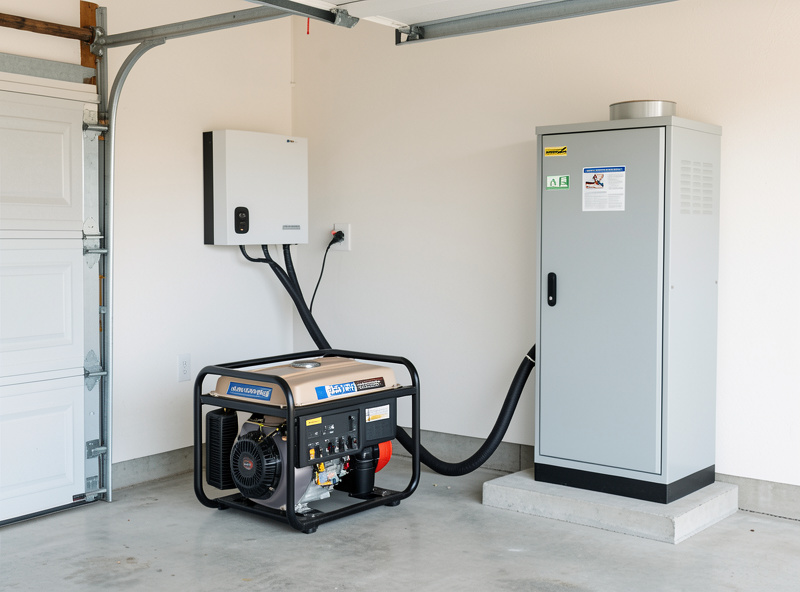
Everything above assumes the generator powers the house directly. If you have a home battery, it doesn’t. The generator feeds the inverter-charger’s AC input, the inverter charges the bank and passes through loads, and the battery covers every surge the generator would otherwise have to. Your well pump’s 4,500-watt inrush never touches the generator — my Victron MultiPlus-II serves it from the bank and the generator just sees a steady charge demand.
So in a battery home you size the generator to charge rate plus pass-through, not to the surge stack. A 3 kW charge plus a couple kilowatts of pass-through is a 5,000-watt inverter generator backing the whole property. The full reasoning, including how to set the inverter’s input-current limit, is in the backup generator sizing guide, and it pairs with the battery-side math in whole-home battery backup sizing. To get the load numbers right in the first place, a plug-in watt meter on each appliance for a week beats every online calculator. As an Amazon Associate I earn from qualifying purchases.
Frequently Asked Questions
What size generator do I need to run a whole house?
Most homes powering essential loads directly land between 7,500 and 12,000 running watts. Sum your simultaneous running loads, add the single largest motor’s starting surge on top, then add 20% margin. With a home battery the figure can fall by half.
How do I calculate starting watts for a generator?
Take the running total of everything on at once, then replace your single largest motor’s running figure with its starting figure. Only one motor surges at a time in practice, so you never sum every appliance’s surge together.
Does a 7500 watt generator run a whole house?
It runs the essentials of most homes comfortably: fridge, freezer, furnace blower, well pump, lights, and internet, with surge headroom for one large motor. It will not run an electric water heater, range, and central air all at once.
How much smaller can a generator be if I have a battery?
Often half the size. The battery absorbs every motor surge, so the generator only needs to cover the inverter-charger’s charge rate plus pass-through loads, typically a 5,000-watt inverter generator instead of a 12,000-watt-plus unit.
Should I size a generator using nameplate ratings?
No. Nameplate ratings are conservative and run high, which leads to oversizing. Measure real draw with a clamp meter or plug-in watt meter over a week. Measured numbers routinely come in well below nameplate.
Related Guides
- Backup Generator Sizing Guide — the full method and the battery-first shortcut.
- Standby vs Portable Generator — which class your sized wattage points to.
- Generator Fuel Consumption Guide — turning watts into a fuel reserve.
- What Can a Battery System Power?
- The Home Backup Power Guide