Important Disclaimer
BatteryStorageHQ provides educational content and estimates only. We are not certified installers, financial advisors, or electricians. Always consult with licensed professionals.
Understanding the Basics of Battery Storage
If you are thinking about energy independence, backup power, or off-grid living, understanding battery storage is your first step. Batteries are the heart of any energy storage system, storing power when it is available and releasing it when you need it most. Whether you want to back up your home during power outages, store solar energy, or build a mobile power system, choosing the right battery technology matters.
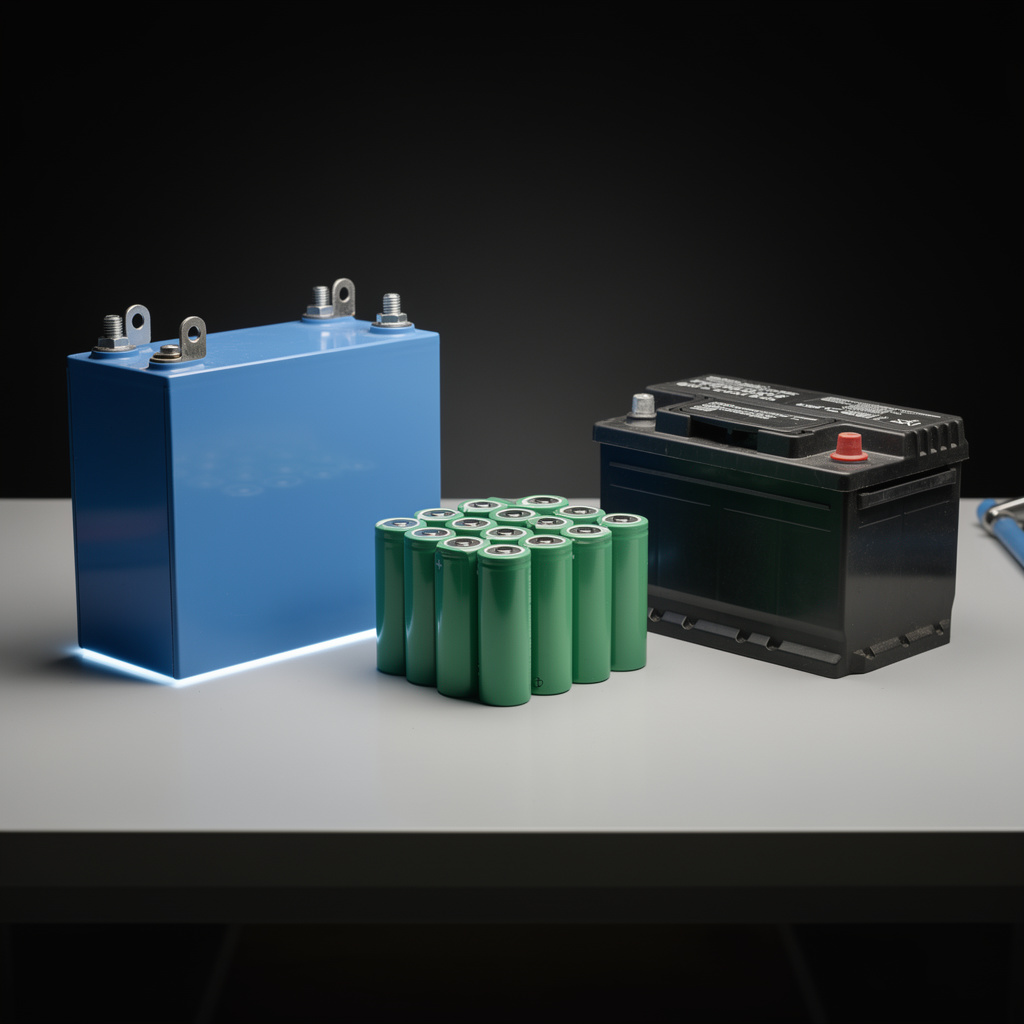
Battery storage has transformed dramatically over the past decade. What used to be bulky, inefficient lead-acid batteries have evolved into sophisticated lithium-ion systems with incredible energy density and longevity. Today, homeowners, van-lifers, and off-grid enthusiasts have more options than ever before. But with choice comes complexity. This guide breaks down everything you need to know about battery chemistries, from lithium and LiFePO4 to lead-acid and emerging technologies.
Why Battery Storage Matters Today
Electricity reliability has become a critical concern worldwide. Extreme weather events, aging grid infrastructure, and increasing energy costs have made grid independence attractive. Battery storage offers a practical solution. It bridges the gap between when energy is generated and when it is consumed.
Consider solar power. The sun shines during the day, but most homes use electricity in the evening. Without batteries, excess solar energy goes back to the grid, often at unfavorable rates. With batteries, you store that energy and use it after sunset, maximizing your investment in renewable energy.
Beyond economics, batteries provide resilience. When the grid fails, a well-designed battery system keeps your lights on, your refrigerator running, and your devices charged. This peace of mind has driven massive growth in residential battery storage, with millions of systems installed globally.
Key Battery Chemistry Types Explained
Lithium Iron Phosphate (LiFePO4)
LiFePO4 batteries have revolutionized the DIY and professional energy storage markets. They offer exceptional safety compared to other lithium chemistries, thanks to their stable phosphate-based cathode material. These batteries rarely experience thermal runaway, making them ideal for home installations and DIY projects.
Key advantages include:
- Long cycle life (3,000-7,000 cycles at 80% depth of discharge)
- Excellent thermal stability (safe up to 60°C)
- No memory effect
- Flat discharge curve (consistent voltage until depleted)
- Environmentally friendly (no cobalt)
LiFePO4 cells maintain about 80% of their original capacity after 5-10 years of regular use. While the upfront cost is higher than lead-acid batteries, the total cost of ownership is often lower due to their extended lifespan.
Lead-Acid Batteries
Lead-acid technology has powered vehicles and backup systems for over 160 years. Despite being older technology, it remains relevant for budget-conscious applications and specific use cases where weight and space are not concerns.
There are three main types:
- Flooded Lead-Acid (FLA): Require regular maintenance (adding distilled water) and must be installed in ventilated areas due to hydrogen gas production during charging.
- Sealed Lead-Acid (SLA): Maintenance-free but sensitive to overcharging. Suitable for indoor installations.
- Absorbed Glass Mat (AGM): Offer better performance than standard SLA batteries, with faster charging and better deep-cycle capability. Popular for marine and RV applications.
Lead-acid batteries typically last 300-800 cycles depending on depth of discharge and maintenance. They are heavier and less energy-dense than lithium alternatives but remain affordable for entry-level systems.
Other Lithium Chemistries
Beyond LiFePO4, several lithium-ion variants exist, each with specific characteristics:
Lithium Nickel Manganese Cobalt Oxide (NMC): Common in electric vehicles due to high energy density. These batteries pack more power into less space but require sophisticated battery management systems and careful thermal management.
Lithium Titanate (LTO): Exceptional for rapid charging and extreme temperature operation. Extremely long cycle life (10,000+ cycles) but lower energy density and higher cost.
Lithium Polymer (LiPo): Flexible form factors popular in drones and RC vehicles. High discharge rates but require careful handling to prevent fire hazards.
Comparing Battery Specifications
Energy Density
Energy density, measured in watt-hours per kilogram (Wh/kg), determines how much energy a battery stores relative to its weight. Higher energy density means lighter, more compact systems.
- LiFePO4: 90-160 Wh/kg
- NMC Lithium-ion: 150-250 Wh/kg
- Lead-Acid: 30-50 Wh/kg
- LTO: 50-80 Wh/kg
For stationary home systems where weight does not matter, energy density is less critical. For mobile applications like RVs and boats, every pound counts, making lithium chemistries preferable despite higher costs.
Cycle Life
Cycle life indicates how many charge and discharge cycles a battery can endure before capacity drops significantly. This metric directly impacts long-term value.
LiFePO4 batteries typically achieve 3,000-7,000 cycles at 80% depth of discharge. Lead-acid batteries achieve 300-800 cycles at 50% depth of discharge. This means a LiFePO4 battery could last 10-20 years while a lead-acid battery needs replacement every 2-5 years in heavy use scenarios.
Depth of discharge significantly affects cycle life. Regularly discharging lead-acid batteries below 50% dramatically shortens their lifespan. LiFePO4 batteries tolerate deeper discharges (up to 80-90%) without major degradation, effectively providing more usable capacity.
Temperature Tolerance
Battery performance varies with temperature. Cold weather reduces available capacity and increases internal resistance. Extreme heat accelerates chemical degradation.
LiFePO4 batteries operate efficiently between -20°C and 60°C (-4°F to 140°F), though charging below freezing requires caution to prevent lithium plating. Lead-acid batteries tolerate a wider range but lose significant capacity in cold conditions.
Proper battery placement and thermal management extend system life and maintain performance across seasons.
Cost Per Kilowatt-Hour
Evaluating battery economics requires looking beyond purchase price to cost per kilowatt-hour over the battery’s lifetime.
Lead-acid batteries cost $100-200 per kWh initially but have short lifespans, resulting in lifetime costs of $0.30-0.50 per kWh cycled. LiFePO4 batteries cost $300-600 per kWh initially but last significantly longer, achieving lifetime costs of $0.10-0.20 per kWh cycled.
For systems used daily, lithium batteries provide better economics despite higher upfront investment. For occasional backup power, lead-acid batteries remain a viable budget option.
Choosing the Right Chemistry for Your Application
Home Backup Systems
For occasional grid outages, flooded or AGM lead-acid batteries offer cost-effective solutions. If you anticipate frequent cycling or want a set-and-forget system, LiFePO4 provides superior longevity and peace of mind.
Solar Energy Storage
Solar applications involve daily charging and discharging. LiFePO4 dominates this space due to high cycle life, tolerance for partial state of charge, and minimal maintenance requirements. Learn how to integrate solar panels with your battery system for optimal energy harvesting.
Mobile and Off-Grid Applications
RVs, boats, and off-grid cabins benefit from lithium’s weight savings and energy density. Every pound of battery weight saved means more payload capacity or better fuel efficiency. The higher upfront cost pays dividends in performance and longevity.
High-Power Applications
Power tools, electric vehicles, and high-draw equipment require batteries with high discharge rates. LiFePO4 and NMC chemistries handle high currents better than lead-acid alternatives, which suffer from voltage sag under heavy loads.
Safety Considerations
All batteries store significant energy and require respect. Proper safety protocols prevent accidents and ensure safe operation.
LiFePO4 batteries are the safest lithium chemistry available, with minimal fire risk even when damaged or overcharged. Lead-acid batteries present explosion risks from hydrogen gas and contain corrosive sulfuric acid.
Regardless of chemistry, proper battery management systems (BMS) are essential. A quality BMS monitors cell voltages, prevents overcharging, and ensures balanced charging, protecting your investment and your safety.
Maintaining Your Battery Investment
Battery longevity depends on proper care. Regular maintenance and monitoring maximize performance and extend service life.
Key maintenance practices include:
- Keeping batteries at moderate temperatures
- Avoiding extreme depths of discharge
- Monitoring state of charge regularly
- Checking connections for corrosion
- Equalizing charge cycles for lead-acid batteries
LiFePO4 batteries require minimal maintenance beyond basic monitoring, making them attractive for users wanting reliable power without constant attention.
Emerging Battery Technologies
The battery industry continues innovating. Several technologies show promise for future applications:
Sodium-Ion Batteries: Using abundant sodium instead of lithium, these batteries promise lower costs and reduced environmental impact. Current generation offers lower energy density but excellent safety and cycle life.
Solid-State Batteries: Replacing liquid electrolytes with solid materials dramatically improves safety and energy density. Major manufacturers are investing heavily, with commercial products expected within this decade.
Flow Batteries: Using liquid electrolytes stored in external tanks, flow batteries offer unlimited cycle life by simply replacing fluids. Ideal for large-scale stationary storage but currently expensive for residential use.
Conclusion
Battery storage technology has never been more accessible or capable. From affordable lead-acid options to high-performance LiFePO4 systems, there is a solution for every application and budget. Understanding the tradeoffs between energy density, cycle life, cost, and safety empowers you to make informed decisions.
The foundation of any successful battery project is knowledge. Start by properly sizing your system, then choose the right chemistry, implement robust safety measures, and commit to ongoing maintenance. With the right approach, your battery system will provide reliable power for years to come.
Whether you are a homeowner seeking backup power, a solar enthusiast wanting energy independence, or an adventurer building a mobile power system, the principles in this guide provide your foundation for success. The journey to energy independence begins with understanding your options and making informed choices. Take the first step today and explore how battery storage can transform your relationship with energy.
Continue Your Battery Storage Journey
Ready to build a system? Start with How to Size a Battery Storage System for a step-by-step calculation guide.