Important Disclaimer
BatteryStorageHQ provides educational content and estimates only. We are not certified installers, financial advisors, or electricians. Always consult with licensed professionals.
For a new home solar install in 2026, the mono vs poly question is essentially settled: buy monocrystalline. Mono panels convert 20–22% of incoming sunlight versus roughly 15–17% for polycrystalline, perform better in heat and low light, and now cost about the same per watt. Poly only wins in one narrow case — free or salvage panels where roof space is unlimited and budget is zero.
I have run both on the bench and the roof, and the gap is real but smaller than the efficiency headline suggests. What actually pushed me to all-mono on my own array was not the lab number — it was the low-light behaviour through a long Swedish autumn, where every extra watt at 8 a.m. and 4 p.m. matters more than the midday peak. This is the practical, build-it-yourself breakdown that the broader home solar panel guide points to.
How They Are Actually Made
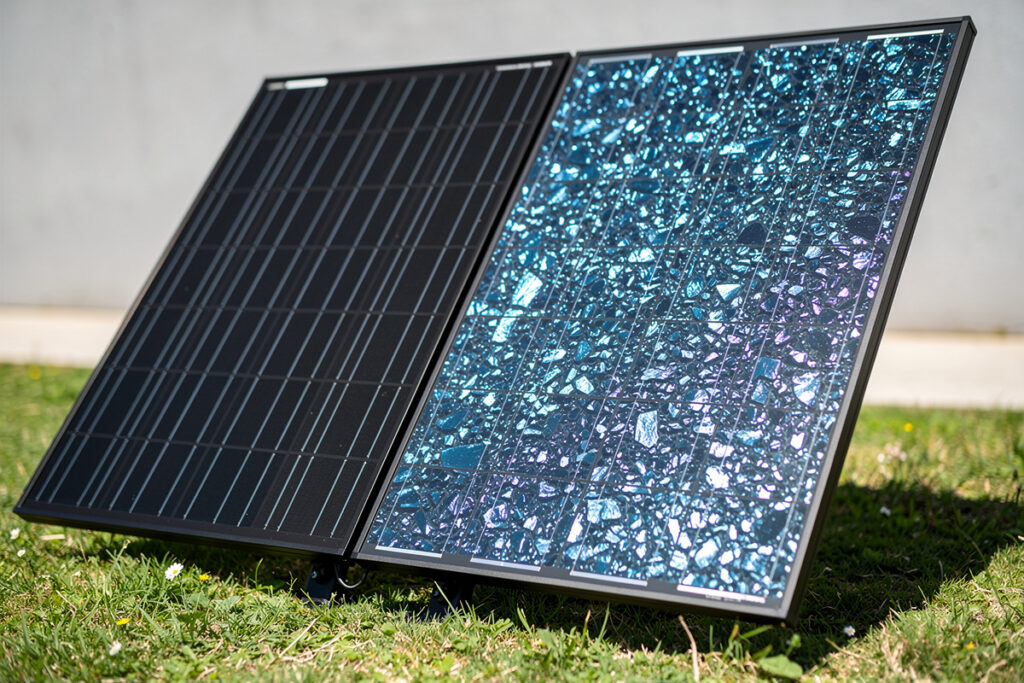
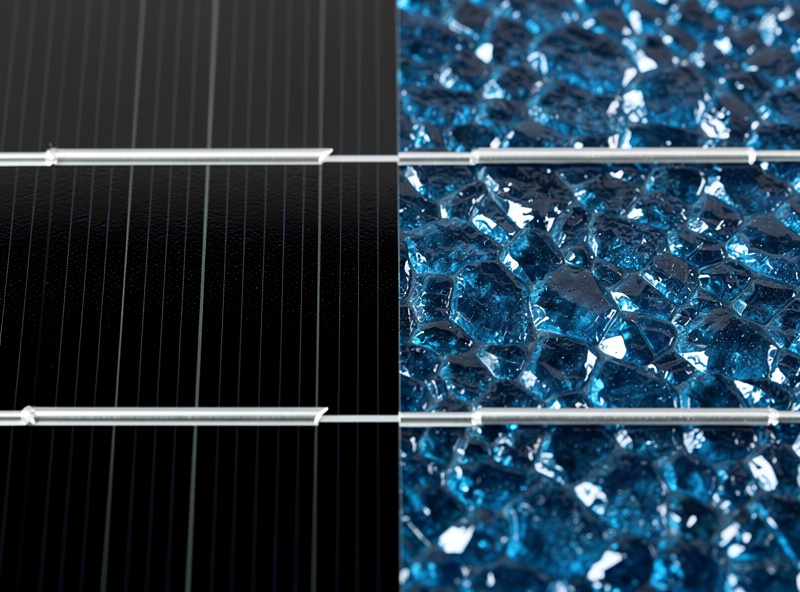
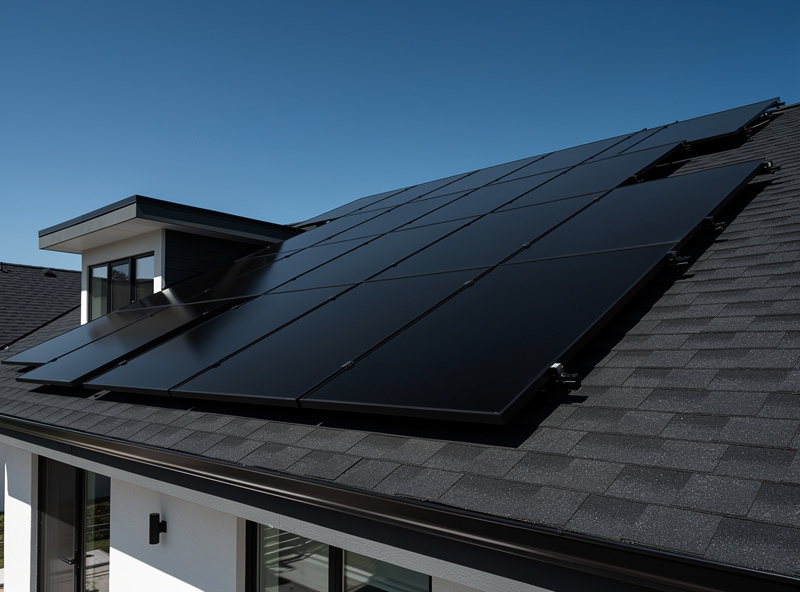
The difference starts in the furnace. Monocrystalline cells are sliced from a single continuous silicon crystal grown by the Czochralski process — one seed crystal slowly pulled from molten silicon into a uniform cylindrical ingot. That uniform crystal lattice lets electrons move with less resistance, which is the root of mono’s efficiency edge. The cells are then squared off, giving mono panels their characteristic dark, uniform black faces with chamfered corners.
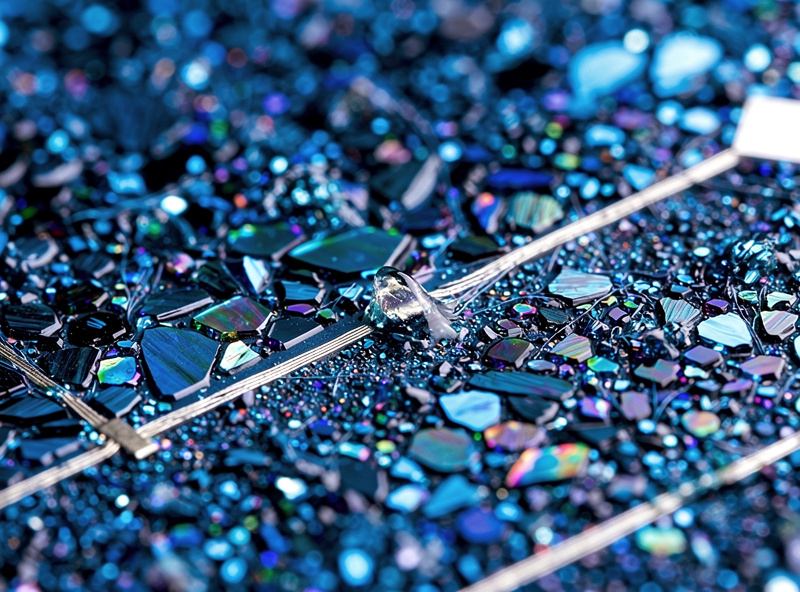
Polycrystalline cells are cast — molten silicon poured into a square mould and allowed to cool into many crystal grains. It is cheaper and wastes less silicon, but the grain boundaries between crystals scatter electrons and bleed efficiency. That is why poly panels look blue and flecked, like frozen shards: you are literally seeing the multiple crystal domains. The blue tint is an anti-reflective coating quirk, but the mottled pattern is the polycrystalline structure itself.
Efficiency and Power Density
Efficiency is really a roof-space argument. A 22% mono panel and a 16% poly panel both produce real watts; the mono just does it in less area. On a constrained roof — which is most roofs — that density difference decides whether you fit 6 kW or 4.5 kW up there. For a battery-storage build where you are chasing every kWh in the shoulder seasons, the denser panel is the obvious call.
Where this bites is the cold, dark end of the year. Mono’s better low-light response means it starts producing earlier in the morning and keeps going later into the dusk than poly of the same nameplate. Across a December day that already only offers a few usable hours, that earlier turn-on is a meaningful slice of the total. The midday peak is similar between the two; the edges of the day are where mono pulls ahead, and the edges are most of a northern winter day.
Temperature and Real-World Behaviour
Both chemistries lose power as they heat up, but mono — especially newer N-type cells — has a gentler temperature coefficient, meaning it sheds less power on a hot roof. In a hot climate that is a summer-yield argument; in a cold climate it is mostly moot because the panels rarely overheat. What does matter up north is that the same cold that helps both panels also drives open-circuit voltage up, and that cold-Voc rise is identical in principle for mono and poly — it is a string-design issue you handle at the charge controller, not a reason to pick one cell type.
One genuinely practical note from running both: cheap poly panels in the salvage market are often old, with connectors and backsheets that have aged in the sun for a decade. The chemistry might be fine but the laminate and the junction box may not be. If you are wiring a real bank, fresh mono with a current warranty removes a whole category of field failures, which matters more once you read the storage safety guide.
Cost in 2026
The historical reason to buy poly — it was cheaper — has largely evaporated. Mono manufacturing scaled so hard that the per-watt price gap is now small to negligible on new panels, and most major manufacturers have simply stopped making residential poly. When you shop new modules today, you are mostly choosing between grades and generations of mono, not mono versus poly. Poly survives in the used and salvage channel, where its low resale value is exactly what makes it attractive for a zero-budget experiment.
If you are building a small 12 V test rig or a shed system and want a known-good new panel without sourcing a pallet, a quality 100 W monocrystalline panel is the cheap way to learn the wiring before you commit to a full roof array. Pair it with proper MC4 connectors and an MPPT charge controller and you have a real, scalable mini-system.
Lifespan and Degradation
Both technologies are durable — 25 to 30 year production warranties are standard — but mono generally degrades a touch slower, around 0.4–0.5% per year versus poly’s slightly steeper curve. Over a 25-year life that compounds into a few extra percent of harvest, which is a minor tiebreaker on top of the efficiency and cost story rather than a deciding factor on its own.
The thing that kills panels in the field is almost never the silicon — it is moisture ingress at the junction box, delamination of the backsheet, or microcracks from poor handling and hail. That is a build-quality and mounting issue shared by both, and it is one more reason I steer people toward new modules from a bankable manufacturer covered in the system component picture, rather than mystery salvage poly with an unknown service history.
The Real 2026 Question: PERC vs TOPCon vs HJT
Here is the honest update: mono vs poly is yesterday’s debate. The decision that actually faces a 2026 buyer is which generation of monocrystalline cell to buy. PERC (Passivated Emitter and Rear Cell) is the mature, cheap baseline. N-type TOPCon and heterojunction (HJT) are the newer architectures, offering slightly higher efficiency, lower temperature coefficients, and lower light-induced degradation for a modest price premium.
For a northern, battery-coupled system, N-type’s better low-light and temperature behaviour is genuinely worth the small premium if your budget allows — it nudges those critical shoulder-season edges in your favour. But PERC mono is still an excellent, proven choice, and the difference is incremental, not transformative. Do not let the N-type marketing convince you PERC is obsolete; it is not. Spend the real decision energy on mounting and string design, where the bigger mistakes hide.
Mono vs poly at a glance
| Attribute | Monocrystalline | Polycrystalline |
|---|---|---|
| Efficiency | 20–22% | 15–17% |
| Appearance | Uniform black | Mottled blue |
| Low-light performance | Better (earlier/later in day) | Weaker |
| Temperature coefficient | Gentler (esp. N-type) | Steeper |
| Cost per watt (new, 2026) | Near-parity | Near-parity / salvage cheap |
| Annual degradation | ~0.4–0.5% | Slightly higher |
| Best for | Almost every new install | Free/salvage, unlimited space |
My Verdict
Buy monocrystalline. The only reason to touch poly is if someone hands you a stack of working panels for next to nothing and you have the roof or ground to spread them out. For everyone building a serious storage system, mono is denser, ages better, performs better in the exact low-light conditions a northern winter throws at you, and costs about the same. Then forget the cell-type debate and put your attention on sizing, mounting, and the charge controller — that is where systems actually succeed or fail.
Frequently Asked Questions
Is monocrystalline always better than polycrystalline?
For new installs, yes. Mono is 20 to 22 percent efficient versus 15 to 17 percent for poly, handles low light and heat better, and now costs about the same. Poly only wins for free salvage panels where space is unlimited and budget is zero.
Why are monocrystalline panels black and polycrystalline blue?
Mono cells are cut from a single uniform silicon crystal, giving a solid black face. Poly cells are cast from many crystal grains, scattering light and creating the mottled blue look. The colour difference reflects the crystal structure, which also drives the efficiency gap.
Do monocrystalline panels work better in winter?
Yes, in practice. Mono’s superior low-light response means it starts producing earlier in the morning and runs later into dusk than poly of the same rating. On a short northern winter day, those extra edge hours are a meaningful share of total daily harvest.
Is polycrystalline cheaper than monocrystalline in 2026?
On new panels, barely. Mono manufacturing scaled so much that per-watt prices are near parity, and most makers stopped producing residential poly. Poly is only meaningfully cheaper in the used and salvage market, where its low resale value suits zero-budget builds.
What about TOPCon and HJT panels?
They are newer N-type monocrystalline cells, not a separate category. They offer slightly higher efficiency, gentler temperature coefficients, and lower degradation for a small premium. For cold, battery-coupled systems they are worth it, but proven PERC mono remains an excellent choice.
Can I mix monocrystalline and polycrystalline panels?
Avoid mixing them in the same series string because mismatched voltage and current drag the whole string to the weakest panel. If you must combine them, wire each type as its own string into a multi-input MPPT controller so each operates at its own maximum power point.