Important Disclaimer
BatteryStorageHQ provides educational content and estimates only. We are not certified installers, financial advisors, or electricians. Always consult with licensed professionals.
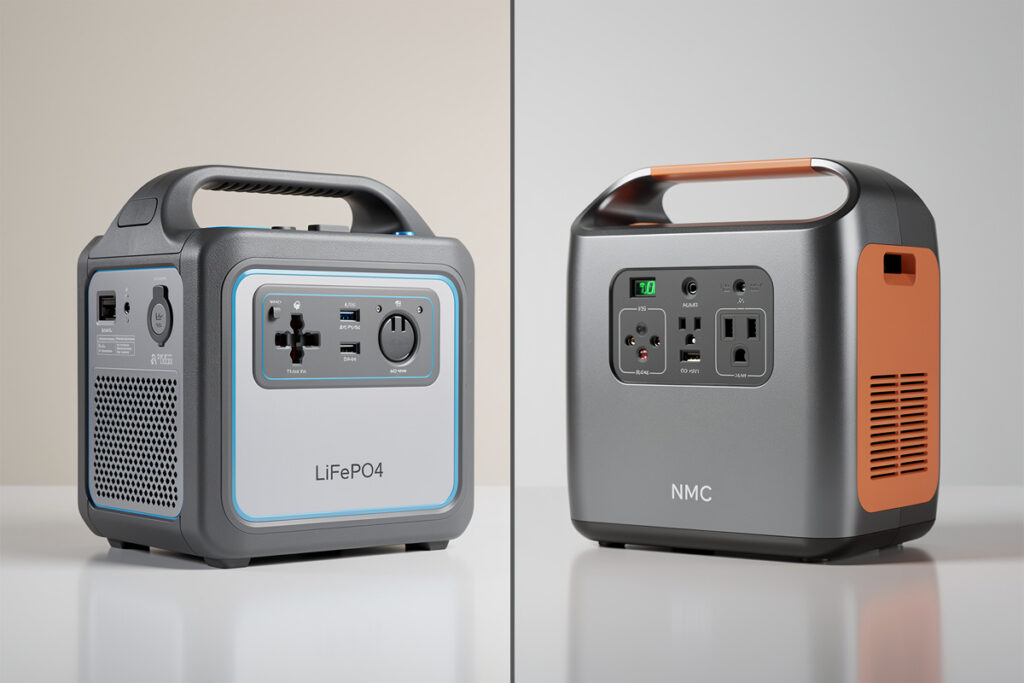
For a portable power station, LiFePO4 is the right chemistry for nearly everyone, and NMC only wins when minimum weight outranks everything else. The reason is specific to a sealed box you carry, store in a hot car, and cycle repeatedly: LiFePO4 survives roughly 3,000–5,000 charge cycles versus 500–1,000 for NMC, and its thermal-runaway threshold is far higher, so it is dramatically safer to run indoors and overnight. NMC’s only real advantage — packing more energy into less mass — matters to ultralight units and almost nowhere else.
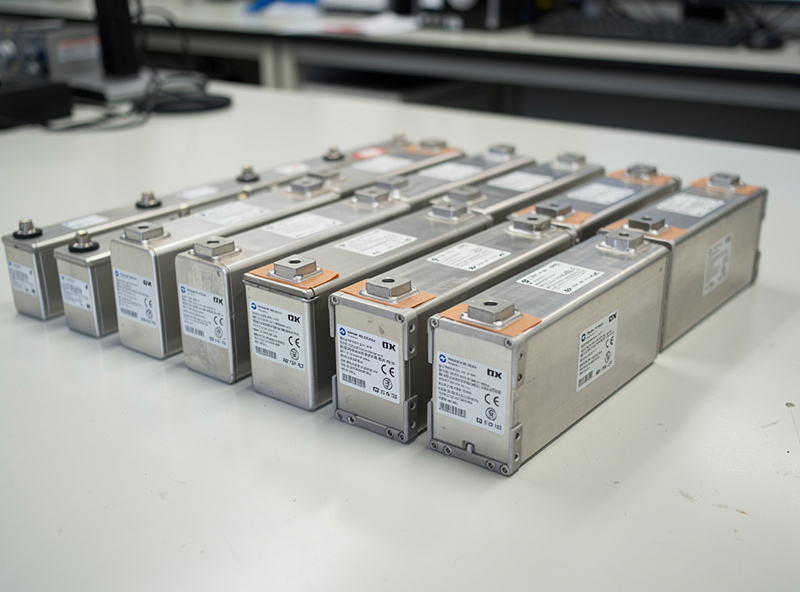
This is the same chemistry verdict I reach on my own bench, where I keep an aging reference bank specifically to watch how cells degrade over years. Here the question is narrower than the broader home-storage debate: which chemistry belongs in an all-in-one portable unit, where weight, heat tolerance, and safety in confined spaces drive the answer. If you want the deeper cycle-life-and-cost analysis for a fixed home bank instead, the LiFePO4 vs NMC for home storage comparison covers that ground; this article is about the portable box.
Cycle Life: Why LiFePO4 Lasts a Decade
A portable power station gets cycled — charged and discharged — far more than a fixed home bank, which makes cycle life the deciding spec. LiFePO4 delivers roughly 3,000–5,000 cycles to 80% remaining capacity; NMC typically manages 500–1,000. Cycle a unit a few times a week for camping or daily for van life and that gap becomes the difference between a decade of service and a tired pack inside three years.
The gap widens at depth. Running a LiFePO4 unit to 80–90% depth of discharge barely dents its lifespan, while taking NMC that deep that often accelerates its decline. That tolerance is why LFP units can advertise their full usable capacity honestly, where NMC units quietly want you to stay shallower. The depth-versus-longevity relationship is charted in the cycle life vs depth-of-discharge guide.
Safety: The Hot-Car and Overnight Test
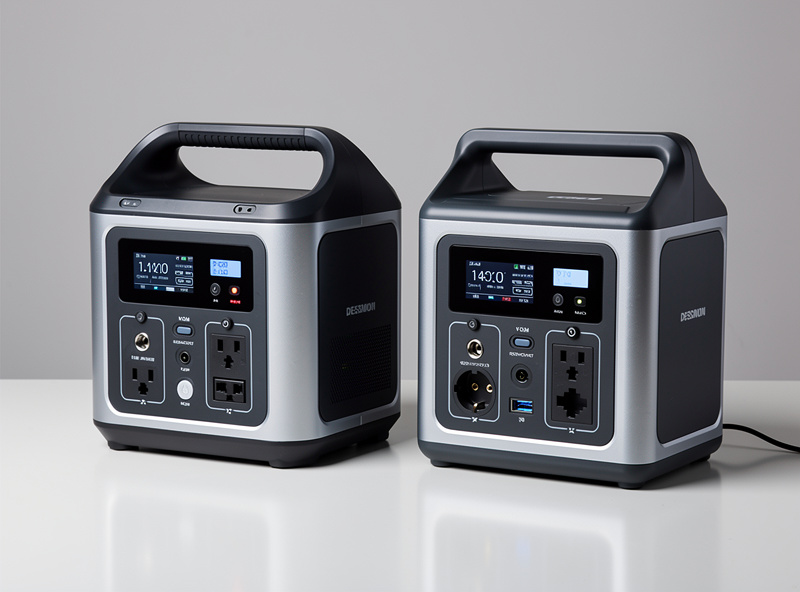
Safety is where the chemistry choice stops being academic. LiFePO4’s thermal-runaway threshold is substantially higher than NMC’s, and when it does fail, the event is far less energetic. For a sealed box that lives in a hot car, sits in a closet, or runs overnight in a bedroom near a CPAP, that margin is the whole reason I steer indoor and confined-space buyers to LFP without hesitation.
NMC is not inherently dangerous — it powers most laptops and EVs under careful battery management — but in a portable unit subjected to heat, vibration, and amateur handling, the conservative chemistry is the right default. The full chemistry-by-chemistry fire behavior is in the battery storage safety guide. Both chemistries share one cold-weather rule: never charge below freezing without a low-temperature cutoff, a point detailed in the cold-weather LiFePO4 guide.
Weight: NMC’s One Real Advantage
NMC packs more energy into less mass and volume — its higher energy density is genuine and measurable. For an ultralight backpacking unit where every ounce counts, or a niche application with a hard weight ceiling, that density can justify the trade in cycle life and thermal margin. This is the one scenario where choosing NMC is a defensible engineering decision rather than a corner cut.
For everyone else, the weight penalty of LiFePO4 is a non-issue. A unit that lives in a van, a closet, or a garage does not care about a few extra pounds, and the cycle-life and safety gains dwarf the density disadvantage. If you find yourself rationalizing NMC for a unit that is not weight-critical, you are usually being sold a cheaper-to-make pack as a feature. A solid LiFePO4 portable power station is the right default for nearly every use case.
LiFePO4 vs NMC in a Power Station
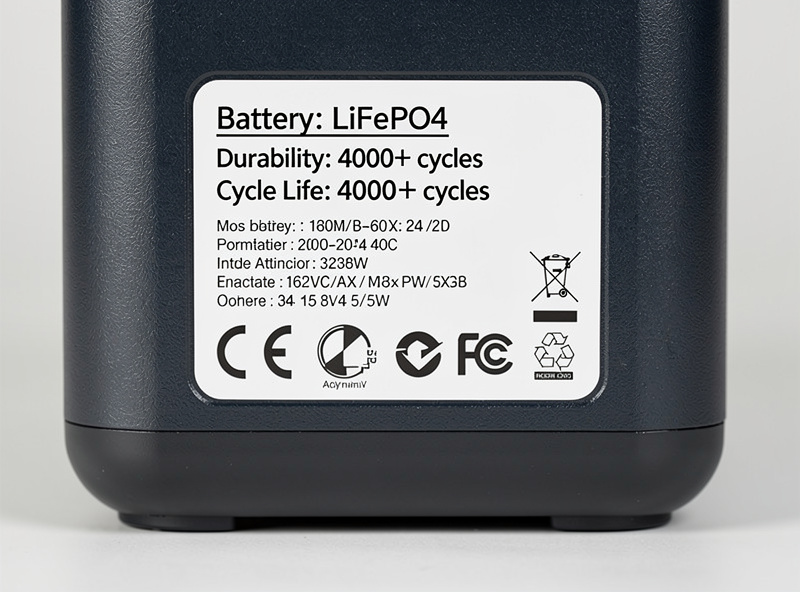
This table lays out the trade head to head, scoped to portable units specifically.
| Trait | LiFePO4 (LFP) | NMC |
|---|---|---|
| Cycle life (to 80%) | ~3,000–5,000 | ~500–1,000 |
| Thermal stability | High (safer indoors) | Lower |
| Energy density (weight) | Lower | Higher |
| Deep discharge tolerance | Excellent (80–90% DoD) | Limited |
| Best for | Almost every use case | Ultralight only |
| Cold-charging rule | No charge below freezing | No charge below freezing |
What Manufacturers Actually Ship Now
The market has largely settled this debate for you. The major brands have moved their current flagship lines to LiFePO4 precisely because buyers learned the cycle-life lesson and reviewers punished short-lived NMC packs. Today, a current-generation unit from a reputable brand almost certainly uses LFP, and a unit still shipping NMC at the same tier is usually an older or budget-cut design.
So the practical buying rule is simple: confirm the chemistry is stated plainly as LiFePO4, and treat a vague or missing chemistry spec as a red flag. The size-tier and surge logic that should accompany the chemistry decision is in the selection guide, and the full buying framework is in the portable power station guide. Get the chemistry right first, then size to your loads.
How Each Chemistry Actually Ages
The spec sheets quote a single cycle number, but the way each chemistry ages tells you more than the headline figure. LiFePO4 degrades gracefully: it holds most of its capacity for years, then declines slowly and predictably, which is why my deliberately-aged LFP reference cells still deliver usable capacity long after their rated cycle count. You get warning, not a cliff. NMC, by contrast, tends to hold up well and then fall off more sharply once it crosses a threshold, and it is more sensitive to being stored at high states of charge in heat.
That difference shapes how you should treat each. With a LiFePO4 unit you can store it at a partial charge between uses and top it up before you need it, and it will reward that gentle handling with a long, flat capacity curve. An NMC unit punishes being left full and hot, losing calendar life even when you are not cycling it. For a backup device that mostly sits idle and waiting, LFP’s calendar-life and storage tolerance are as valuable as its cycle count — arguably more so. Storing any unit on a smart timer or a programmable smart plug lets you hold it at a partial charge automatically instead of leaving it pinned at 100%.
Frequently Asked Questions
Is LiFePO4 or NMC better for a portable power station?
LiFePO4 for nearly everyone. It lasts roughly 3,000 to 5,000 cycles versus 500 to 1,000 for NMC and is far more thermally stable, making it safer indoors. NMC only wins for ultralight units where minimum weight is the top priority.
Why do most power stations use LiFePO4 now?
Because buyers learned the cycle-life lesson. LiFePO4 survives several times more charge cycles than NMC and is dramatically safer in a sealed box that sits in heat or runs indoors. Major brands moved their flagship lines to LFP for those reasons.
Does NMC have any advantage in a power station?
One: higher energy density, meaning more capacity per pound. That matters only for ultralight backpacking units or niche weight-critical uses. For any unit living in a van, closet, or garage, the weight penalty of LiFePO4 is irrelevant.
Is NMC dangerous in a portable power station?
Not inherently, but its thermal-runaway threshold is lower than LiFePO4’s and its failure mode is more energetic. For a unit run indoors, stored in a hot car, or operated overnight, LiFePO4’s conservative chemistry is the safer default choice.
Can I charge either chemistry below freezing?
No. Both LiFePO4 and NMC must not be charged below freezing without a low-temperature charge cutoff or self-heating circuit. If your unit lives in an unheated space, confirm it has that protection before relying on cold-weather charging.