Important Disclaimer
BatteryStorageHQ provides educational content and estimates only. We are not certified installers, financial advisors, or electricians. Always consult with licensed professionals.
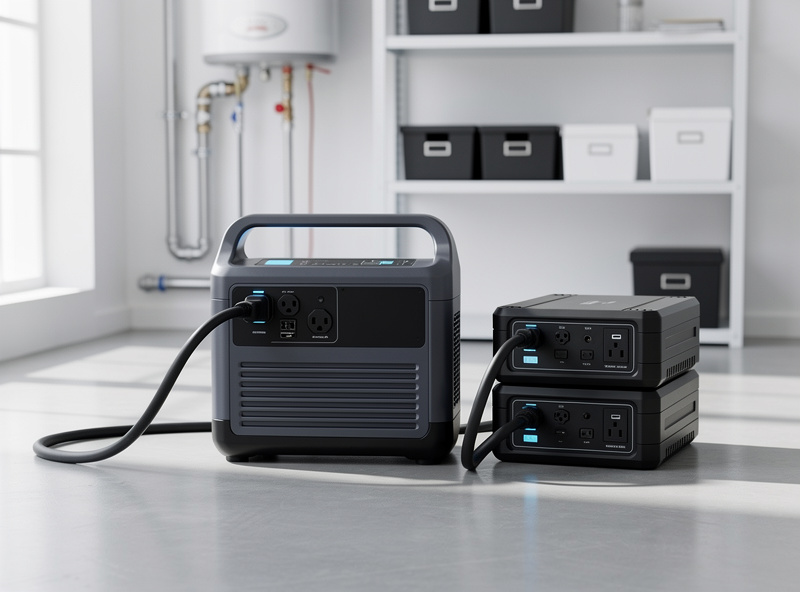
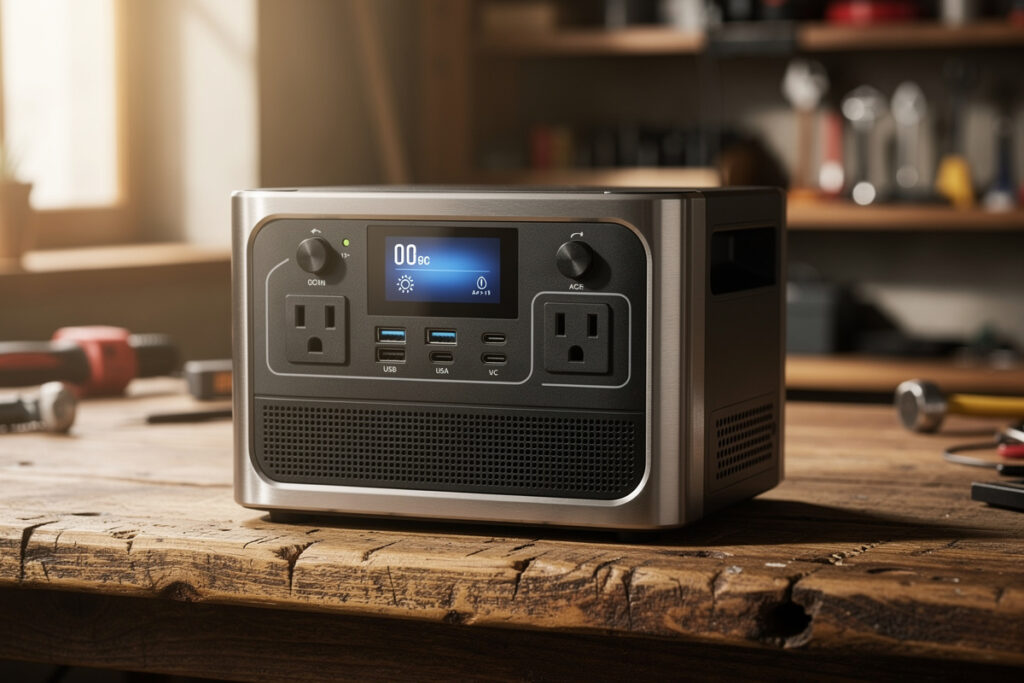
A portable power station is a sealed all-in-one box: lithium cells, a battery management system, an inverter, and a charge controller in one case with a handle. For most people the honest answer is that you are paying a premium for plug-and-play convenience over a DIY LiFePO4 bank — and that premium is worth it right up until you need more than about 5 kWh, at which point the math flips hard toward building your own.
I run a 16S LiFePO4 bank wired to roughly 51.2 V nominal at home, top-balanced on a bench supply and compression-fixtured between end plates, and I have spent years with the BMS boards and inverters that the all-in-one units hide behind a plastic shell. That bare-cell builder’s lens is exactly why I can tell you where a power station earns its money and where the marketing copy is selling you a number that does not matter. This guide is the map: how the specs actually work, how to size one to your real loads, and how to read the difference between a unit you will keep for a decade and one that puffs a cell in three summers.
What a Portable Power Station Actually Is
A portable power station bundles four components that a home pack-builder normally buys and wires separately: a lithium battery (usually LiFePO4 now, sometimes NMC), a battery management system, a pure sine inverter, and an MPPT solar charge controller. The whole point is that you never touch a busbar, a Class-T fuse, or a torque wrench.
That integration is the product. On my bench, commissioning a DIY bank means top-balancing every cell to 3.65 V, setting the BMS protection windows, and tuning the inverter’s absorption and float to LFP-correct values by hand. A power station ships with all of that done and locked. You lose the ability to tune it, and you pay a markup of roughly two to three times the raw cell-and-inverter cost — but for a renter, a van, or a grab-and-go outage kit, never having to think about DC fusing and thermal-runaway prevention yourself is a legitimate reason to buy one.
The category splits cleanly by size. Sub-300 Wh units are glorified phone-and-laptop banks. The 500–1,500 Wh tier is the sweet spot for camping, CPAP, and short outages. The 2–6 kWh expandable systems are where power stations start competing with a small home backup — and where you should seriously compare them against a wall-mount pack instead.
The Three Specs That Actually Matter
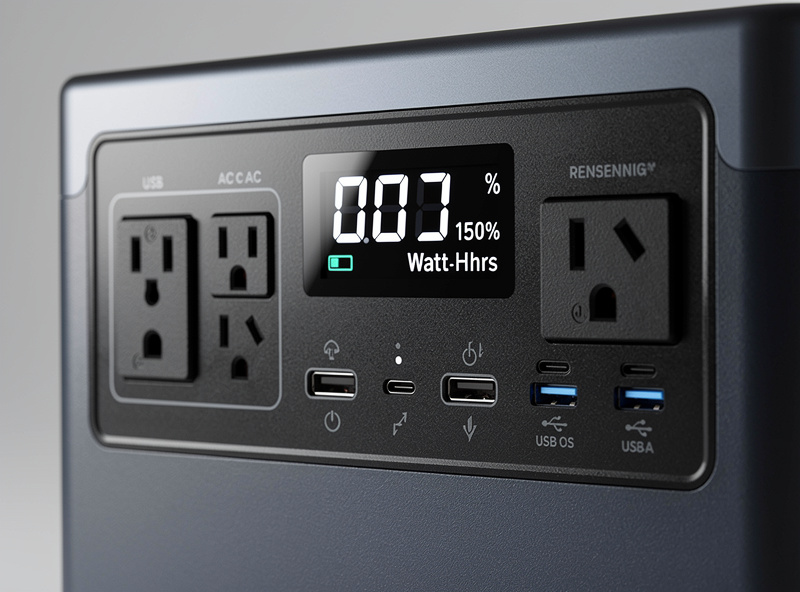
Capacity (watt-hours), continuous output (watts), and surge output (watts for a few seconds) are the only three numbers that decide whether a unit runs your loads. Everything else — the app, the screen, the number of USB ports — is convenience. Capacity tells you how long; continuous output tells you what you can run at all; surge tells you whether motors will start.
Capacity is rated in nameplate watt-hours, but you never get all of it. Inverter conversion losses and the BMS low-voltage cutoff mean you should plan on roughly 85–90% of the label being usable from a LiFePO4 unit. A 1,000 Wh station realistically delivers about 850–900 Wh to your devices. That is not a defect; it is physics, and any honest sizing math — the same approach I use in the battery sizing guide — starts by derating the nameplate.
Continuous output is the inverter’s steady rating. A 1,800 W inverter runs a 1,500 W space heater fine but will trip the moment you also start a microwave. Surge is the spec people forget and then return units over: a fridge compressor or a well pump draws four to seven times its running watts for a fraction of a second at startup — the locked-rotor amperage, or LRA. A station rated 2,000 W continuous but only 2,400 W surge will not start a fridge that runs at 150 W but inrushes to 1,200 W plus whatever else is on the circuit. Surge headroom is the spec that separates a unit that backs up your kitchen from one that browns out.
LiFePO4 vs NMC: Why Chemistry Decides Lifespan
LiFePO4 (LFP) has effectively won the portable power station market because it survives roughly 3,000–5,000 cycles to 80% capacity versus around 500–1,000 for the older NMC packs, and it is dramatically more thermally stable. For a unit you charge and discharge daily, that cycle-life gap is the difference between a decade of service and a tired pack in three years.
The trade is weight and volumetric density. NMC packs more energy into less mass, which is why ultralight units and some older designs still use it. But LFP’s thermal behavior is the deciding factor for a sealed box that lives in a hot van or a closet: its thermal-runaway threshold is far higher and its failure mode is far less violent. I keep a deliberate reference bank of aged cells on the bench precisely to watch how chemistries degrade, and the LFP cells age gracefully where NMC falls off a cliff. The full breakdown lives in the LiFePO4 vs NMC cycle-life comparison, and the cycle life vs depth-of-discharge chart shows why running an LFP unit to 80% depth barely dents its lifespan while doing the same to NMC accelerates the decline.
One real caveat the spec sheets bury: LiFePO4 must not be charged below freezing. A quality station includes a low-temperature charge cutoff or a self-heating circuit. If you plan to run one in a cold van or an unheated cabin, confirm it has that protection — it is the same rule DIY builders break and ruin a bank over, as I detail in the cold-weather LiFePO4 guide.
Solar Input and Recharge Speed
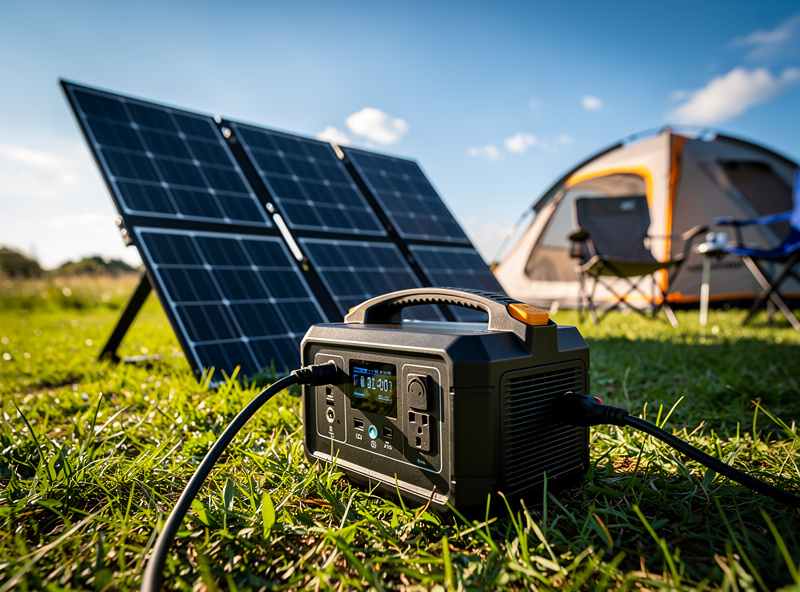
The “solar generator” label just means the station has a built-in MPPT charge controller and a solar input port. The two numbers that matter are the maximum solar input wattage and the controller’s voltage window (Voc range). Feed it more open-circuit voltage than the controller accepts and it shuts off — or in cold weather, where panel Voc rises by roughly 0.27–0.30% per degree Celsius below the rating, you can over-voltage a controller that looked fine in summer.
An MPPT controller, which all decent stations now use, recovers 20–30% more harvest than the cheap PWM controllers in bargain units, especially on a cold high-voltage string. That is the same reason I keep a PWM controller on my bench only to demonstrate why it loses — the full argument is in the MPPT vs PWM comparison. If you are pairing panels with a station, match the panel string’s voltage to the controller’s window first; the solar sizing method walks the real numbers, not the optimistic nameplate.
Be honest about recharge math at northern latitudes. My south-facing array produces a fraction of its nameplate in a Swedish December — under one peak-sun-hour on a bad day. A 200 W panel does not deliver 200 Wh per hour; plan on real-world harvest well below the label, and never rely on solar alone to recover a station fast during an outage in winter.
There is also a charging trade-off most buyers miss: charging a LiFePO4 unit fast and full to 100% every single time shortens its life slightly compared to holding it at a partial state of charge between uses. For a backup unit that mostly sits ready, storing it around 60–80% charge and topping up before an expected outage is gentler on the cells than keeping it pinned at 100% indefinitely. This is the same long-term-health discipline I apply to the main bank — the absorption and float behavior that keeps cells happy on a permanent install carries straight over to a portable box that lives on a shelf.
Sizing a Power Station to Your Real Loads
Sizing is just arithmetic done honestly. List every device, multiply its watts by the hours you will run it, add 10–15% for inverter losses, and you have your watt-hour target. The two near-universal mistakes are buying capacity for loads you will never run and undersizing the inverter for the one motor that actually matters.
For a weekend of camping — phone charging, LED lights, a CPAP, a small fan — a 1,000–1,500 Wh unit is plenty. For a two-day outage keeping a fridge and some lights alive, you need both the watt-hours to cover the fridge’s daily duty cycle (a modern fridge uses roughly 1–2 kWh per day) and the surge to start its compressor. That is why outage buyers should read the surge spec before the capacity spec; the pure sine vs modified sine breakdown matters here too, because sensitive electronics and some motors misbehave on modified-sine output.
The expandability question is the one that catches people. Many 2 kWh+ units accept add-on battery modules, which sounds flexible until you price it out: stacking expansion packs often costs more per kWh than the base unit, and well past the point where a DIY bank’s cost-per-kWh wins decisively. Buy the capacity you need now plus one tier of headroom; do not buy a platform on the promise of expansion you will pay a premium to add later.
Power Station Tiers Compared
This table maps the four practical tiers against the specs that decide a purchase. Use it to land in the right size class before you compare individual models.
| Tier | Capacity | Typical Continuous / Surge | Best For | Honest Limitation |
|---|---|---|---|---|
| Pocket / Camp | 200–500 Wh | 300 W / 600 W | Phones, laptops, LED lights, CPAP | Won’t start any motor load |
| Mid (sweet spot) | 1,000–1,500 Wh | 1,800 W / 3,000 W | Camping, short outages, small fridge | One device at a time on the AC side |
| Large Portable | 2,000–3,600 Wh | 2,400 W / 4,800 W | Two-day outage, fridge + lights + electronics | Heavy (40–60 lb); expansion costly per kWh |
| Expandable System | 4,000–6,000+ Wh | 3,600 W+ / 7,200 W+ | Whole-essentials backup, off-grid van/cabin | DIY bank usually wins on cost-per-kWh here |
Power Station vs Building Your Own
Below roughly 3–5 kWh, a power station’s convenience premium is reasonable and the integration genuinely buys you safety and simplicity. Above that, the cost-per-kWh gap becomes hard to justify: a DIY 16S LiFePO4 bank with a quality inverter typically lands at a fraction of the per-kWh cost of stacking expansion modules, and you get to choose the BMS, the inverter, and the surge rating instead of accepting whatever the sealed box decided.
The honest framing is convenience versus control. A power station is the right call when you cannot or will not wire DC, when portability is the point, or when you need a backup tomorrow with zero commissioning. A DIY bank is the right call when the system is permanent, when you need more than a few kWh, or when surge capacity for hard motor loads matters — the moment the workshop fires up or a well pump cycles, the inverter you chose by hand beats the one a marketing team picked. The 18-month cost analysis puts real numbers on where the crossover sits. If you are still deciding which path fits your situation, the power station vs DIY battery comparison works through the decision criteria side by side.
Safety: What the Sealed Box Still Can’t Hide
A quality power station handles the DC fusing, the BMS protection windows, and the thermal management for you — which is most of what makes a DIY bank dangerous if done wrong. But you still control the inputs. Do not exceed the rated solar input voltage. Do not charge a LiFePO4 unit below freezing without confirmed low-temp protection. Do not run a sealed box in a totally unventilated space at high continuous draw, where the inverter’s own heat has nowhere to go.
LiFePO4 chemistry is the reason these units are as safe as they are: its thermal-runaway threshold is far higher than NMC’s and its failure mode is far less energetic. That is exactly why I steer outage and indoor-use buyers toward LFP units specifically. The battery storage safety guide covers the chemistry-by-chemistry fire behavior in full, and the battery chemistry comparison shows where each chemistry actually belongs.
Reading a Spec Sheet Without Getting Fooled
Manufacturers optimize the numbers they put on the box, and a few of them are deliberately flattering. Learn to translate three of them and you will stop overpaying for marketing. The first is capacity: a unit advertised at 1,000 Wh delivers about 850–900 Wh in practice, so compare nameplate-to-nameplate but plan on the derated figure. The second is the “X device-charges” claim — “charges your phone 80 times” tells you nothing about whether it runs a fridge, because phone charging is the easiest possible load.
The third and most abused is surge wattage, sometimes printed in tiny type or quoted as a “peak” that lasts milliseconds. A station that claims 3,000 W surge but only sustains it for 20 milliseconds may still fail to start a compressor whose inrush lasts longer. When a spec sheet separates “peak” from “surge” from “continuous,” read all three; when it only lists one big number, assume it is the most flattering one. The same skepticism I apply to a panel’s nameplate versus its real winter output applies here — the brand-buying guide makes the same point about over-promised solar numbers.
Cycle-life ratings deserve the same scrutiny. A “3,500 cycle” rating is usually quoted to 80% remaining capacity at a specific depth of discharge and temperature. Run the unit hotter, deeper, or faster than that test and you get fewer cycles. LFP is forgiving enough that this rarely bites casual users, but it is why the cycle-life-versus-depth-of-discharge relationship is worth understanding before you assume a decade of daily use. For a head-to-head look at how the three dominant brands perform on these same standards, the EcoFlow vs Bluetti vs Anker comparison puts their flagship models through the same surge, capacity, and spec-sheet scrutiny.
Who Should Buy One — and Who Shouldn’t
Buy a portable power station if you rent, if you need true portability for a van or campsite, if you want outage backup with zero wiring, or if your needs sit under about 3 kWh. The convenience is real and for these cases it is worth the markup. Pair it with a portable solar panel for a power station only after you have matched the panel’s voltage to the station’s input window — the voltage mismatch is the most common mistake and the guide covers exactly how to avoid it. Once you know the capacity tier and output you need, the best portable power stations comparison narrows the field to the units that actually deliver their rated specs in field conditions.
Skip it and build instead if the system is permanent, if you need more than a few kWh, or if you care about tuning the BMS and inverter to your specific loads. The same Home Assistant rule engine that watches my bank’s per-cell voltage and daily PV also watches the workshop’s hard surge loads — that level of control is exactly what a sealed appliance trades away. Neither answer is wrong; they solve different problems, and knowing which problem you have is the whole game.
Frequently Asked Questions
How long will a portable power station run a refrigerator?
A 1,500 Wh LiFePO4 station runs a modern fridge using 1 to 2 kWh per day for roughly 8 to 14 hours, accounting for the compressor’s duty cycle and 10 to 15 percent inverter losses. Surge rating, not capacity, decides whether it starts at all.
Is LiFePO4 better than NMC for a power station?
Yes for most buyers. LiFePO4 survives roughly 3,000 to 5,000 cycles versus 500 to 1,000 for NMC, and it is far more thermally stable. NMC only wins where minimum weight is the priority, such as ultralight units.
Can I charge a portable power station from solar?
Yes, if it has a built-in MPPT charge controller and a solar input port. Match your panel string’s open-circuit voltage to the controller’s window, and remember cold weather raises panel voltage by about 0.27 to 0.30 percent per degree Celsius.
How big a power station do I actually need?
List every device, multiply watts by run hours, then add 10 to 15 percent for inverter losses. Camping and CPAP needs sit at 1,000 to 1,500 Wh. A two-day fridge-and-lights outage needs 2,000 Wh or more plus enough surge to start the compressor.
When is building a DIY battery bank cheaper than a power station?
Above roughly 3 to 5 kWh. Below that, a power station’s convenience premium is reasonable. Above it, a DIY 16S LiFePO4 bank typically costs a fraction per kWh of stacking expansion modules, and lets you pick the inverter and surge rating yourself.
What does the surge rating mean and why does it matter?
Surge is the wattage a station can deliver for a fraction of a second. Motors like fridge compressors and pumps inrush to four to seven times their running watts at startup. Too little surge headroom and the unit trips even when running watts are well within range.