Important Disclaimer
BatteryStorageHQ provides educational content and estimates only. We are not certified installers, financial advisors, or electricians. Always consult with licensed professionals.
EcoFlow, Bluetti, and Anker are the three brands most home buyers actually cross-shop, and the honest answer to “which is best” is that they have converged on LiFePO4 and pure-sine output, so the real differences are charging philosophy, expandability, and how much you trust the app. EcoFlow leans into fast AC charging and a broad accessory ecosystem; Bluetti leans into large expandable capacity and value per watt-hour; Anker (SOLIX) leans into build quality, long warranties, and conservative engineering. None of them is a wrong choice in the right tier.
I evaluate sealed units the way I evaluate the BMS boards and inverters on my own bench: I ignore the marketing number and look at chemistry, surge behavior, and how the thing ages. The comparison below is built on the durable, checkable strengths of each brand — not on specific model numbers that will be discontinued by the time you read this.
Where All Three Now Agree
The most important thing to know is that the chemistry war is over: all three brands’ current flagship lines use LiFePO4 cells, deliver pure sine output, and rate their packs in the thousands of cycles. That convergence means you are no longer choosing between good and bad chemistry — you are choosing between three competent implementations. The cycle-life advantage of LFP over the older NMC packs, roughly 3,000–5,000 cycles versus 500–1,000, now applies across all three, which is exactly why I steer buyers toward current-generation units regardless of badge.
That shared baseline reframes the decision. Once chemistry is settled, the differences come down to how each brand handles charging, expansion, and software — the things you live with daily. The underlying reasoning for why LFP won is in the LiFePO4 vs NMC comparison, and the size-tier logic that should precede any brand decision is in the portable power station guide.
EcoFlow: Fast Charging and a Broad Ecosystem
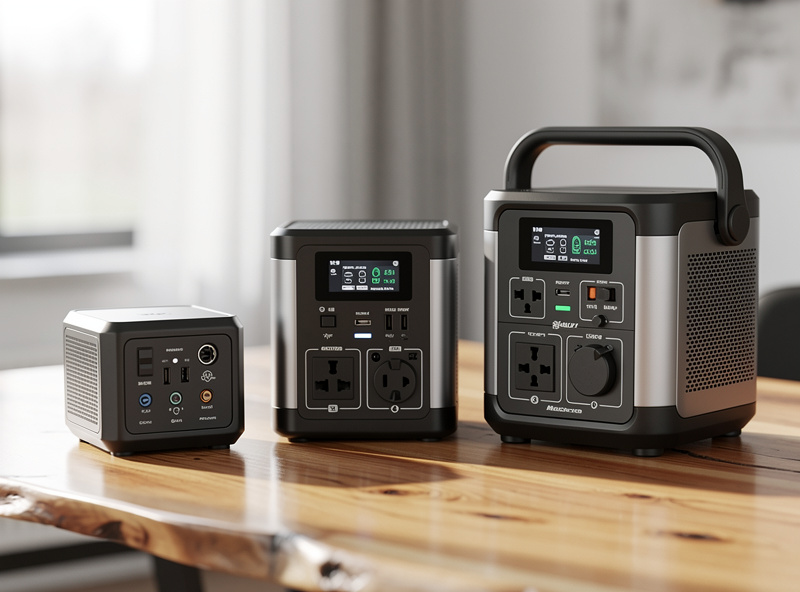
EcoFlow’s signature strength is charging speed. Its units are known for aggressive AC recharge rates and an adjustable charge-speed setting that lets you trade recharge time against cell longevity — a thoughtful feature, because charging LFP slower and to a partial state of charge is gentler on the cells over years. The brand also fields one of the widest accessory ecosystems: extra battery modules, smart outlet panels, and alternators.
The trade-off with fast charging is heat and, sometimes, fan noise, and EcoFlow’s app-and-firmware-heavy approach means more reliance on software than a minimalist would like. If you value topping up in an hour before a storm, or you want a platform you can expand and integrate, EcoFlow earns its following. Just remember the charge-longevity discipline I apply to my own bank: leaving any LiFePO4 unit pinned at 100% indefinitely is harder on the cells than storing it partially charged, a point that ties back to the cycle life vs depth-of-discharge relationship. A current EcoFlow LiFePO4 power station suits the fast-recharge, expandable use case best.
Bluetti: Big Expandable Capacity for the Money
Bluetti’s reputation is built on large capacity and strong value per watt-hour, especially in the expandable tier where you bolt on extra battery modules to reach several kWh. For buyers eyeing the boundary between a portable unit and a small home backup, Bluetti often delivers the most usable capacity for the price. Its units commonly include solar-friendly MPPT inputs with generous voltage windows.
The caution with any expandable platform — Bluetti included — is the cost-per-kWh math once you start stacking modules. Expansion packs frequently cost more per kWh than the base unit, and past a few kWh you are in territory where a DIY LiFePO4 bank wins decisively on cost and control, as the 18-month cost analysis shows. Within the portable range, though, a Bluetti expandable power station is a strong value pick for high-capacity needs.
Anker SOLIX: Conservative Engineering and Long Warranties
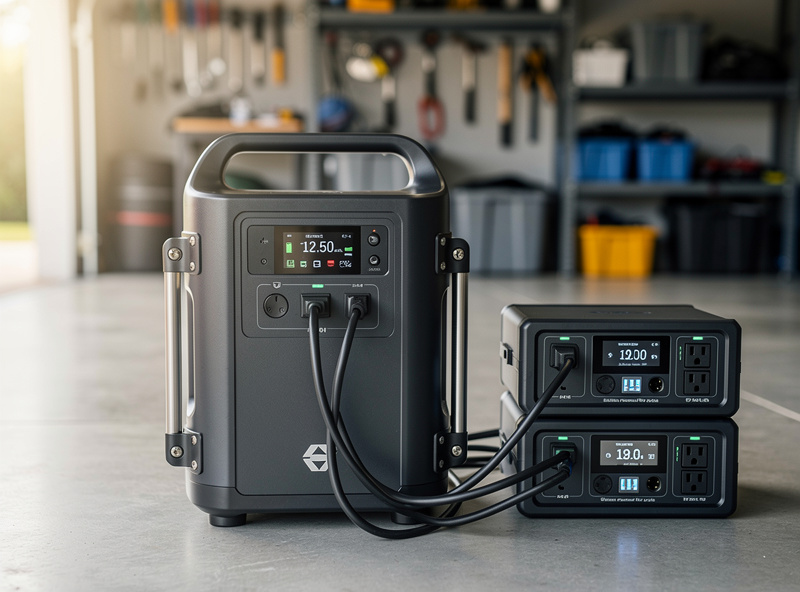
Anker’s SOLIX line trades the headline charging speeds for build quality, conservative thermal design, and notably long warranty terms. For a buyer who wants a unit that quietly works for a decade without drama, that conservatism is a feature, not a shortfall. Anker’s lineage in consumer power electronics shows in the fit and finish and the restraint of its specs — it rarely chases a flattering number it cannot sustain.
The flip side is that Anker’s ecosystem and maximum expandability can be narrower than EcoFlow’s or Bluetti’s at the very top end, and its fast-charge rates are sometimes more modest. For most outage and camping buyers that is irrelevant; a long warranty and steady engineering matter more than a record recharge time. An Anker SOLIX power station is the pick when reliability and warranty length top your list.
Brand Strengths at a Glance
This table compares the three on the durable traits that actually differentiate them, not on transient model specs.
| Trait | EcoFlow | Bluetti | Anker SOLIX |
|---|---|---|---|
| Signature strength | Fast AC charging | Capacity per dollar | Build + warranty |
| Chemistry (current lines) | LiFePO4 | LiFePO4 | LiFePO4 |
| Expandability | Broad ecosystem | Large, value-focused | Moderate |
| Software reliance | High (app-centric) | Moderate | Lower / conservative |
| Best buyer | Fast recharge, integration | High capacity on a budget | Set-and-forget reliability |
How to Actually Decide
Pick the size tier first, then let your priority break the tie. If you want the fastest recharge and the widest accessory ecosystem, EcoFlow. If you want the most usable capacity per dollar in the expandable range, Bluetti. If you want the longest warranty and the most conservative engineering, Anker SOLIX. All three deliver LiFePO4 and pure sine, so you are choosing a philosophy, not avoiding a lemon.
Whichever badge you choose, the specs that decide whether it serves you are the same ones I weigh on every unit: enough continuous output for your largest device, surge headroom of roughly double that to start motors, and a solar input window matched to your panels if you want a solar generator. The MPPT vs PWM breakdown explains why the controller inside matters, and the how-to-pick guide walks the full selection method that should precede any brand loyalty.
Frequently Asked Questions
Is EcoFlow or Bluetti better?
Neither is universally better; both use LiFePO4 and pure sine output. EcoFlow leads on fast AC charging and ecosystem breadth, while Bluetti leads on usable capacity per dollar in the expandable range. Choose by whether recharge speed or capacity matters more to you.
Does Anker SOLIX use LiFePO4?
Yes. Anker’s current SOLIX power station lines use LiFePO4 cells, like EcoFlow and Bluetti. Anker’s distinguishing traits are conservative thermal engineering, strong build quality, and notably long warranty terms rather than headline charging speed.
Which power station brand charges fastest?
EcoFlow is generally known for the most aggressive AC recharge rates and an adjustable charge-speed setting. Faster charging trades against heat and slightly faster cell wear, so storing the unit at a partial charge between uses is gentler long term.
Are expandable power stations worth it?
Within the portable range, yes. But expansion modules often cost more per kWh than the base unit, and past a few kWh a DIY LiFePO4 bank wins on cost and control. Buy the capacity you need now plus one tier of headroom.
Do all three brands deliver pure sine power?
Yes. EcoFlow, Bluetti, and Anker SOLIX current flagship lines all output pure sine AC, which is safe for sensitive electronics and motors. The chemistry and output-quality differences that once separated brands have largely converged.