
Important Disclaimer
BatteryStorageHQ provides educational content and estimates only. We are not certified installers, financial advisors, or electricians. Always consult with licensed professionals.
A weak cell reveals itself three ways: it races to the top first on charge, sags lowest under load, and ends the discharge early on a capacity test — consistently, while its neighbors still have margin. Confirming it takes three simple checks: rest voltage, voltage under load, and a single-cell capacity test.
The most important thing to get straight before you start chasing a “bad battery” is that there are two different problems people lump together. A drifted cell is healthy but out of balance; a weak cell has genuinely lost capacity or gained internal resistance. They look similar on a casual glance and have completely different fixes — so the whole job is telling them apart with data. This guide is part of the battery maintenance and troubleshooting cluster.
Drift vs Weak Cell: The Distinction That Matters
Drift is a state-of-charge problem. The cells are all fine, but their charge levels have wandered apart, so on charge one cell reaches 3.65 V and trips the BMS while the others sit at 3.45 V with room to spare. Rebalancing fixes this completely — it just realigns the charge levels. A weak cell is a capacity or resistance problem: that cell genuinely holds less or fights current harder, so it will keep falling out of line no matter how many times you rebalance it.
Here is the tell that separates them: after a proper rebalance, a drifted-but-healthy pack stays together for many cycles. A weak cell drifts right back out within a cycle or two, because the underlying capacity mismatch reasserts itself every time. If you find yourself rebalancing the same cell over and over, you do not have a balance problem — you have a weak cell. The rebalancing side is covered in re-balancing drifted cells.
The Symptoms of a Weak Cell
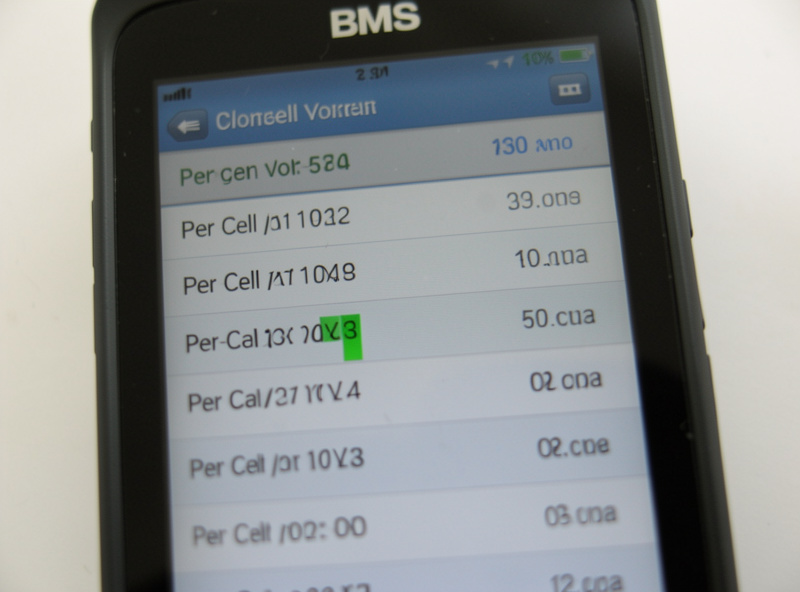
A weak cell announces itself in patterns, not single readings. The classic signature: the same cell is always first to hit the high-voltage cutoff on charge and first to sag toward the low-voltage cutoff on discharge — it has the least room at both ends because it holds less. Cell spread (the gap between your highest and lowest cell) widens faster than it used to, especially near the top and bottom of the charge curve where weak cells diverge most.
You will also see nuisance BMS trips: over-voltage on charge or under-voltage on discharge caused by that one cell reaching its limit while the pack as a whole is nowhere near full or empty. And a capacity test will come back lower than your baseline, because the discharge ends when the weak cell hits its floor. None of these alone proves a weak cell, but together they point straight at one. The BMS-trip side is covered in the BMS fault codes guide.
Test 1: Compare Rest Voltages
Start simple. Let the pack rest with no load and no charge for an hour or more, then read every cell voltage — your BMS shows these directly. In a healthy balanced pack at rest, all cells sit within a few millivolts of each other. A cell sitting noticeably lower at rest, especially after the pack has settled, is your first suspect. Note that a single rest-voltage reading can be misleading on LFP because of its flat curve, so this is a screening step, not a verdict.
Do this reading at a couple of different states of charge if you can — near full and near empty — because weak cells diverge most at the extremes and may hide in the flat middle. A cell that tracks the others perfectly in the middle but shoots high near full and drops low near empty is showing the capacity-mismatch signature even before you load-test it.
Test 2: Voltage Under Load
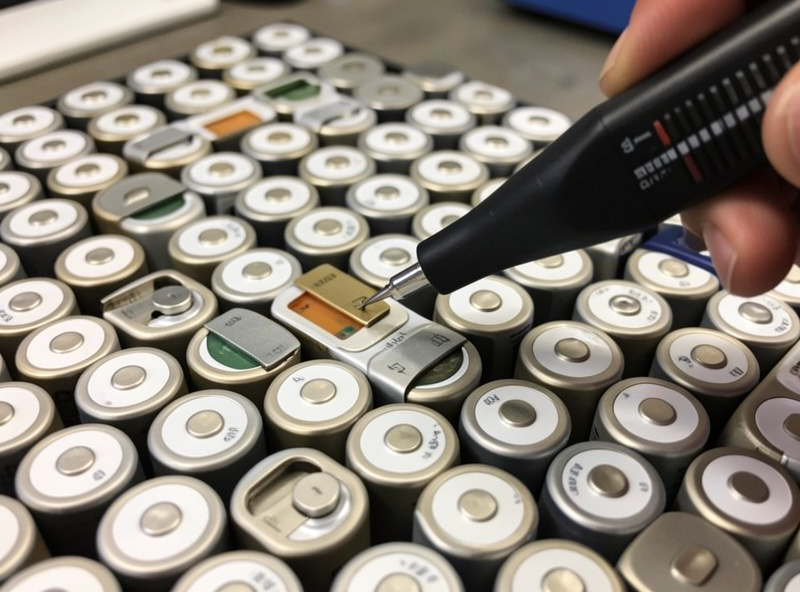
This is the most revealing test because it exposes internal resistance, which is where many weak cells fail. Apply a meaningful load to the pack and watch the per-cell voltages live. A healthy cell sags a little under load and recovers; a high-resistance weak cell sags noticeably more than its neighbors under the same current and recovers more slowly when the load is removed. The bigger the voltage dip relative to the other cells, the higher that cell’s internal resistance.
This is exactly why a weak cell trips the under-voltage protection early: under a hard load — the moment the workshop’s surge loads fire — its voltage collapses faster than the others and reaches the BMS floor while the pack still has plenty of charge. Watching cell voltages live during a real load event is one of the most useful things a per-cell monitoring setup gives you, and it is the kind of thing my Home Assistant dashboard logs automatically. On my own bank I flag any cell that dips more than about 50 mV below its neighbors under a hard 0.5C load – that gap has reliably fingered the cell that later failed a single-cell capacity test.
Test 3: Confirm With Capacity
The definitive test is capacity. The whole-bank capacity test already measures your weakest cell, because the discharge stops when the first cell hits its floor — so a bank testing well below baseline with the same cell always ending the run is strong evidence. To be certain, you can capacity-test the suspect cell individually: charge the pack full, rebalance so all cells start equal, then discharge and see whether that one cell still reaches empty well before the others. If it does after a clean rebalance, it is genuinely weak, not merely drifted.
That last step is what closes the case. A drifted cell, once rebalanced, will track the pack through a full discharge. A weak cell, even starting perfectly balanced, will reach its floor early — because the problem was never balance, it was capacity. The table below summarizes how the symptoms map to cause.
| Symptom | Drifted (Healthy) Cell | Weak Cell |
|---|---|---|
| After a clean rebalance | Tracks the pack for many cycles | Drifts back out within a cycle or two |
| Voltage under load | Sags like its neighbors | Sags more, recovers slower (high resistance) |
| Single-cell capacity | Matches the others | Reaches empty early, lower capacity |
| Fix | Rebalance | Replace with a matched cell |
What to Do Once It’s Confirmed
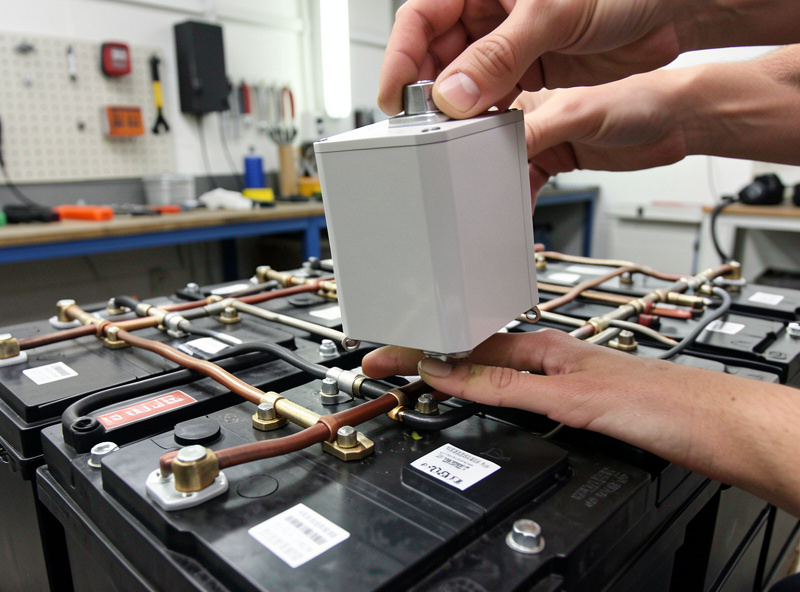
If the tests confirm a genuinely weak cell, no amount of rebalancing will fix it — balancing moves charge between cells, it cannot restore lost capacity. The fix is replacement, ideally with a capacity-matched cell of the same chemistry and a similar age, so the new cell does not become the new outlier. On a bank built from well-matched, properly top-balanced cells this rarely happens early; mismatched or grade-B builds are far more prone to producing a single laggard, which is the argument for buying right the first time — see grade A vs grade B cells and top balancing.
Until you replace it, the BMS will keep protecting the weak cell by cutting your usable capacity to its limit — so the whole bank performs like its weakest member. That is tolerable as a short-term bridge but not a permanent state; a single weak cell quietly steals capacity from every cycle. Diagnose it on data, decide on data, and replace it rather than nursing it indefinitely.
Frequently Asked Questions
How do I tell a weak cell from a cell that’s just out of balance?
Rebalance the pack cleanly, then watch that cell. A drifted-but-healthy cell tracks the others for many cycles afterward. A weak cell drifts back out within a cycle or two and reaches empty early even when it started perfectly balanced, because the problem is lost capacity, not charge level.
What are the signs of a bad cell in a battery pack?
The same cell is consistently first to hit the high-voltage cutoff on charge and first to sag low on discharge, cell spread widens faster than before, the BMS trips while the pack is not actually full or empty, and a capacity test comes back below baseline with that cell ending the run.
How does voltage under load reveal a weak cell?
Apply a meaningful load and watch per-cell voltages live. A high-resistance weak cell sags noticeably more than its neighbors under the same current and recovers more slowly when the load is removed. The larger the relative voltage dip, the higher that cell’s internal resistance.
Can rebalancing fix a weak battery cell?
No. Balancing moves charge between cells; it cannot restore lost capacity. If a cell is genuinely weak it will keep falling out of line no matter how often you rebalance it. The fix is replacement with a capacity-matched cell of the same chemistry and similar age.
Will one weak cell ruin my whole battery bank?
It does not destroy the other cells, but it caps the whole bank’s usable capacity, since the BMS protects the weakest cell by ending charge and discharge at its limits. The pack performs like its weakest member, so a confirmed weak cell is worth replacing rather than nursing indefinitely.