Important Disclaimer
BatteryStorageHQ provides educational content and estimates only. We are not certified installers, financial advisors, or electricians. Always consult with licensed professionals.
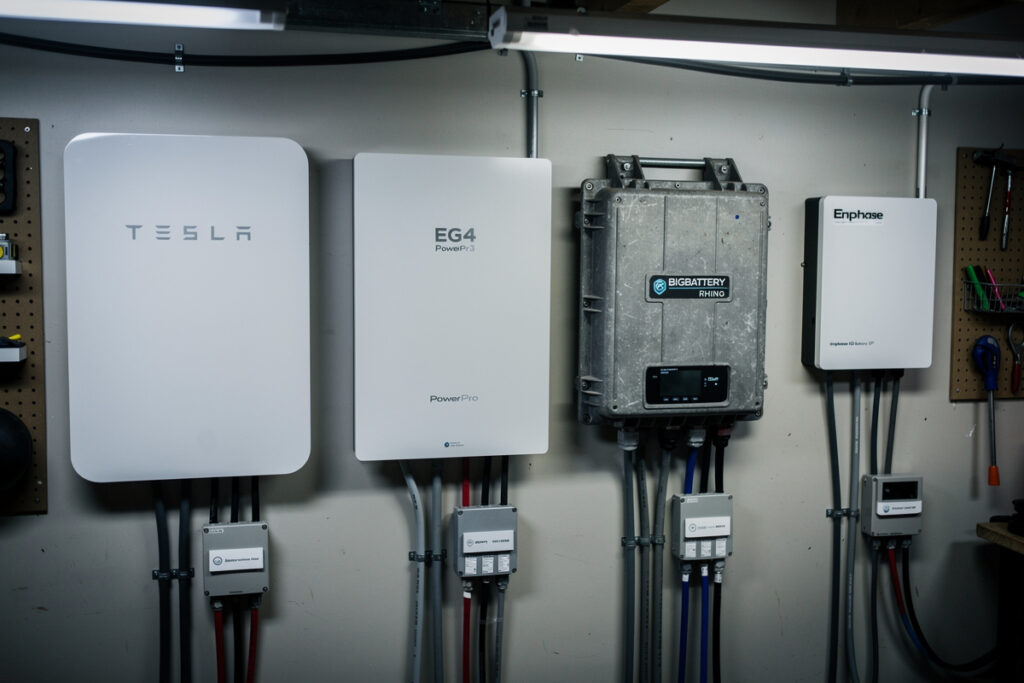
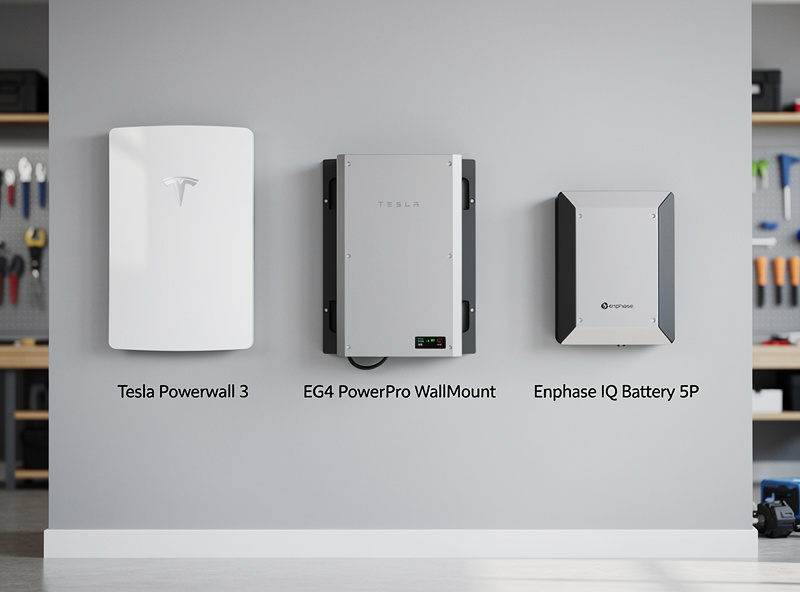
Tesla Powerwall 3 alternatives in 2026 deliver comparable or better capacity at 30–60% lower installed cost. After comparing the Powerwall 3 against EG4 PowerPro WallMount, BigBattery Rhino 2, Enphase IQ Battery 5P, and DIY server rack stacks across capacity, warranty, and 5-year economics, the practical winners depend on installation comfort: EG4 PowerPro at $4,800 installed beats the $9,300 Powerwall 3 on cost-per-kWh while matching capacity, but requires DIY-friendly installation. For users who want Tesla-class plug-and-play simplicity at lower cost, the field is thinner — Enphase IQ 5P costs more, not less.
This article compares the major Tesla Powerwall 3 alternatives across cost, capacity, and use case fit. It is the alternatives-focused companion to our home battery storage hub.
Why Look for Powerwall Alternatives
Tesla Powerwall 3 retails at $9,300 installed for 13.5 kWh — a premium price for premium plug-and-play simplicity. The same 13.5–15 kWh capacity is available from EG4, BigBattery, SOK server rack stacks, and DIY builds at $1,800–5,200 installed. The cost difference of $4,000–7,500 represents 80–150% of the Powerwall purchase price in alternative options. For users with any DIY comfort, the savings fund significant additional system capacity, multiple inverter upgrades, or simply offset other home expenses.
The other reason to look at alternatives: Tesla’s installer wait times. As of 2026, Tesla Powerwall 3 installation timelines stretch 6–12 weeks in many US markets. Alternative systems with non-Tesla installers often install in 2–4 weeks. For users who need backup capability before hurricane season or peak summer rates, faster installation matters. Our battery hub covers the full landscape.
Alternatives Compared Against Powerwall 3
| System | Capacity | Installed Cost | $/kWh | vs Powerwall 3 |
|---|---|---|---|---|
| Tesla Powerwall 3 (baseline) | 13.5 kWh | $9,300 | $689 | — |
| Enphase IQ Battery 5P | 15.0 kWh | $11,500 | $767 | 11% more expensive |
| EG4 PowerPro WallMount | 14.3 kWh | $4,800 | $336 | 48% cheaper |
| BigBattery Rhino 2 | 15.4 kWh | $5,200 | $338 | 44% cheaper |
| SOK 48V (×3 server rack) | 15.0 kWh | $3,750 | $250 | 60% cheaper |
| Pytes V5 (×3 server rack) | 14.4 kWh | $4,500 | $313 | 52% cheaper |
| DIY EVE 280Ah build | 15.0 kWh | $2,500–3,000 | $167–200 | 71% cheaper |
The cost differences are real and substantial. Enphase IQ Battery 5P is actually more expensive than the Powerwall 3, not less — Enphase positions as a premium AC-coupled alternative with higher 15 kWh capacity but at a price that defeats the budget motivation. The genuine alternatives are EG4 PowerPro and below, where the price drops 44–71% versus Powerwall.
EG4 PowerPro WallMount: The Practical Sweet Spot
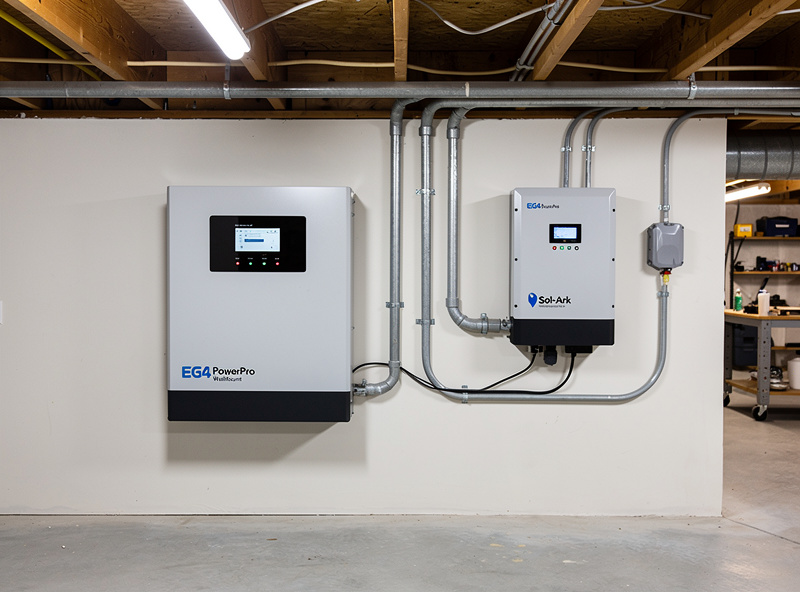
EG4 PowerPro WallMount at $4,800 installed for 14.3 kWh is the alternative most home users should evaluate first. Specs comparable to Powerwall 3: LiFePO4 chemistry (same), 95% round-trip efficiency (Powerwall 3 is 97.5%), 10-year warranty (same), wall-mount form factor (same). Differences: requires hybrid inverter (Sol-Ark 15K, EG4 18kPV, Victron MultiPlus II) instead of using included inverter; supports CAN bus communication for inverter integration; has US-based EG4 customer support but not Tesla’s nationwide service network.
For most home users, the EG4 PowerPro requires the same level of professional electrician work as Powerwall 3 (panel integration, AC connection, permitting). The DIY component is mostly the wall mounting and inverter wiring, which a competent homeowner can handle. Our EG4 PowerPro review covers detailed performance testing.
Enphase IQ Battery 5P: Premium AC-Coupled Alternative
The Enphase IQ Battery 5P targets users with existing Enphase microinverter solar systems. Capacity 15 kWh, AC-coupled architecture (no hybrid inverter required), professional installation through Enphase certified installers. The installed cost of $11,500 is higher than Powerwall 3 because of the AC-coupled premium and Enphase’s positioning.
For users without existing Enphase solar, this system makes little sense — the Powerwall 3 is cheaper with similar capability. For users with Enphase IQ8 microinverters already installed, the IQ Battery 5P integrates seamlessly without requiring any inverter changes, which can justify the price premium over alternatives. The decision usually comes down to existing solar system architecture rather than fresh installation.
BigBattery Rhino 2: US-Made Mid-Tier
BigBattery Rhino 2 at $5,200 for 15.4 kWh targets the same DIY-friendly tier as EG4 PowerPro at slightly higher capacity and price. The unit is assembled in California with Chinese cells, providing a domestic-touchpoint for users who prioritize US-based assembly. Specs: LiFePO4 chemistry, 10-year warranty, 95% round-trip efficiency, supports common hybrid inverters.
The Rhino 2 differentiates from EG4 on form factor — it’s a freestanding floor unit rather than wall-mounted, which some users prefer for installation flexibility. Performance specs are essentially identical to EG4 PowerPro. For users who specifically want US-assembled hardware or floor-mount form factor, BigBattery is the answer; for most users, EG4 PowerPro at slightly lower cost makes more sense.
Server Rack Stack Options
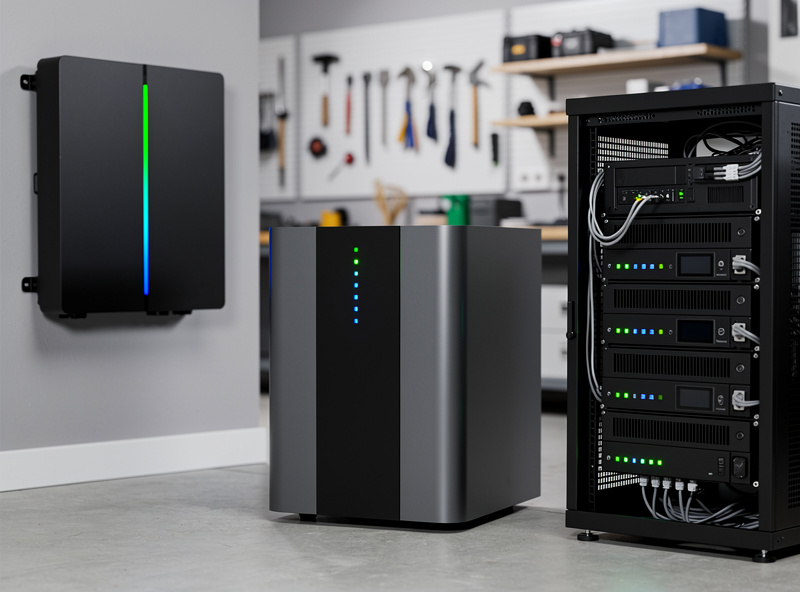
Server rack 48V batteries (SOK SK48V100, Pytes V5) provide the deepest cost savings while still maintaining 10-year warranty and US support. A stack of 3 SOK SK48V100 units provides 15 kWh for $3,750 installed — 60% less than Powerwall 3 with comparable warranty. Pytes V5 at $4,500 for 14.4 kWh sits between SOK and EG4 on price.
The trade-off is form factor. Server rack batteries require a 19-inch rack or shelf for stacking, which is straightforward in a basement or closet but harder to fit in a finished living space. The wall-mount form factor of EG4 PowerPro and Tesla Powerwall is more living-space-friendly. For users with garage, basement, or utility room placement, server rack is the right answer; for users with no closet space, wall-mount systems are necessary. Our SOK review article covers the rack-mount alternative in depth.
DIY Extreme Savings
For users with significant DIY skills, full custom builds drop costs further. DIY EVE 280Ah cell builds (16 cells, 48V, ~15 kWh) cost $2,500–3,000 in materials — 71% less than Powerwall 3. The trade-offs: no warranty, requires BMS programming knowledge, requires careful cell balancing, and assumes you take responsibility for fire safety configuration. For experienced DIYers, these are manageable; for first-time battery builders, the steep learning curve plus warranty risk often pushes the calculation back toward Tier 2 commercial systems.
For homelab enthusiasts who already have BMS programming experience and rack space, the DIY extreme tier is genuinely worth pursuing. For most home users, the EG4 PowerPro at the Tier 2 sweet spot is the practical alternative to Powerwall 3 that captures most of the cost savings without DIY complexity. Our DIY vs prebuilt cost article covers the tradeoffs in depth.
Installation Time Comparison
Installation timeline matters when you need backup before a known event (hurricane season, summer peak rates, planned renovation). Tesla Powerwall 3: 6–12 weeks from order to commissioning (current 2026 timelines). Enphase IQ 5P: 4–8 weeks through certified installers. EG4 PowerPro: 2–4 weeks (in-stock at SignatureSolar) plus electrician scheduling. Server rack DIY: 1–2 weeks (in-stock at SignatureSolar) plus self-installation. DIY EVE builds: 2–4 weeks for cell delivery (overseas shipping) plus build time.
For users needing fast deployment, EG4 PowerPro and server rack systems significantly outpace Tesla. The supply chain for non-Tesla home battery hardware is relatively short — most components are stocked and ready to ship within days. Tesla’s longer timeline reflects high demand and limited certified installer capacity. Our battery storage hub covers vendor-by-vendor lead times.
Frequently Asked Questions
What are the best Tesla Powerwall 3 alternatives in 2026?
EG4 PowerPro WallMount at $4,800 for 14.3 kWh (48% cheaper). SOK 48V server rack stack at $3,750 for 15 kWh (60% cheaper). DIY EVE 280Ah builds at $2,500 for 15 kWh (71% cheaper). All deliver comparable capacity at significantly lower cost.
Is the EG4 PowerPro as good as Tesla Powerwall 3?
Comparable for most home use cases. Same LiFePO4 chemistry, 10-year warranty, similar capacity (14.3 vs 13.5 kWh), 95% vs 97.5% round-trip efficiency. EG4 requires a hybrid inverter (Sol-Ark 15K, EG4 18kPV) instead of bundled inverter. $4,500 cheaper installed.
Why is the Enphase IQ Battery 5P more expensive than Powerwall?
AC-coupled architecture and Enphase positioning premium. The IQ 5P targets users with existing Enphase microinverter solar systems where it integrates seamlessly. Without existing Enphase solar, the higher cost rarely justifies vs Powerwall 3.
How long does Tesla Powerwall 3 installation take?
6–12 weeks from order to commissioning in most US markets in 2026. Alternative systems install faster: EG4 PowerPro in 2–4 weeks, server rack DIY in 1–2 weeks. For urgent deployment, alternatives win on timeline.
Are server rack batteries cheaper than Powerwall?
Yes, dramatically. SOK SK48V100 stack of 3 units provides 15 kWh for $3,750 — 60% cheaper than Powerwall 3 with similar warranty. Trade-off is rack/closet space requirement vs wall-mount form factor.
Can I save money with DIY battery vs Powerwall?
Yes, 71% less for DIY EVE 280Ah cell builds at $2,500–3,000 for 15 kWh. The trade-offs are no warranty, BMS programming requirement, and cell balancing knowledge. EG4 PowerPro at mid-tier is the practical compromise for most users.
Which Powerwall alternative is easiest to install?
EG4 PowerPro WallMount has the closest installation profile to Tesla Powerwall — wall mount, panel integration via electrician, similar permitting. Server rack DIY requires more self-installation. DIY EVE builds require the most expertise.