Important Disclaimer
BatteryStorageHQ provides educational content and estimates only. We are not certified installers, financial advisors, or electricians. Always consult with licensed professionals.
An off-grid wellness setup with a 1500 W infrared sauna and a 500 W cold plunge chiller needs roughly 12-15 kWh of usable LiFePO4 battery storage and a 6 kW continuous-rated hybrid inverter to support 5-session-per-week protocols without grid backup. The sizing math is driven by the surge load of the chiller compressor and the duration of the sauna session, not by sauna draw alone. This guide walks through the load profile, the battery and inverter spec, and the real-world cost of taking a wellness setup fully off-grid in 2026.
Wellness equipment is one of the trickiest off-grid load categories — neither sauna nor cold plunge run continuously, but both have substantial peak demands and predictable session schedules that make solar-and-battery sizing more deterministic than for whole-home backup. The trade-off is that resistive heaters (saunas) and refrigeration compressors (chillers) hit the inverter and the battery in fundamentally different ways, and a system sized for one will fail at the other. Get the calculation right and a wellness setup runs on pure solar in summer and gracefully grid-supplements in winter.
Load Profile: What Sauna and Cold Plunge Actually Draw
Three numbers matter for off-grid sizing: continuous draw (steady-state running watts), surge draw (startup peak), and daily duty cycle (hours of run time per day).
Infrared sauna (1-2 person): 1500-1800 W continuous, no surge above 10% of running, 30-45 minutes per session, 1 session per day in heavy use. Daily energy: ~1.0-1.4 kWh per session. Resistive load — easy on inverters once running.
Infrared sauna (3-4 person): 2200-3000 W continuous, similar duty cycle. Daily energy: ~1.5-2.2 kWh per session. The 3000 W tier pushes against typical 6 kW inverters when other loads are running concurrently.
Cold plunge chiller (small, ~25 gallon): 400-600 W continuous when running, 2000-3500 W surge for 0.5-2 seconds at compressor start, 6-8 hours per day total run time to maintain 38-42 °F. Daily energy: ~3-5 kWh. The surge is the killer — it eats inverter headroom and demands battery cells with high C-rate discharge.
Cold plunge chiller (large, 50+ gallon, commercial): 800-1200 W continuous, 4000-6000 W surge, 8-12 hours per day. Daily energy: ~7-12 kWh. Pushes most home inverters past their continuous rating.
For deeper coverage of the sauna power side, the InfraredSaunaLab ultimate guide to infrared saunas covers the per-cabinet wattage breakdown across major brands and sizes — that is the input for the calculation here.
Battery Sizing: The Two-Day Resilience Math
Off-grid wellness setups follow the same sizing principle as off-grid homes: at minimum, two days of usable storage so a cloudy day does not interrupt the protocol. For the most common configuration (1-2 person sauna + small cold plunge), the math runs:
- Sauna: 1.4 kWh/day average
- Cold plunge: 4.0 kWh/day average
- Pump and circulation: 0.3 kWh/day
- Lighting and minor loads: 0.5 kWh/day
- Total daily wellness load: ~6.2 kWh/day
Two days of resilience: 12.4 kWh of usable storage. LiFePO4 batteries should be sized assuming 80% depth of discharge as the daily target (and 90% as a one-off limit), so nameplate capacity needs to be 12.4 / 0.8 = 15.5 kWh. Three 5.12 kWh server-rack batteries (15.36 kWh nameplate) is the natural fit.
For the chemistry side of why LiFePO4 specifically — cycle life, cold-weather behaviour, charge-discharge math — see our battery chemistry comparison hub. The cycle-life-vs-DOD math is in our cycle life vs DOD guide.
Inverter Sizing: The Surge Problem
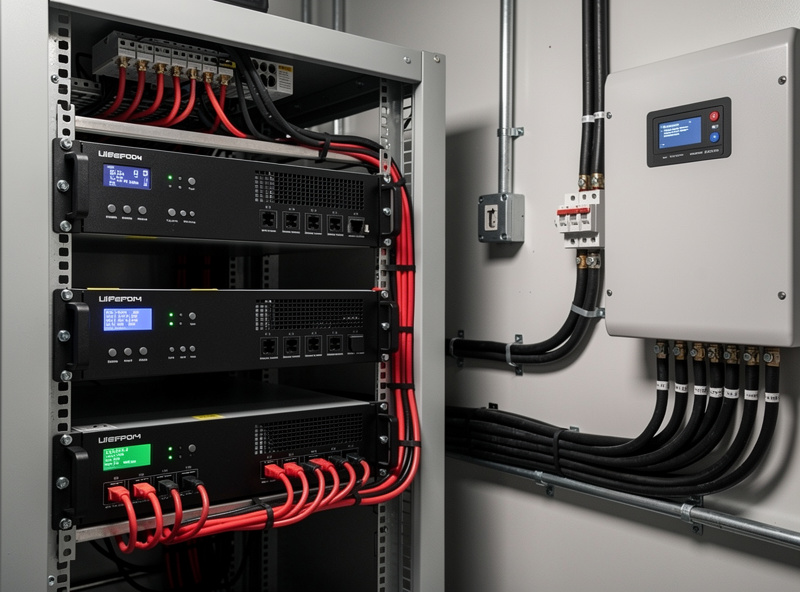
Continuous draw on a typical wellness setup is 2-3 kW; surge is 4-6 kW for under 2 seconds. Most quality hybrid inverters in the 6 kW class handle 12 kW surge for 5+ seconds, which is comfortable headroom. The brands that consistently deliver this in our testing:
Sol-Ark 8K-2P ($4,800-$5,200): 8 kW continuous, 16 kW surge. Premium build, best customer support in the US market. Right answer for serious off-grid wellness setups. Covered in detail in our Sol-Ark vs EG4 hybrid inverter decision.
EG4 18kPV ($3,200-$3,800): Higher peak power than the Sol-Ark, more configurability, weaker support. Right pick if you want more headroom for future expansion. See our EG4 18kPV review.
Victron MultiPlus II 5000VA ($1,800-$2,200): 5 kW continuous, 10 kW surge for 5 sec, the modular European standard. Right pick for setups expanding incrementally — pair multiple units for higher capacity. See our MultiPlus II review.
Avoid: Pure-sine-wave inverters under 4 kW continuous (cannot handle chiller surge), modified-sine inverters of any size (damages refrigeration compressors), and “12 kW peak” cheap inverters where the peak rating is for 0.1 second — verify continuous and 5-second surge specs.
Solar Sizing for the Wellness Load
Daily energy of 6.2 kWh requires ~2 kW of solar in good locations (4-5 sun hours/day) or ~3 kW in winter latitudes (3-3.5 sun hours/day). For a wellness setup that runs through the year, plan for the worst-case month: 3 kW of solar produces ~9 kWh on a winter day in the Pacific Northwest, just enough to refill a daily 6 kWh draw plus 50% margin.
Mount geometry matters more than panel count for wellness setups specifically. The protocol is most often run in the early evening (after work, after the gym), so battery charge needs to be at 100% by sunset. South-facing panels at latitude tilt produce the smoothest charge curve; west-facing produces less total energy but better matches evening usage.
Cold Climate Considerations
LiFePO4 cells refuse to charge below 32 °F, which is the central problem for outdoor or unheated-shed wellness setups in northern climates. The fix is one of three:
Indoor battery placement. Mount the battery bank inside the heated portion of the home or outbuilding. Easiest solution; requires the battery to fit somewhere conditioned.
Self-heated batteries. EG4 PowerPro and SOK SK48V100 (our review) include integrated self-heaters that draw a few hundred watts to keep cells above 32 °F when ambient drops. Acceptable solution for outdoor enclosures rated for the climate.
Conditioned battery enclosure. A small insulated outdoor enclosure with a thermostat-controlled radiant heater. Most expensive but most flexible — handles any battery brand. Detailed in our LiFePO4 cold weather performance guide.
Wellness Setup Cost Breakdown
| Component | Spec | Cost (2026) |
|---|---|---|
| 3× Server-rack LiFePO4 (5.12 kWh each) | 15.36 kWh nameplate | $3,600-$4,500 |
| Hybrid inverter (8 kW continuous) | 16 kW surge | $3,200-$5,200 |
| Solar panels (3 kW) | 8x 400W panels | $1,200-$1,800 |
| Mounting hardware and BoS | Combiner, breakers, cabling | $800-$1,200 |
| Installation labour (if not DIY) | Permitting + connection | $2,500-$5,000 |
| Battery enclosure (cold climate) | Insulated + heater | $400-$800 |
| Total (DIY) | $9,200-$13,500 | |
| Total (professional) | $11,700-$18,500 |
Hybrid vs Pure Off-Grid: Which Architecture
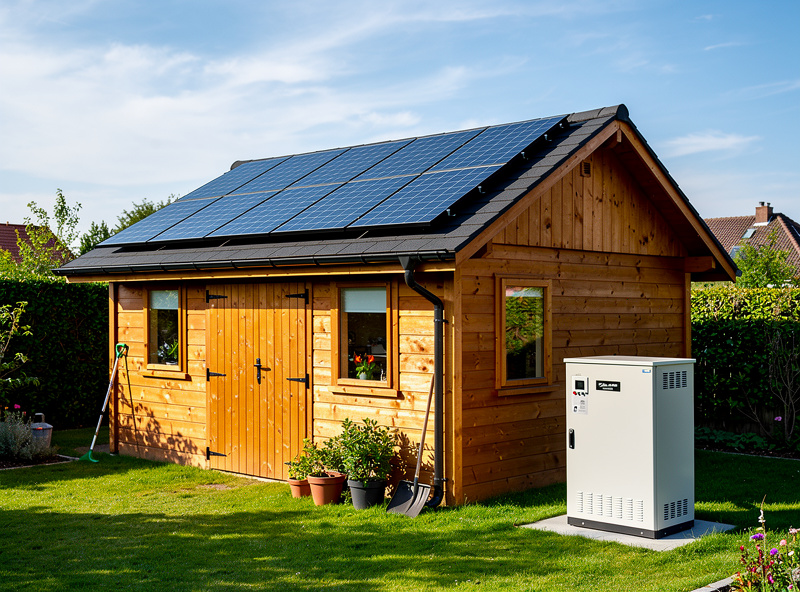
True pure-off-grid means no grid connection at all — the battery is the only fallback for cloudy weeks. Hybrid means the system is grid-tied but prioritizes solar and battery, falling back to grid only when reserves are low. For wellness setups, hybrid is almost always the right choice: 95% of the energy comes from solar in summer, 50-70% from solar in winter, and the grid handles the rare “5 cloudy days in a row” edge case without the cost of a 4-day battery bank.
Hybrid sizing also lets you skip the battery cold-climate problem entirely — undersized batteries with grid backup work fine, while undersized batteries on pure off-grid leave you with cold sauna sessions and warm cold plunges in February.
Frequently Asked Questions
How much battery do I need for an off-grid sauna and cold plunge?
Roughly 12 to 15 kWh of usable LiFePO4 storage for a 1 to 2 person infrared sauna plus a small cold plunge chiller, sized for 2 days of resilience at 80 percent depth of discharge. Three 5.12 kWh server rack batteries is the natural fit and gives a clean upgrade path.
What inverter size do I need?
6 kW continuous, 12 kW surge minimum. The cold plunge chiller’s compressor surge is the binding constraint, not the sauna’s continuous draw. Sol-Ark 8K-2P, EG4 18kPV, and Victron MultiPlus II 5000VA paired in parallel all meet the spec.
Can I run an off-grid wellness setup with a small inverter and a generator?
Yes for occasional use, no for daily protocols. A 3 kW inverter handles the sauna alone but cannot cover the cold plunge chiller surge. Hybrid grid tied is a better fit for daily wellness use than generator backup.
Will the system work in winter?
Yes with proper sizing. Plan for the worst case month at your latitude: 3 kW of solar produces about 9 kWh on a Pacific Northwest winter day, enough for daily wellness use plus margin. LiFePO4 batteries need self-heating or indoor placement below freezing.
How much does a complete off-grid wellness battery system cost?
$9,200 to $13,500 DIY, $11,700 to $18,500 with professional installation. The biggest variable is the inverter (Sol-Ark vs Victron) and whether you include cold-climate battery conditioning. Solar at 3 kW adds 1,200 to 1,800 to either total.
Should I go pure off-grid or hybrid?
Hybrid for almost every wellness setup. Solar plus battery handles 95 percent of summer energy and 50 to 70 percent of winter energy, with grid covering rare cloudy weeks. Pure off-grid requires 4-day battery banks that triple system cost without much real benefit.